NeuroTracker vs. CogniFit Brain Training Tools Compared
NeuroTracker and CogniFit are both credible cognitive training platforms, but they take different paths. NeuroTracker is built around focused 3D multiple-object tracking for perceptual-cognitive performance training. CogniFit offers broader cognitive assessment and training across multiple cognitive domains.
NeuroTracker vs. CogniFit
Overview
NeuroTracker
NeuroTracker uses short 3D tracking sessions to train perceptual-cognitive performance through a repeatable protocol that is easy to measure across people or teams.
🕓 How long? Just 6 minutes per session.
CogniFit
CogniFit offers a broad library of adaptive games, assessments, and personalized training activities across multiple cognitive domains.
🕓 How long? Around 10-20 minutes per day.
Benefits To The Brain
NeuroTracker
Discover how NeuroTracker enhances cognitive performance and mental agility, offering powerful brain-boosting benefits through its science-backed 3D tracking exercises.
Attention
Working Memory
Spatial Awareness
Focus
Processing Speed
Decision Making
Situational Awareness
Neuroplasticity
Multitasking
Motion perception
Motor Performance
Learning Capacity
Fatigue Resistance
Reaction Time
Injury Prevention
Response Control
NeuroTracker's effectiveness is backed by over 120 peer-reviewed studies, which demonstrate that users typically see substantial improvements in cognitive test scores, often within just 30 training sessions.
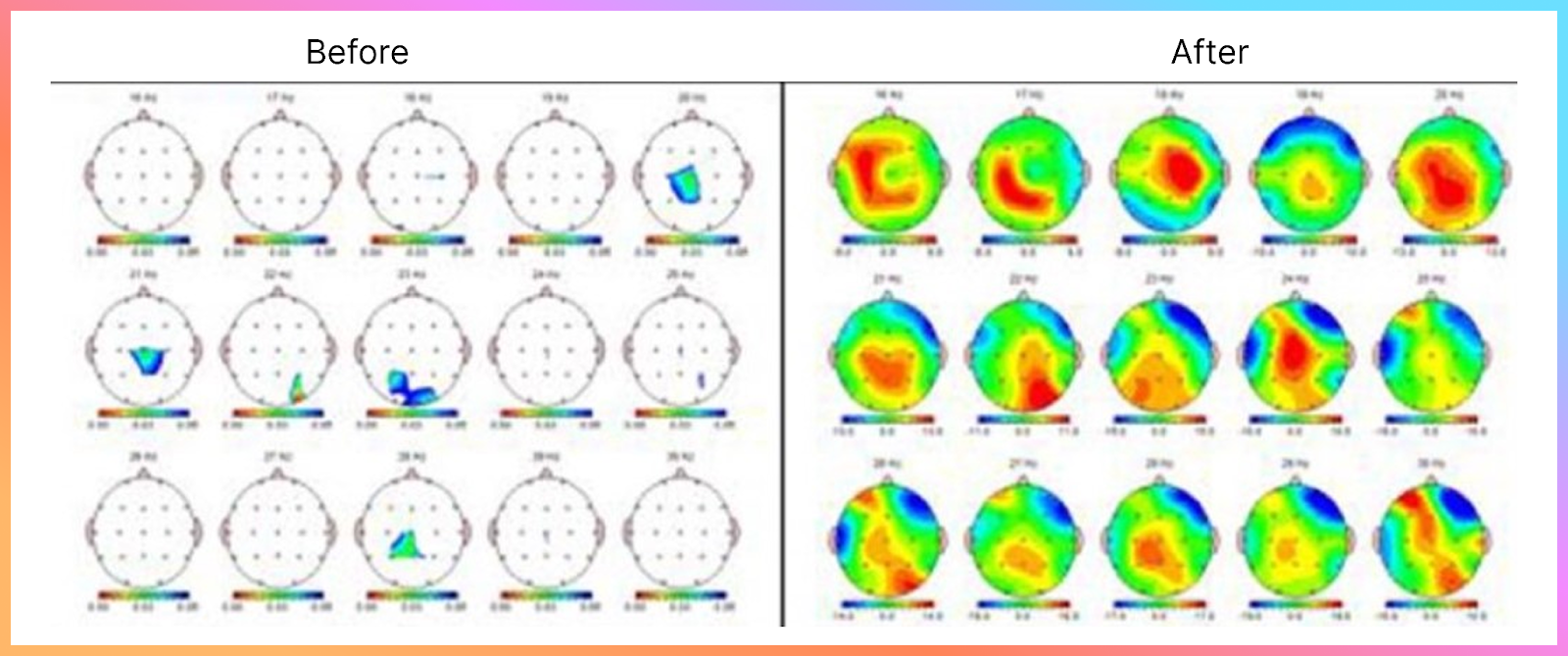
In addition, qEEG brain imaging has revealed heightened beta wave activity in the frontal areas of the brain—regions tied to focus, cognitive control, and adaptability. This increase suggests NeuroTracker may promote neuroplasticity and enhance the brain's ability to process information efficiently.
CogniFit
CogniFit is broad and varied. NeuroTracker is more focused: one repeatable 3D tracking protocol with clear progression over time. CogniFit targets a broad set of cognitive skills through gamified tasks, including memory, attention, reasoning, coordination, perception, processing speed, working memory, and related domains.
Key Features
Whether it’s adaptive difficulty or targeted exercises, see how the platforms compare and find the right fit for your mental performance needs.
Neurotracker
2D & 3D cognitive training experiences
Advanced training modes (Dual-tasking)
Progress tracking with user-friendly analytics
Adaptive difficulty levels that adjust to your performance
Supported by over 120 peer-reviewed studies
Free 6-min brain assessment
Accessible on multiple devices, portable for convenience
Personalized training based on your goals
Suitable for both beginners and advanced users
CogniFit
Adaptive mini-games that get harder or easier based on how you're doing
Helps improve memory, focus, and thinking speed
Fun and effective way to train your brain
Consumer and professional use
Tracks your progress to show how your brain is improving over time
Scientific Validation & Real-World Transfer
NeuroTracker
- Over 120 peer-reviewed studies back its effectiveness in boosting cognitive performance.
- Professionals, including athletes, military personnel, and healthcare providers, use it to enhance reaction time, focus, and cognitive abilities under pressure.
- Clinicians incorporate it into cognitive training programs for ADHD, autism, TBI, and age-related cognitive issues.
- Research indicates real-world benefits, such as a 15% improvement in soccer passing accuracy, as well as improvements in academics and driving safety.
CogniFit
- CogniFit cites peer-reviewed studies and reviews across assessment and training.
- Its examples include healthy aging, academics, driving, and auditory-cognitive training.
- NeuroTracker is easier to evaluate because its research centers on one clear task: 3D object tracking. Compare studies by user group, training plan, and outcome.
- Compare evidence by user group, training plan, comparator, and outcome.
Both cite research. NeuroTracker stands out for focused 3D tracking and applied perceptual-cognitive performance use.
Who Is It For?
With scientifically validated results and global adoption, NeuroTracker serves a wide range of individuals seeking to enhance cognitive performance in real-world settings:
Neurotracker
Elite athletes (e.g., tennis, soccer, basketball, martial arts)
Motorsport professionals (e.g., Formula 1 drivers)
Military and law enforcement (e.g., Navy SEALs, police)
Pilots and aviation professionals
Older adults (with cognitive decline, dementia, Alzheimer's and general mobility)
Students and individuals with ADHD or autism
Corporate professionals
Rehabilitation patients (e.g., concussion, TBI recovery)
Esports athletes and gamers
Clinical practitioners
Scientific researchers
General users (everyday individuals wanting better focus and mental sharpness)
CogniFit
Seniors and adults
Adults maintaining mental sharpness
Students, educators, clinicians, researchers
Usability And User Experience
NeuroTracker
- Clean Design: Simple, easy-to-use interface with no distractions.
- Device Compatibility: Works on desktops, tablets, and smartphones.
- Training Format: Uses 2D or 3D environments, with 3D glasses included for full experience.
- Session Length: Quick 6-minute sessions, perfect for busy users.
- Adaptive Learning: Adjusts difficulty based on your progress.
- Progress Tracking: Provides detailed feedback to track improvements.

CogniFit
- Time Commitment: Sessions last 15-20 minutes, which may be too long for some users.
- User Interface: Clean design, but some users find tasks repetitive or too simple.
- Effectiveness: CogniFit cites studies on cognitive outcomes and selected real-world transfer areas.

Business & Enterprise Solutions
Both platforms support individual and professional use. NeuroTracker is strongest for teams that want short sessions, user management, custom programs, and clear analytics. CogniFit also offers professional tools for clinicians, researchers, educators, and organizations.
Here’s how NeuroTracker and CogniFit compare for organizational use:
Pricing Analysis
NeuroTracker, positioned as a premium performance tool, offers a 14-day free trial and flexible pricing options, including a lifetime subscription. CogniFit offers lower monthly and annual pricing plus a long-term 3-year Premium option.
Final Thoughts
Both platforms are credible. The best choice depends on the goal, population, training protocol, and outcome being measured.
Choose NeuroTracker
Choose NeuroTracker if you want short, focused 3D multiple-object tracking, clear performance tracking, team tools, and applied perceptual-cognitive performance research.
Choose CogniFit
Choose CogniFit if you want a broader range of adaptive cognitive tasks, assessments, reports, and personalized training options.
For focused training and team rollout, start with NeuroTracker.
FAQs
Getting Started
Take our free, science-backed assessment used by businesses and coaches across the world. Upgrade when you are ready to train properly and see results within 30 days.
Take the Free Brain Test
Create your free account and instantly access our cutting-edge brain test trusted by Manchester United, Navy Seals, and thousands of others. This science-backed assessment gives you an accurate snapshot of your current cognitive abilities, setting the stage for your brain training journey.
Upgrade
When you are ready to take your brain to the next level? Upgrade to unlock the full NeuroTrackerX experience with unlimited 3D sessions that dramatically increase results. You'll be able to track your progress, and see real-time improvements in your cognitive performance. No other tool lets you train and measure your brain performance like NeuroTracker
PricingTrain for 6 Minutes a Day
Devote just 6 minutes each day to training and stay consistent. In as little as 30 days, you’ll start to see real improvements in your attention, focus, reaction time, processing speed, working memory, and overall cognitive ability, agility and health.
More Like This..
NeuroTracker is one of the most widely researched cognitive training systems, used in elite sports, military, and human performance settings worldwide. Built on 20 years of neuroscience research.