

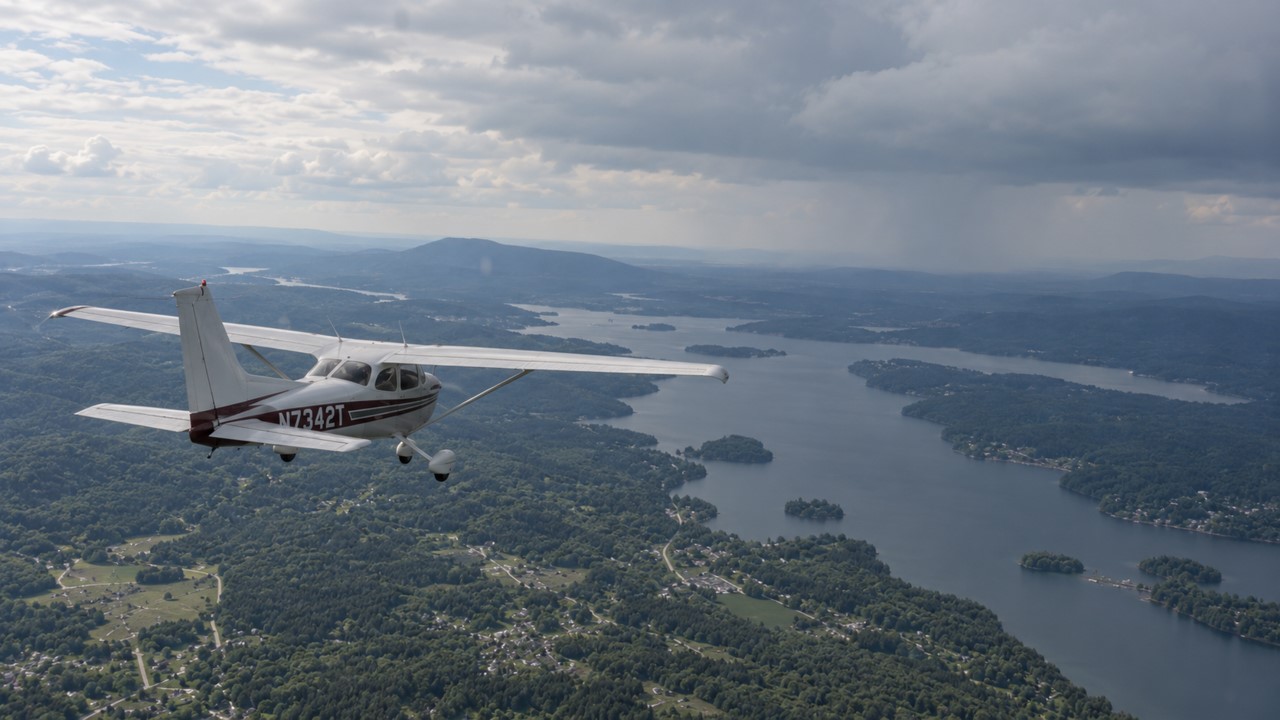

Welcome to the Research and Strategy Services at in today's fast-paced.
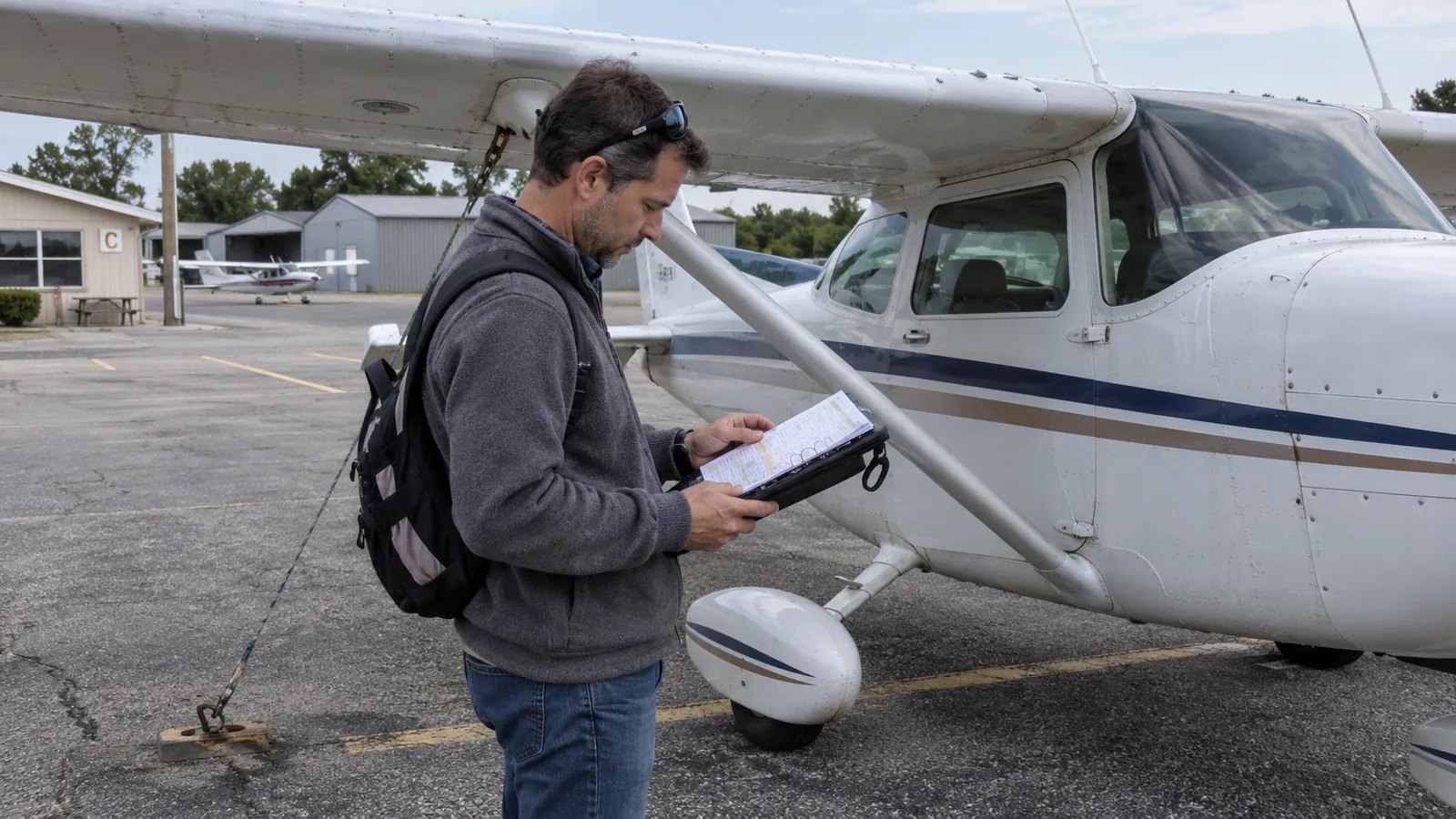
Before every flight, there is a surprising amount of preparation that goes into making sure everything is ready. We check the aircraft, the weather, the route, the airports and all the little details that can make the difference between an enjoyable flight and a difficult one.
But there is another part of that preparation that I think deserves just as much attention: are we, as pilots, actually ready for the flight we're about to undertake?
It sounds like a simple question, but the more I think about it, the more interesting it becomes. We have very structured ways of checking that an aircraft is ready to fly. Understanding whether the person flying it is mentally ready to deal with whatever happens that day is a rather different challenge.
If I'm planning a flight outside my usual local area, I'll generally start preparing the night before. I'll look at the weather, the route, the airports I'm expecting to use and the conditions I might encounter along the way. Depending on the flight, there may also be a flight plan to file and various airspace requirements to consider.
You have to think about much more than simply getting from point A to point B. What are the runway lengths and elevations at your destination? What circuit procedures apply? Are there NOTAMs affecting the airports or airspace you'll be using? Is fuel available where you're planning to land? What are the frequencies, terrain considerations and possible alternatives if something changes?
Weather adds another layer. I'll review the current reports, including METARs, and the forecasts, including TAFs, looking at winds, ceilings, visibility and whatever developing conditions might affect the journey. For longer flights I'll also be thinking about estimated times en route, fuel consumption, suitable altitudes and alternate airports.
A lot of that information ends up on my kneeboard or in my electronic flight bag. If I need to divert, I don't want to be discovering everything about an unfamiliar airport for the first time while I'm already flying towards it. All of this planning has an important purpose beyond simply knowing where you're going. It reduces uncertainty, removes unnecessary decisions and helps you manage the workload that might otherwise arrive while you're in the air.
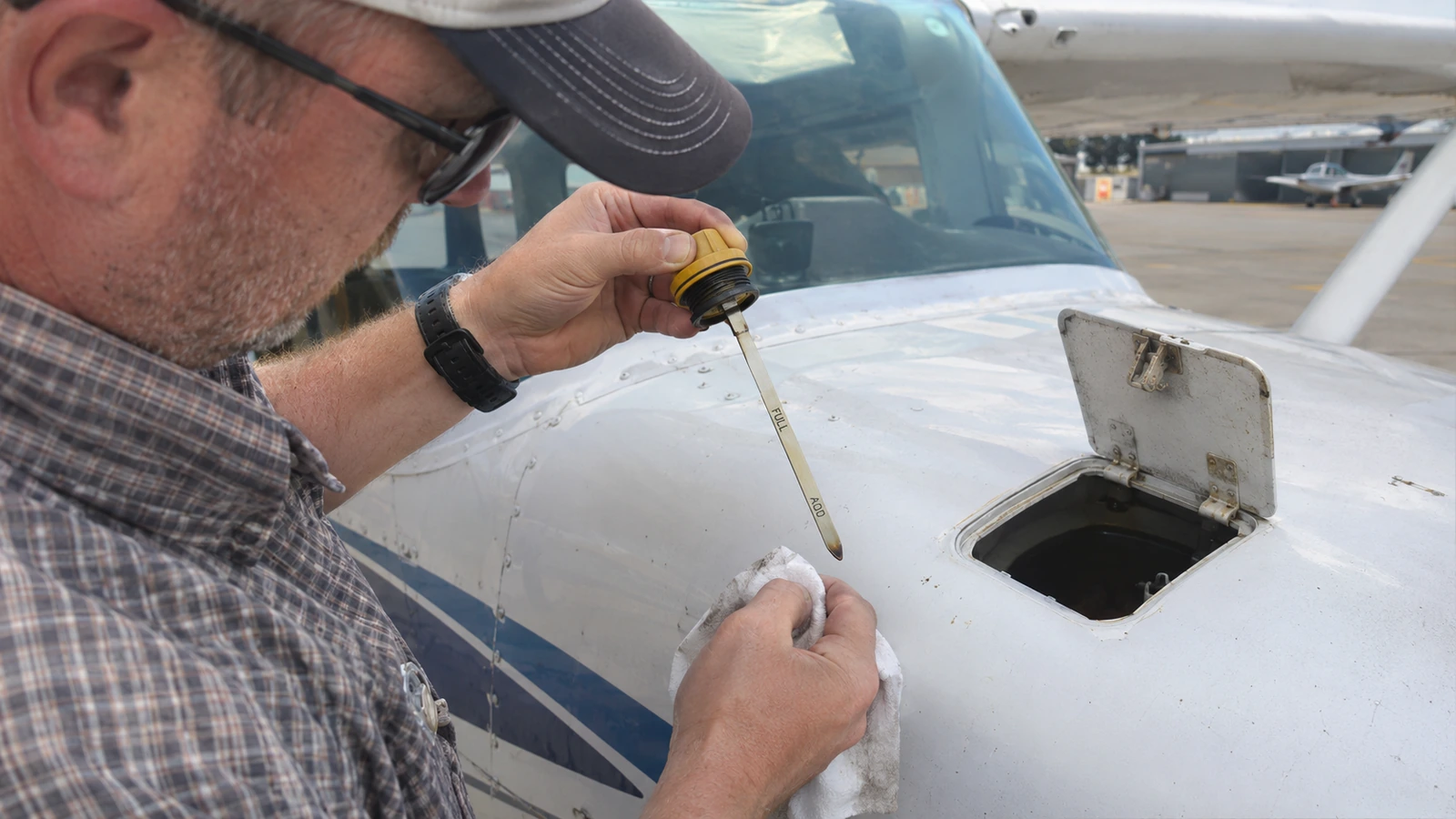
Then there's the aircraft itself. Before getting in, I'm walking around checking the condition of the airplane, inspecting things such as the control surfaces, tires, propeller, air intakes, oil and fuel. If somebody has filled my tanks, I don't simply assume everything is correct because they told me the job was done. I check the fuel myself.
Once inside, there are more checks, including the engine run-up and the systems and configuration checks before takeoff. It's a very disciplined process, and for good reason. Think about how differently we treat our cars. We might drive thousands of kilometres between servicing appointments, while a pilot is inspecting critical parts of the aircraft before every flight.
Yet after all that preparation, there's still one important part of the system that we cannot inspect in quite the same way.
Pilots already have a well-established personal readiness check known as IMSAFE: Illness, Medication, Stress, Alcohol, Fatigue and Emotion. It's a practical way of making us stop and consider whether something in our physical or mental condition could interfere with flying safely.
I think it's an important part of being a responsible pilot. But what interests me is how difficult some of those factors can be to judge accurately, particularly when the effects are subtle. If you're sick for example, you may recognize that something is wrong. If you've had very little sleep, you probably know it. But what about the cumulative effect of a stressful week, concerns about work or finances, a disagreement at home, or simply having too many things competing for your attention?
You might be perfectly accustomed to operating under those conditions. In fact, they may have become so normal that you don't really notice how much mental energy they're consuming.
The problem is that those concerns don't necessarily disappear when you climb into the cockpit. You may be concentrating on navigation or listening to ATC while some part of your attention is still occupied with something unrelated to flying. It's not necessarily enough to cause an obvious mistake, but it may reduce the capacity you have available when something unexpected happens.
And that is where I think readiness becomes particularly interesting.
A flight might be completely routine until you encounter deteriorating weather, an unfamiliar airport, a change in ATC instructions or an equipment problem. Suddenly you have to process new information, revise your expectations and make decisions while continuing to fly the aircraft.
As pilots, we train to handle those situations. But our ability to manage them can also depend on what we're bringing into the cockpit that day.
There's another distinction worth considering. A pilot can be legally qualified, have the appropriate licences and documentation, and still have good reasons to reconsider a particular flight.
Experience and recent practice matter. If I haven't flown for a while, I know I'm going to approach certain things differently than if I've been flying regularly. The same applies when I'm operating somewhere unfamiliar or facing conditions that are closer to the limits of my personal experience.
I remember when I was starting out, how closely I watched the METARs and particularly the winds. A forecast that might concern a relatively inexperienced pilot may be perfectly manageable for somebody with considerably more experience. That confidence develops through training and practice, but it also depends on knowing your own limitations.
Confidence itself is interesting, because it can help us perform, but it can also work against us if we become too committed to a decision we've already made. Perhaps you're supposed to be somewhere at a certain time. Maybe you've spent hours preparing the flight, passengers are expecting to leave, or you've already rearranged your day to make it happen. It's easy to see how those pressures might influence your judgment, even when nothing is forcing you to take off.
One of the most important questions we can ask ourselves is whether we're choosing to fly because we're genuinely ready for the conditions and demands ahead, or because we've become committed to completing the trip.
Being qualified to fly and being ready for this particular flight are not necessarily the same thing.
That distinction also brings us back to the cognitive demands of aviation. A pilot's available attention isn't unlimited, and neither is the time available to make every decision. The more mental resources that are already occupied, the less flexibility there may be when the situation changes.
This is particularly relevant because flying demands more than simply carrying out familiar procedures. We have to monitor, anticipate, communicate and sometimes completely reorganize what we're doing as new information becomes available. Even a well-planned flight can change surprisingly quickly.
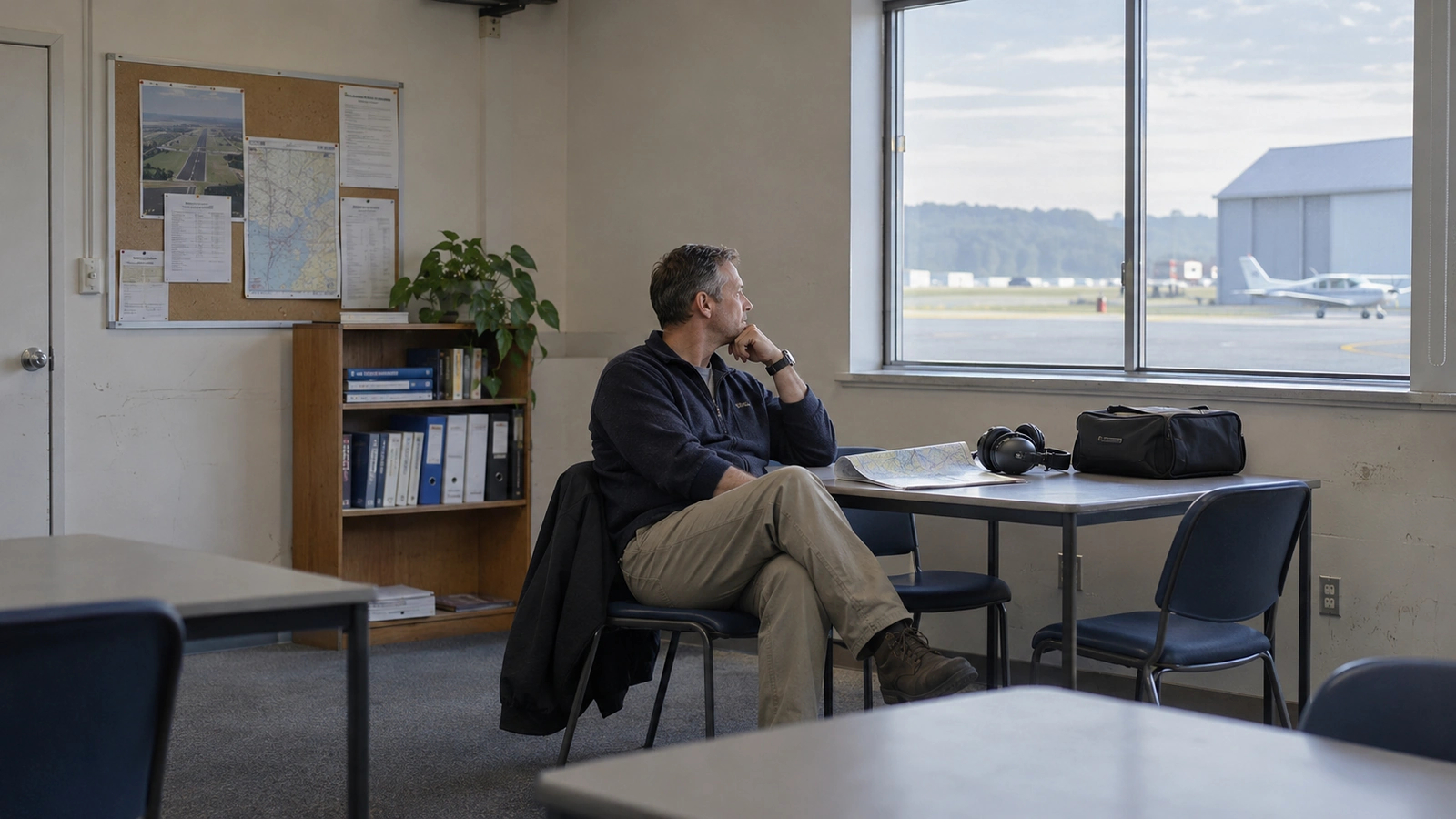
One area I find particularly interesting is whether we can add more objective information to the way we understand our own cognitive performance.
We already measure so many aspects of an aircraft's condition. We monitor fuel, engine performance, electrical systems and all sorts of other variables because having reliable information helps us make better decisions. Naturally, the human side of the equation is much more complex, but I think there's value in exploring what additional measurements might tell us.
One example I've been exploring personally is NeuroTracker, a visual-attention assessment and training task that produces objective performance measurements under increasingly demanding tracking conditions. NeuroTracker has been incorporated into a US Air Force pilot-training initiative, while separate aviation research involving simulated and live jet flights has used the task to investigate the cognitive workload associated with flying. Similar questions about understanding the capabilities of the person operating complex equipment are also being explored in military operational readiness.
For aviation, what interests me is what would make a cognitive readiness assessment genuinely useful to pilots. It would need to be practical enough to complete regularly, provide results that are reliable across repeated assessments and make it reasonably straightforward to understand meaningful changes in individual performance. Most importantly, those changes would need to tell us something useful about the cognitive demands we actually experience when flying.
I'm also interested in the longer-term possibilities. Beyond understanding how we're performing today, could regular assessment and structured cognitive training help us learn more about our individual capabilities and how they change over time? It's an interesting area to explore, particularly when we consider how much aviation already invests in maintaining technical proficiency.
There is a broader principle here that goes beyond any individual technology. The better we understand our own performance, the better equipped we may be to recognize when something deserves attention, whether that's fatigue, stress, insufficient recent practice or simply taking on a flight that is more demanding than we're prepared for.
Most flights, particularly in general aviation, are meant to be enjoyable. That's certainly one of the reasons I fly. We spend time preparing because we want the experience to be safe, manageable and rewarding, not because we expect something to go wrong every time we leave the ground.
But aviation has a way of reminding us that even familiar situations can change. Weather develops, traffic appears where we didn't expect it, plans get amended and occasionally equipment doesn't behave the way it should.
That is why I think assessing our own readiness deserves the same serious attention we give to the aircraft and the flight plan.
Before getting into the cockpit, it's worth asking some difficult questions. Am I properly rested? Is something occupying my attention? Have I maintained the proficiency I need for these conditions? Am I comfortable with the workload this flight may involve? And perhaps most importantly, am I prepared to change my plans or stay on the ground if the answers suggest that I should? There's an old saying among pilots that I've always liked: takeoffs are optional, landings are not.
We spend a great deal of time making sure the aircraft is ready to take off. We should be just as deliberate about understanding whether we're ready to fly it, because a safe flight begins with the condition and judgment of the person making the decision to go.
Welcome to the Research and Strategy Services at in today's fast-paced.

This article explores how aviation demands require recognizing when reality has changed, reorganizing quickly enough to keep pace with it, and doing so without ever stopping the primary task of flying the aircraft.
Pilots don’t just control where the aircraft is — they continuously anticipate where it is heading next. This article explores how prediction, workload management, and future-state awareness help pilots stay ahead of the aircraft.
President of NeuroTracker Scott Kozak provides insights on the fascinating research collaborations happening with the US Air Force.
NeuroTracker is one of the most widely researched cognitive training systems, used in elite sports, military, and human performance settings worldwide. Built on 20 years of neuroscience research.