

Welcome to the Research and Strategy Services at in today's fast-paced.
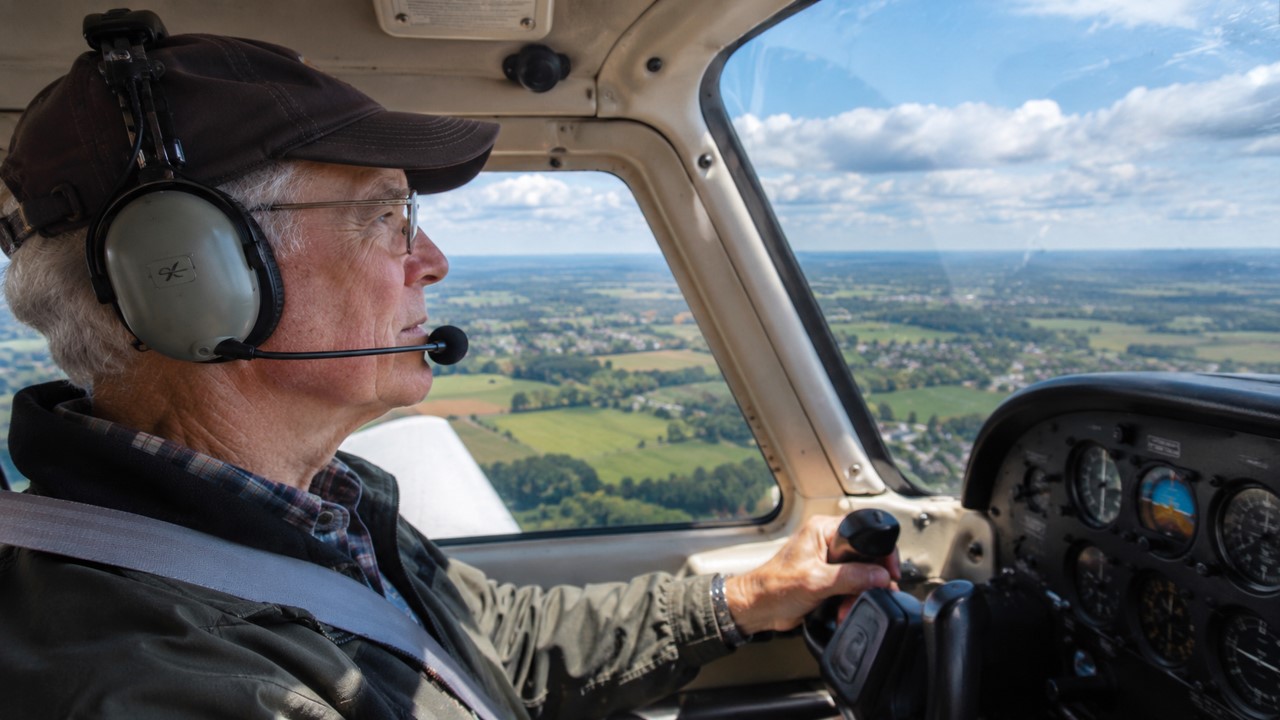
One of the things I love about aviation is that there's always something new to learn. You can have thousands of hours of flying experience and still encounter situations that challenge you, teach you something or change the way you approach your next flight.
I started my own pilot training at 50, a little later in life than many pilots. Perhaps because of that, I've thought quite a bit about what it means to continue flying as we get older.
For someone who has spent decades developing their skills, flying can become a very important part of life. It's not simply about getting from one airport to another. It's the independence, the challenge, the enjoyment and the satisfaction of doing something that requires genuine skill and judgment.
Naturally, most of us want to preserve that ability for as long as possible. But how do we know whether we're maintaining the capabilities we need, and what role does all that accumulated experience play?
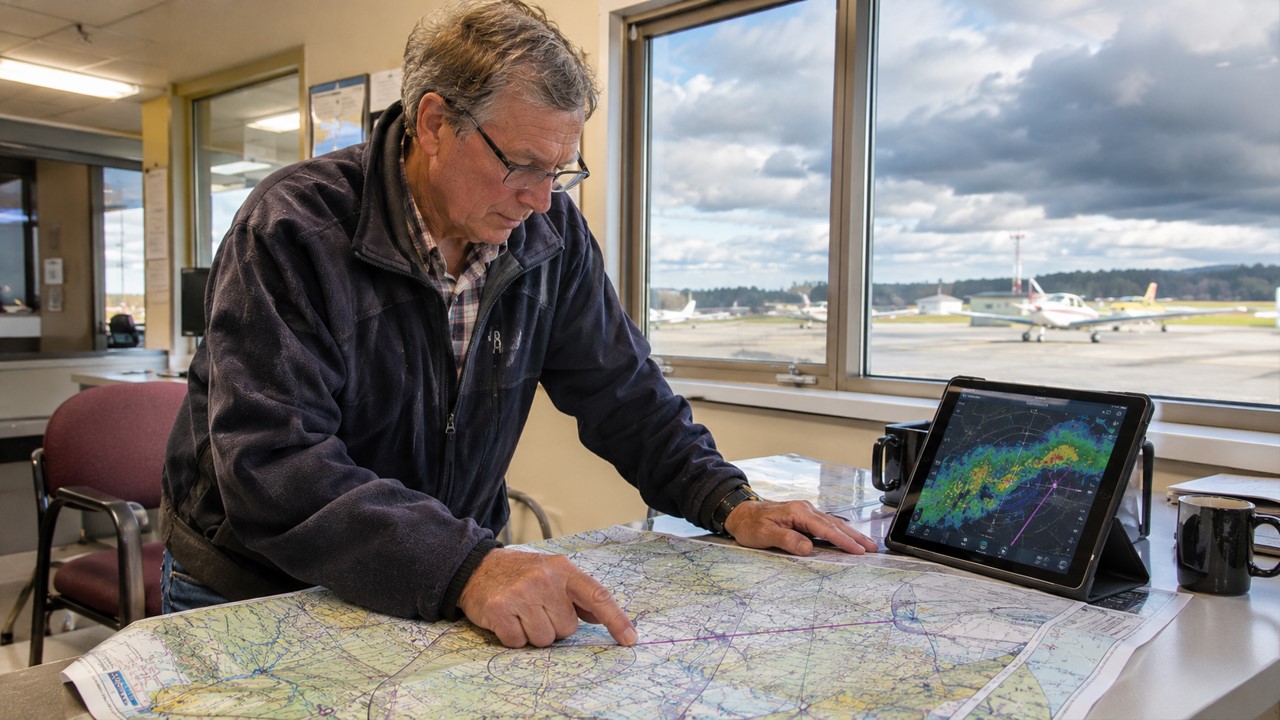
There's something fascinating about watching an experienced pilot handle a situation that might seem overwhelming to somebody relatively new to flying.
A more experienced pilot may recognize a developing problem earlier, know which information matters most and have a clearer understanding of the available options. Familiar procedures become more natural, leaving attention available for other demands.
That's an important advantage because flying isn't just about reacting quickly. It's also about anticipating what's likely to happen next and avoiding situations that become unnecessarily difficult.
Research supports the value of aviation expertise.
A 2007 study published in Neurology followed 118 general aviation pilots aged 40 to 69 over three years. Researchers assessed performance in a flight simulator, including ATC communications, traffic avoidance, instrument monitoring and approaches.
Pilots with more advanced aviation qualifications generally performed better and showed less deterioration in their overall simulator scores over the study period.
What I find particularly interesting is that expertise was more informative than simply counting accumulated flight hours. There is a difference between having flown a lot and having developed a broader range of skills through demanding training and experience.
That seems very relevant to how we think about remaining capable as pilots. The experience we've accumulated is valuable, but continuing to develop it may be just as important.
Of course, experience doesn't mean that age becomes irrelevant.
Flying requires us to plan in detail, process information, maintain situational awareness, remember instructions, monitor instruments and make decisions while circumstances continue changing.
Some of the cognitive abilities supporting those activities can change as we age. Processing speed, attention and executive functions—the abilities involved in organizing information, shifting between demands and controlling decisions—are particularly relevant.
But those changes don't occur uniformly, and they don't automatically translate into the same effects on flying performance.
A 2011 longitudinal study of aviators found that measures of processing speed and executive function helped predict how pilots performed in simulator assessments over time. Aviation expertise remained important, but it wasn't the only factor influencing performance.
Another study examining aviation decision-making and flight control found a similarly complex relationship. Involving 72 instrument-rated pilots, researchers examined decision-making and aircraft control in simulated approaches and holding patterns. Older pilots were more likely to choose to land when visibility was inadequate, while higher levels of aviation expertise helped offset age-related differences in holding-pattern control. It's an interesting distinction: experience may help preserve certain flying skills without necessarily protecting every aspect of judgment under challenging conditions.
Consider the demands of flying into an unfamiliar airport with complex airspace, receiving amended instructions from ATC or learning an updated avionics system. Experience may help you recognize what's important, but you still need sufficient attention and flexibility to manage the information arriving in real time.
An experienced pilot can have excellent judgment while finding certain information-processing demands more challenging than they once did. Equally, a pilot who is getting older may continue performing extremely well because of their knowledge, proficiency and established habits.
The objective should be to understand the individual rather than make assumptions based simply on age.
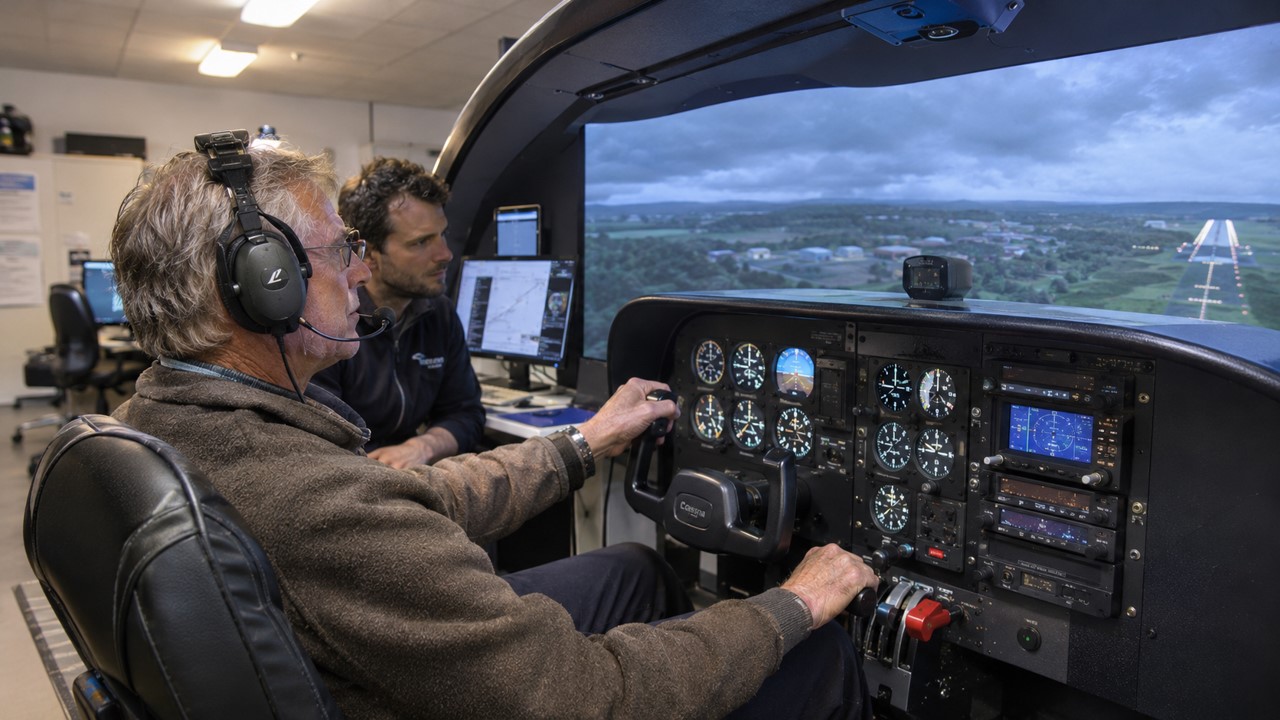
I think one of the best things pilots can do as they get older is resist the temptation to rely entirely on what they already know.
I'm currently extending my own flying experience through additional training, including my night rating and instrument flying. One of the things I appreciate about training is that it exposes you to new situations and makes you work on skills that may not get challenged during familiar local flights.
I also like flying with different instructors. Everyone has slightly different experiences and ways of explaining things, and occasionally somebody will challenge a habit or assumption that you've carried for years.
That can be extremely valuable, regardless of age.
Recurrent training and scenario-based simulation offer similar opportunities. Instead of simply repeating procedures we already know, we can practise unfamiliar situations, refine decision-making and identify areas where additional work would help.
There's another practical aspect that I think deserves attention: adapting our personal operating minimums.
Every pilot should understand the conditions they're comfortable handling. That might involve crosswinds, visibility, unfamiliar airports, challenging terrain or the length of a particular flight.
Those personal limits don't have to remain fixed throughout our flying lives. We can adjust them as our experience develops, our proficiency changes or the demands of a particular flight become more challenging.
For example, choosing shorter legs on a longer journey, flying with another qualified pilot or allowing more generous weather margins may make good operational sense.
I don't see those decisions as giving something up. I see them as examples of good judgment.
Alongside practical training, I'm interested in whether we can develop a better understanding of our cognitive performance over time.
Pilots already invest considerable effort in maintaining their aircraft, updating equipment and keeping their qualifications current. It seems reasonable to take a similarly proactive interest in the human capabilities involved in flying.
One technology I've personally been exploring is NeuroTracker, a visual-attention assessment and training task that provides repeatable measurements of performance under demanding tracking conditions. What interests me is the possibility of using structured and quickly repeatable cognitive measures to better understand individual performance patterns over time, alongside practical aviation training and established assessments.
For that kind of approach to be useful in aviation, measurements would need to be reliable, interpretable and meaningfully related to the demands pilots experience in the cockpit.
It's an area worth exploring, particularly as we learn more about how cognitive performance, accumulated expertise and continued training interact throughout our flying lives.
I think there's a positive way to approach ageing as a pilot.
We don't have to assume that getting older means steadily losing the ability to do something we love. Equally, we shouldn't assume that years of experience automatically protect us from every change in our capabilities.
The more useful approach is to remain curious about our own performance, continue developing our skills and make thoughtful adjustments when circumstances call for them.
For me, aviation has always been about learning, exercising judgment and taking responsibility. Those qualities become no less important as we get older.
Ultimately, the goal isn't simply to keep flying for as many years as possible. It's to keep flying well, with the skills, awareness and judgment that allow us to continue enjoying aviation safely and confidently.
Welcome to the Research and Strategy Services at in today's fast-paced.

Pilots carefully check their aircraft, weather and flight plans before departure. But how do they assess their own readiness? John McMahon explores how attention, fatigue and personal circumstances can influence the decision to fly.
This article explores how aviation demands require recognizing when reality has changed, reorganizing quickly enough to keep pace with it, and doing so without ever stopping the primary task of flying the aircraft.
Pilots don’t just control where the aircraft is — they continuously anticipate where it is heading next. This article explores how prediction, workload management, and future-state awareness help pilots stay ahead of the aircraft.
NeuroTracker is one of the most widely researched cognitive training systems, used in elite sports, military, and human performance settings worldwide. Built on 20 years of neuroscience research.