



Welcome to the Research and Strategy Services at in today's fast-paced.
Brain fog can feel frustrating. You may struggle with focus, forget words mid-sentence, feel mentally slow, or find it hard to multitask. Many people turn to brain training apps hoping for clearer thinking.
But one big question remains:
Are free brain fog apps enough, or is premium worth paying for?
Let’s break this down clearly and honestly — focusing on real problems, real expectations, and practical solutions.
Brain fog is not a medical diagnosis. It is a symptom. People describe it as:
Brain fog can happen due to stress, lack of sleep, hormonal shifts, thyroid issues, burnout, post-viral recovery, screen overload, or aging.
An app alone cannot “cure” brain fog. But structured cognitive training may help support attention, processing speed, and working memory — which are often affected when people feel foggy.
That is where brain training apps come in.
Most free brain apps provide:
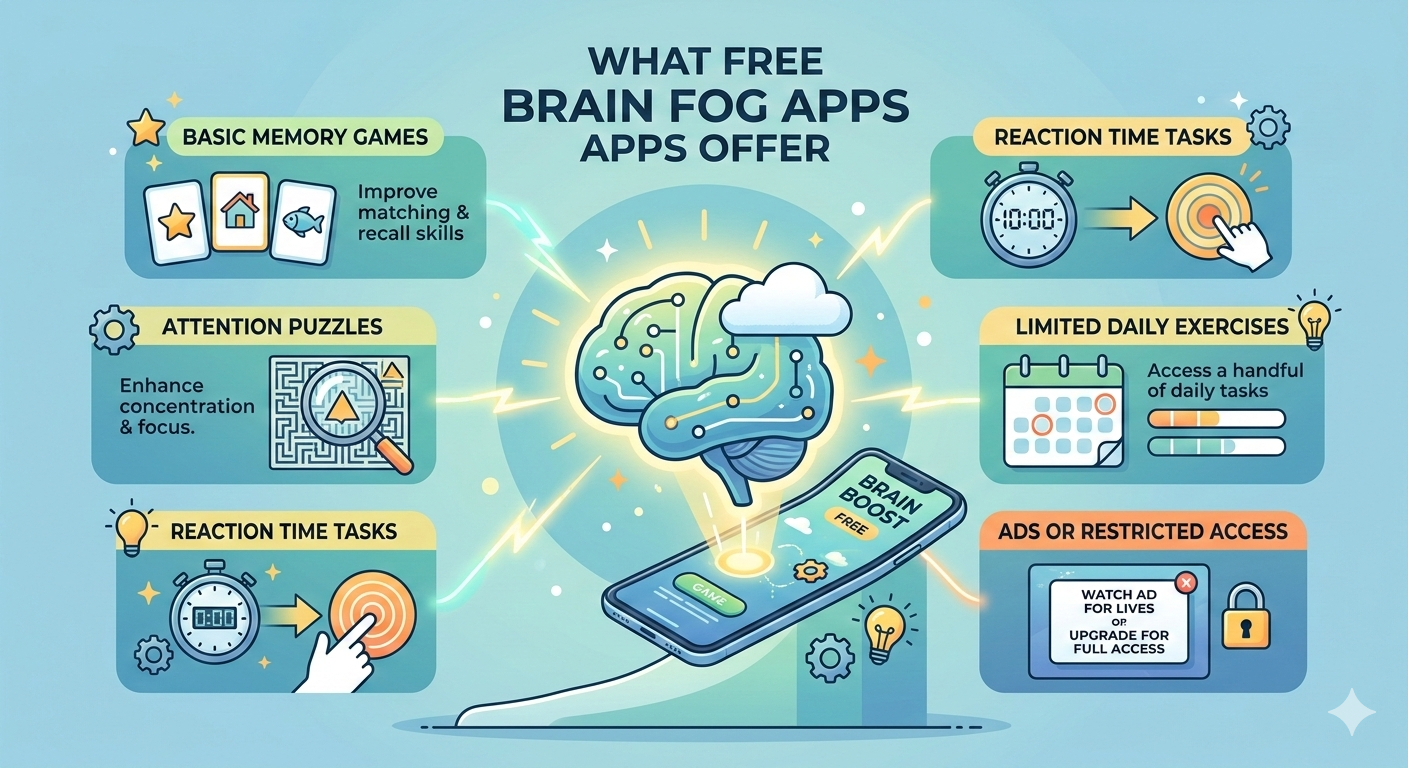
Examples include:
If your goal is to simply “wake up your brain” for 5–10 minutes a day, free versions can be helpful.
Many free apps train you to get better at the game itself — not necessarily at real-life focus or clarity.
If your brain fog feels mild and occasional, free apps may be enough.
If your fog feels persistent, frustrating, or performance-limiting, you may need something more structured.
Premium subscriptions usually unlock:
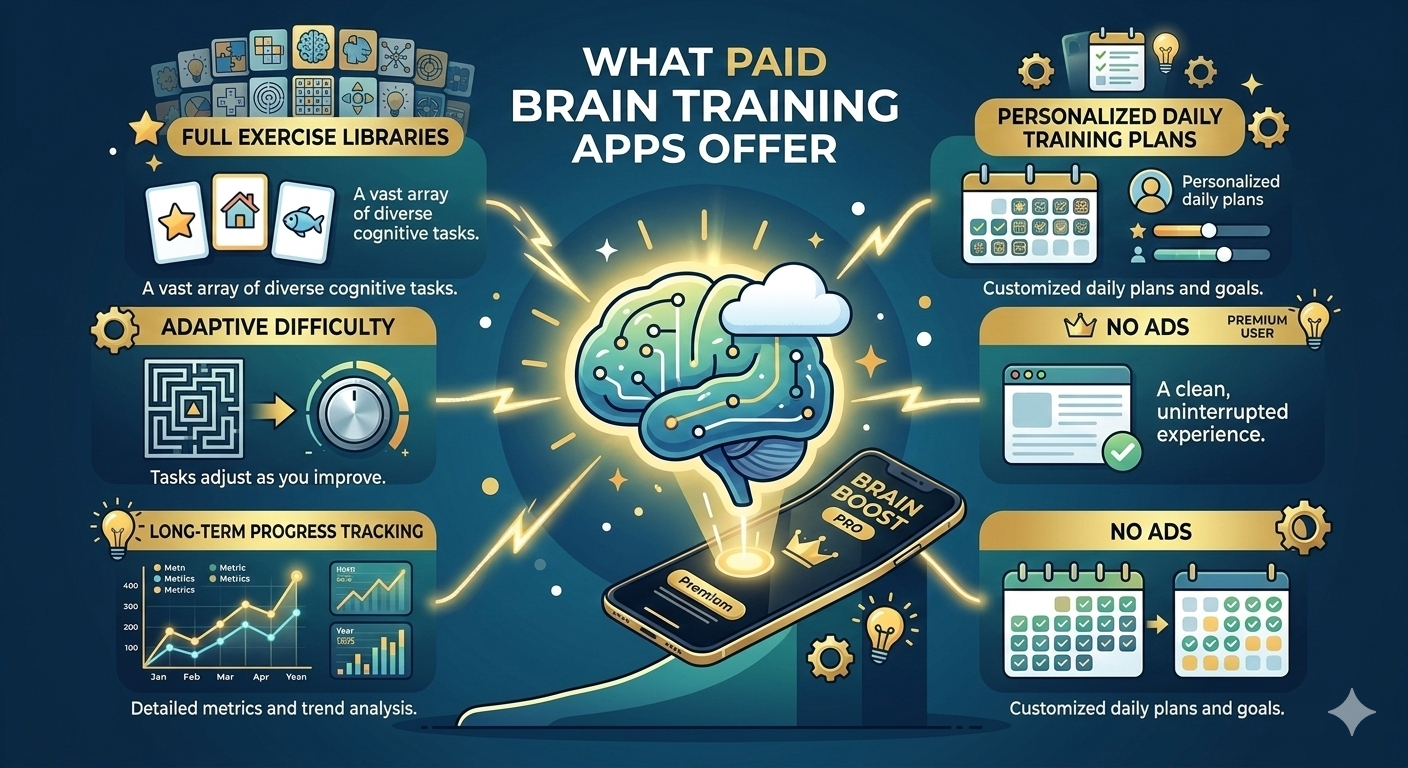
The key advantage is structure and consistency.
Research in cognitive science suggests that improvement is more likely when training is:
Premium plans are designed to encourage that structure.
But not all premium apps are equal.
Among brain training tools, NeuroTracker is different from traditional puzzle-based apps.
Instead of mini-games, it uses 3D multiple object tracking — a task where you track several moving objects in space at once.
This challenges:
These are the same systems many people feel are weak when experiencing brain fog.
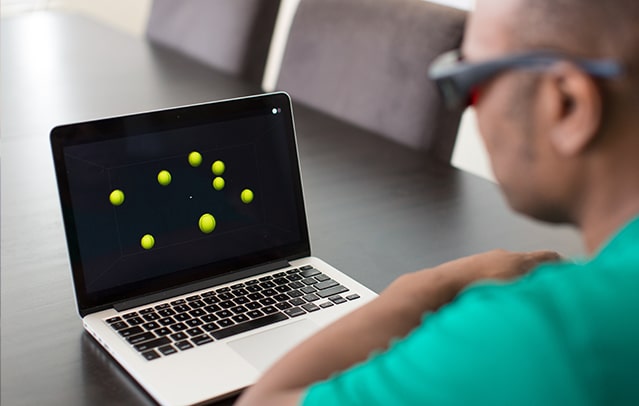
Unlike casual brain games, NeuroTracker:
It trains your ability to manage multiple pieces of information simultaneously — something that feels difficult during brain fog.
NeuroTracker has been used in performance settings such as sports, clinical environments, and cognitive research. That suggests it was designed with serious cognitive demands in mind.
Sessions are typically short (around 6 minutes), but cognitively demanding. This may help improve mental stamina over time when done consistently.
The system adjusts based on your performance. This keeps the brain challenged — which is important for potential improvement.
While it is not a medical treatment, NeuroTracker’s structured and research-aligned approach may offer deeper cognitive engagement compared to casual brain games.
Free brain apps may be enough if:
Consistency matters more than price.
Premium may be worth considering if:
In these cases, a more serious cognitive training system like NeuroTracker may align better with your goals than casual puzzle apps.
If you are experiencing persistent brain fog, also consider:
Brain training works best as part of a broader lifestyle approach.
Here is the honest answer:
It depends on your goals.
If you want entertainment and light mental activity → free apps are fine.
If you want structured cognitive training that targets attention and processing speed more directly → premium tools, especially NeuroTracker, may offer more value.
The most important factor is not price.
It is:
✔ Consistency
✔ Challenge level
✔ Real cognitive engagement
✔ Tracking measurable progress
Brain fog can feel discouraging, but improvement is often gradual.
Free apps are a good starting point.
Premium apps offer structure.
NeuroTracker offers a more focused, research-informed approach that may better target attention and mental clarity systems compared to casual brain games.
No app is magic.
But the right tool, used consistently, may support clearer thinking over time.
Welcome to the Research and Strategy Services at in today's fast-paced.
Healthy aging isn’t only about what changes with age, but also what capacity remains to adapt. This article explores how NeuroTracker research suggests cognitive adaptability remains surprisingly high in older adults.
The brain and body are often treated as separate systems, but NeuroTracker research suggests they are deeply connected. This review explores how perception, decision-making, attention, and movement interact across sport, driving, aging, fatigue, and motor performance.
Learn about an 11 year old boy's inspiring achievements using NeuroTracker training for sports and educational performance.
NeuroTracker is one of the most widely researched cognitive training systems, used in elite sports, military, and human performance settings worldwide. Built on 20 years of neuroscience research.