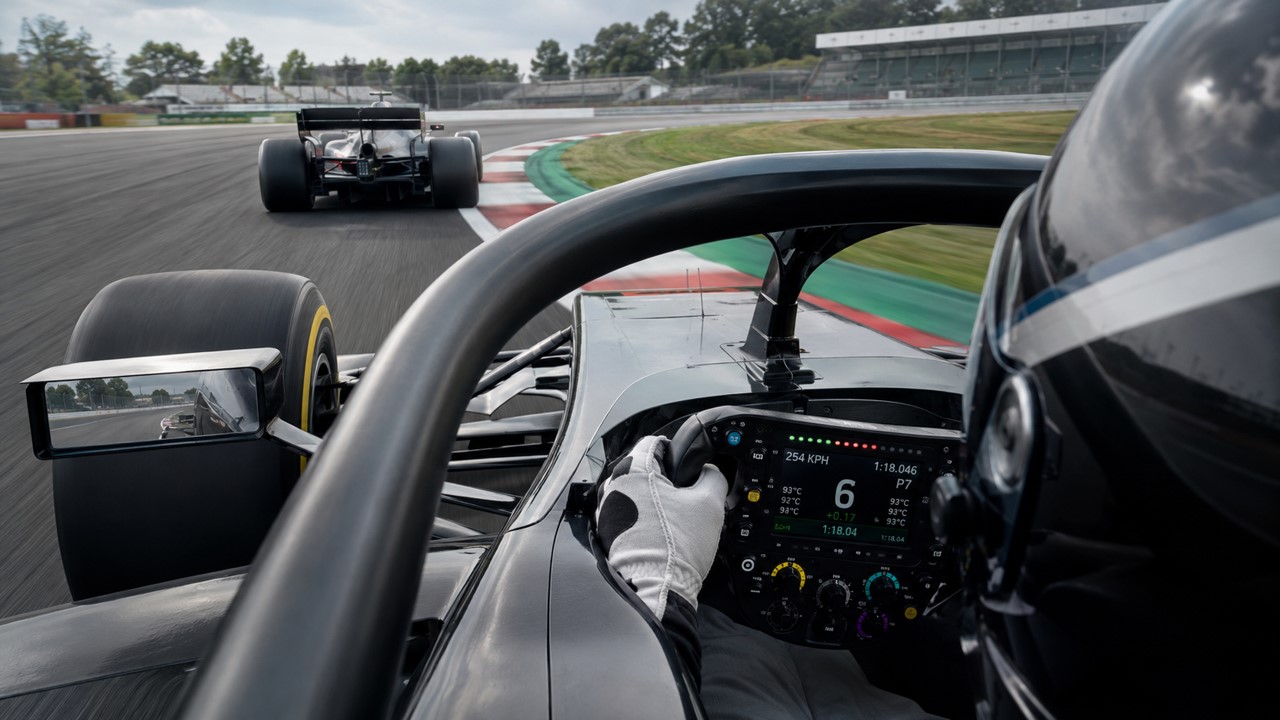



Welcome to the Research and Strategy Services at in today's fast-paced.
In a recent French television feature following the preparation of World Rally Championship (WRC) driver Adrien Fourmaux, viewers were given a rare look behind the scenes of modern rally training. Among the physical conditioning and endurance work, one element stood out: structured perceptual-cognitive training designed to support sustained focus during long, high-pressure stages.
In the interview, Fourmaux described a challenge that is rarely discussed publicly in motorsport — not speed, not reflexes, but attention endurance.
“There were moments during a stage where I would lose the thread… I had difficulty taking in all the information my co-driver was giving me through the pace notes. Now I can complete a 20-minute stage and I don’t have that issue of losing the thread anymore.”
This shift points to an important reality in elite rally performance: success is not only mechanical or technical. It is deeply cognitive.
France 3 Hauts-de-France feature following Adrien Fourmaux’s rally preparation, highlighting the physical and cognitive demands of elite WRC performance (in French):
Motor racing places extreme demands on mental focus and information processing — particularly the ability to maintain stable attention under sustained cognitive load, sometimes described as attention endurance in elite rally preparation.
Unlike circuit racing, rally stages unfold over long, unpredictable environments where drivers must continuously:
All of this happens while operating under significant physiological stress.
Fourmaux explains that in difficult moments his heart rate can rise to 160–180 beats per minute, levels more often associated with intense physical exertion than seated performance. Under these conditions, cognitive control becomes more fragile. Even small lapses in attention can lead to delayed processing of pace notes or missed environmental cues.
Drivers must process vast amounts of information in fractions of a second, while also maintaining stable focus over sustained periods — a challenge often linked to attention endurance in high-level rally performance.
This is not a problem of effort. It is a matter of mental load tolerance. These conditions are characteristic of Sustained Cognitive Load in High-Stakes Decision Environments, where performance must be maintained continuously under consequence.
This pattern also reflects broader principles of Cognitive Performance Under Load, where sustained demand over time alters performance dynamics even when underlying ability remains unchanged.
Fourmaux’s description of “losing the thread” reflects a known cognitive phenomenon: attentional fatigue under sustained multi-source input. When visual, auditory, and decision demands accumulate, the brain’s ability to maintain stable focus can fluctuate.
His account of now being able to complete a full 20-minute stage without that loss of focus signals a different capacity — attention endurance. This refers to the ability to:
In modern motorsport, these qualities are becoming as trainable — and as important — as physical endurance.
To address these demands, some elite drivers integrate perceptual-cognitive training into their preparation. A key method used in this domain is 3D Multiple Object Tracking (3D-MOT) — a task designed to challenge attention control under dynamic visual load.
In this type of training, athletes must track several moving targets simultaneously in a 3D space, requiring:
When combined with additional task elements or physiological load, the training can reflect the dual-task nature of rally driving, where drivers must manage both external visual demands and internal stress responses.
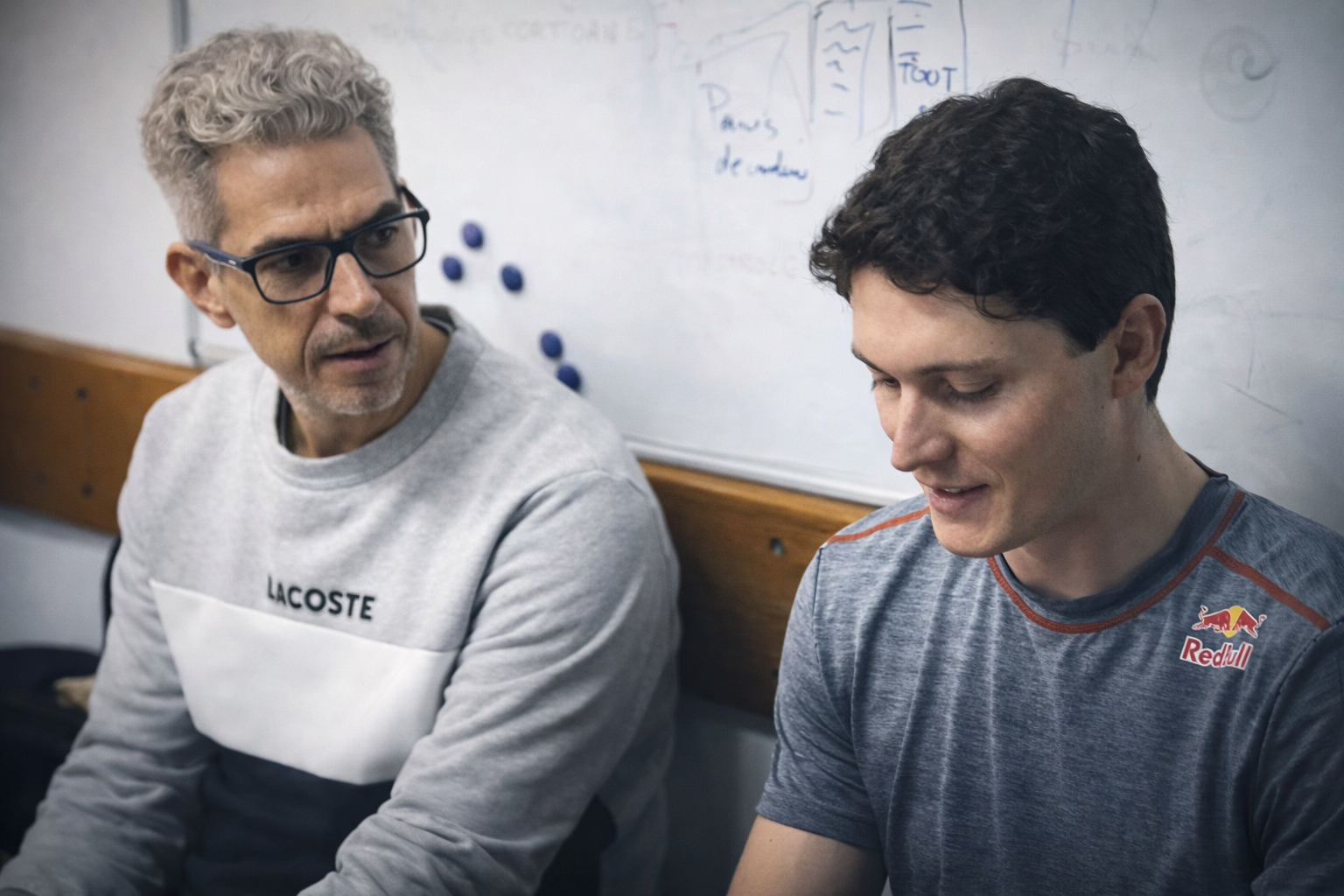
Fourmaux’s preparation in this area is guided by Julien Southon, a sports psychologist and cognitive performance specialist who works with drivers at the elite level of motorsport, focusing on the perceptual and attentional demands unique to racing environments.
According to Southon, the objective of this work is not to change how a driver steers or brakes, but to strengthen the mental capacities that support consistent execution under load.
“At the highest level, drivers don’t struggle because they lack skill. The challenge is maintaining stable attention while processing multiple streams of information under stress. That’s where perceptual-cognitive training becomes relevant — it helps athletes build the ability to stay mentally controlled when the environment becomes complex.”
Southon emphasizes that rally driving places exceptional demands on sustained attention compared to many other forms of motorsport.
“In rally, the driver is continuously integrating visual input from the road with pace notes, while also adapting to changing surfaces and car feedback. Over long stages, this creates cognitive fatigue. Training attention endurance helps reduce the likelihood of attentional drift in those moments.”
The focus, he explains, is on developing tolerance for mental load, not chasing short-term performance boosts.
“We’re working on cognitive stability — the capacity to maintain focus late into demanding efforts. Small lapses can come from mental fatigue, not from a lack of driving ability. Building attention endurance supports consistency.”
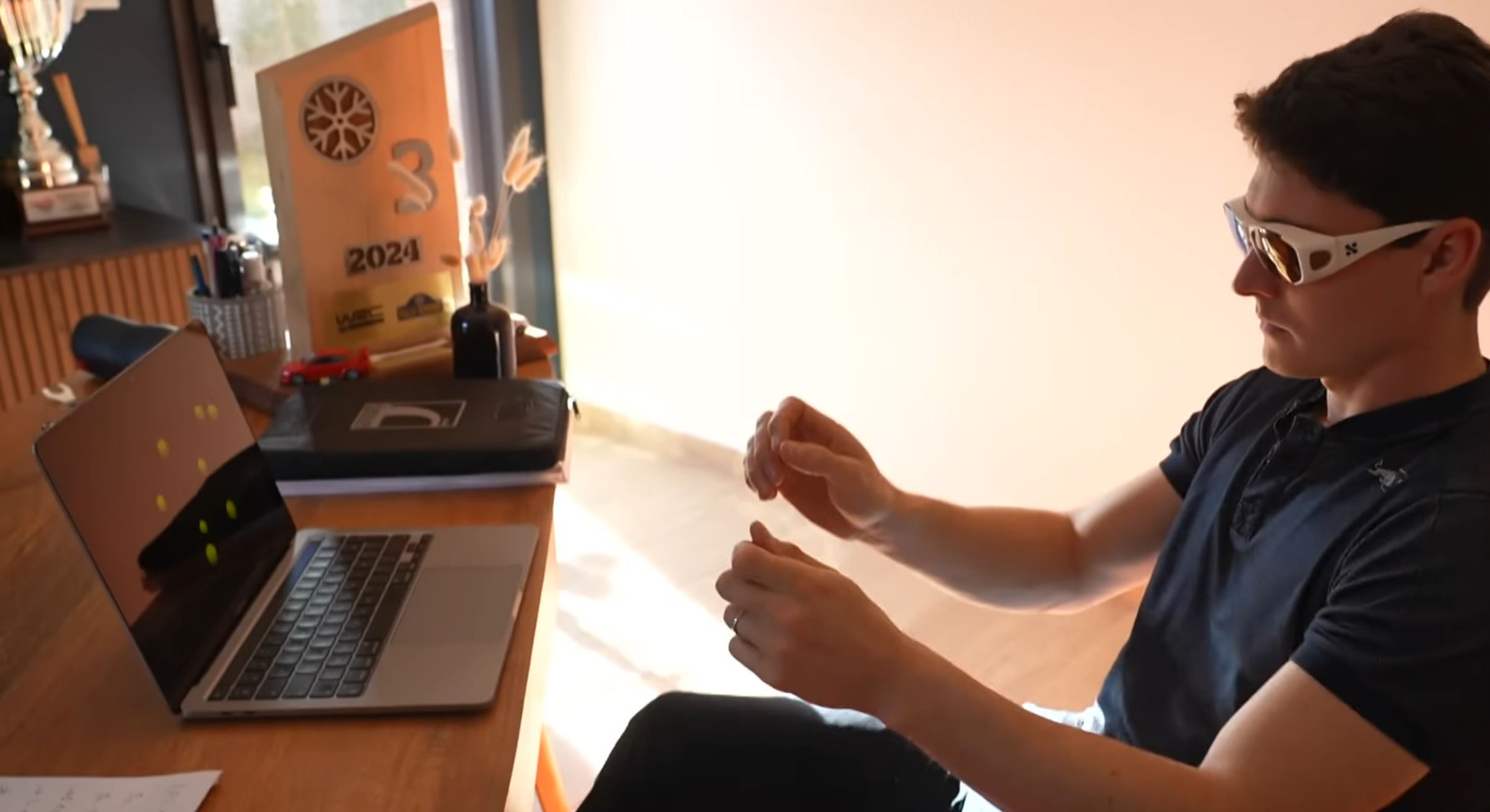
In the televised feature, Fourmaux is seen performing 3D-MOT tasks using the NeuroTracker platform, a system widely used in elite performance environments to implement this type of perceptual-cognitive training. Wearing 3D glasses, he tracks multiple moving targets on screen — a drill that directly challenges the attentional control required during rally stages.
This does not replace technical, physical, or strategic training. Instead, it adds a layer aimed at supporting the brain’s ability to manage sustained complexity.
As competition margins narrow, modern motorsport is moving beyond traditional preparation models. Physical conditioning remains critical. So does technical refinement. But the cognitive layer — attention stability, information processing under stress, and mental endurance — is increasingly recognized as part of the performance system.
Fourmaux’s description of moving from “losing the thread” to completing full stages with stable focus offers a window into this evolution. It reflects not a single tool, but a broader shift toward treating cognitive capacity as a trainable component of elite performance.
For rally drivers operating at the edge of control for extended periods, that shift may prove just as important as horsepower or setup.
Welcome to the Research and Strategy Services at in today's fast-paced.
At Formula 1 speeds, performance depends on far more than fast reactions. This article explores how elite drivers prioritize information, anticipate what comes next, and continuously update the race at extreme speed.
Elite tennis returners do more than react quickly — they extract useful information before the ball is even struck. This article explores how anticipation, body cues, and rapid updating help players solve the return before the serve fully unfolds.
Elite athletes don’t need to look directly at everything to stay aware of a fast-changing play. This article explores how gaze and attention work together to monitor movement, spacing, and opportunity across the wider visual field.
NeuroTracker is one of the most widely researched cognitive training systems, used in elite sports, military, and human performance settings worldwide. Built on 20 years of neuroscience research.