

Welcome to the Research and Strategy Services at in today's fast-paced.
When performance shifts in physically or perceptually restricted settings, the change is often attributed to reduced ability. Slower adjustments, simplified strategies, or increased error rates may be interpreted as signs of diminished cognitive capacity.
However, an alternative explanation may be structural.
Reduced action range represents one specific form of environmental constraint in which the physical or perceptual boundaries of a task narrow the set of executable responses. The individual’s knowledge, reasoning ability, and motivation may remain intact, yet the available space for action contracts.
The observable shift reflects reduced functional range, not reduced competence.

Reduced action range occurs whenever external boundaries limit movement, perception, or interaction. This may involve restricted visual field, limited maneuverability, constrained interaction zones, or reduced access to certain environmental cues.
Under less restricted conditions, an individual may:
When boundaries tighten, many of these options become unavailable. Strategies that depend on wider movement or extended perception cannot be executed.
The solution space contracts in physical or perceptual terms.

A central interpretive error occurs when restricted action space is mistaken for reduced cognitive capacity.
Under reduced action range:
Yet observable performance may change.
Corrective maneuvers that would normally compensate for minor errors may no longer be possible. Certain perceptual cues may be inaccessible. Alternative strategies may exist conceptually but cannot be implemented within the imposed boundary.
This does not necessarily indicate cognitive decline. It reflects structural restriction of functional range.

Reduced action range can occur within stable and predictable systems. The rules governing interaction may be clear, and the mapping between action and outcome may remain consistent.
What changes is not reliability but latitude.
The individual operates within narrower physical or perceptual limits. Even when internal models are accurate, performance must conform to the available range of execution.
The constraint lies in what can be enacted, not in what can be understood.
When action range contracts, internal processing may reorganize. Attention may concentrate on fewer available cues. Adjustment strategies may become more conservative. Exploration may decrease because broader alternatives cannot be physically implemented.
These secondary effects arise from structural restriction rather than diminished cognitive resources.
The system adapts to fit the available range.
Reduced action range is not inherently harmful. Defined boundaries can increase predictability, reduce variability, and prevent overextension. In some systems, limiting maneuver range supports stability and coordination.
At the same time, reduced latitude may limit adaptability or exploratory depth.
The imposed boundary reshapes performance, but it does not define capacity.
Performance changes observed under spatial or perceptual restriction should be interpreted in light of structural constraints.
Altered response patterns, simplified strategies, or reduced adjustment capacity may reflect adaptation to narrowed functional range rather than reduced ability. Distinguishing between reduced action space and reduced capacity prevents misattributing environmental limits to personal weakness.
This pattern reflects the broader principles described in Cognitive Performance Under Environmental Constraint, where externally imposed boundaries reduce degrees of freedom and reshape how performance is expressed.
Welcome to the Research and Strategy Services at in today's fast-paced.
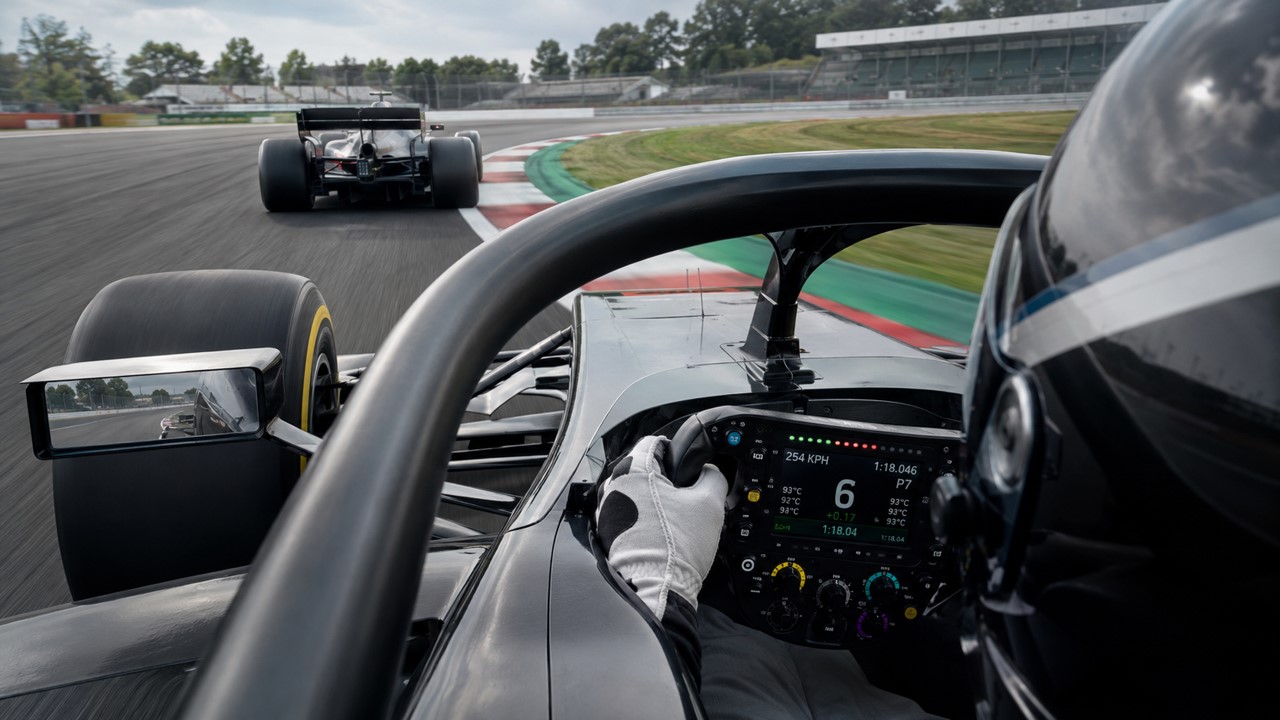
At Formula 1 speeds, performance depends on far more than fast reactions. This article explores how elite drivers prioritize information, anticipate what comes next, and continuously update the race at extreme speed.
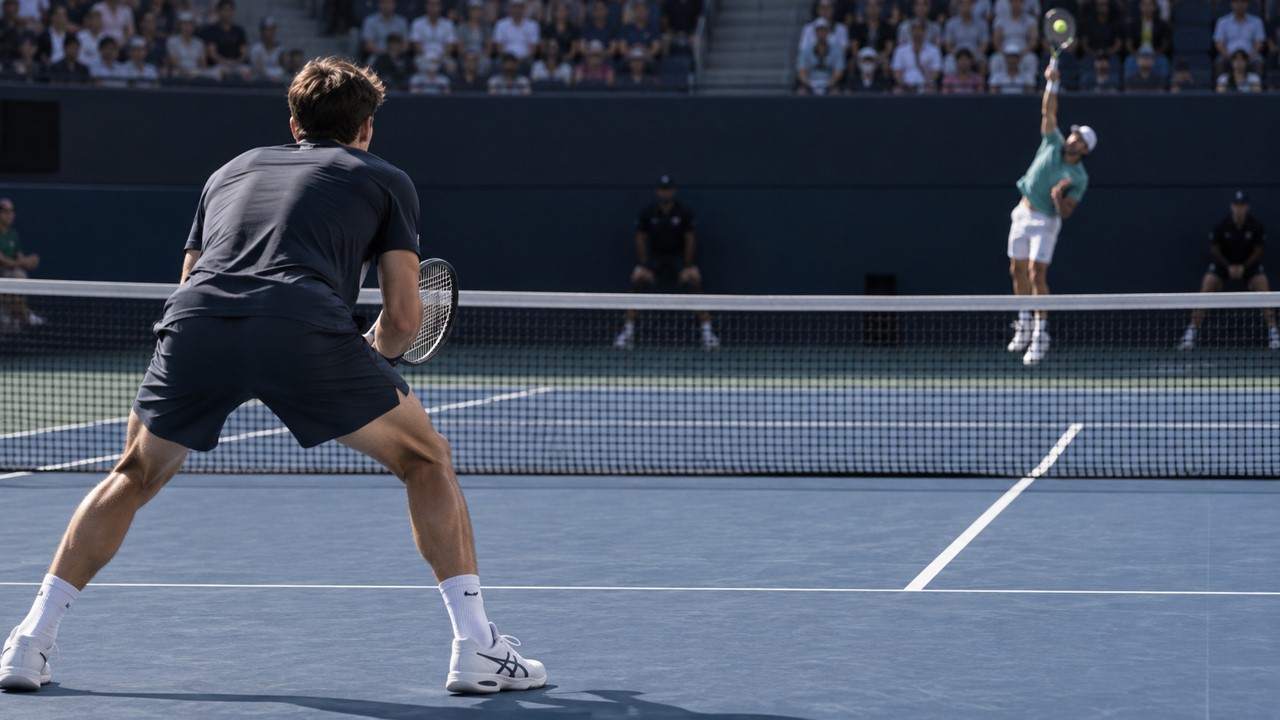
Elite tennis returners do more than react quickly — they extract useful information before the ball is even struck. This article explores how anticipation, body cues, and rapid updating help players solve the return before the serve fully unfolds.
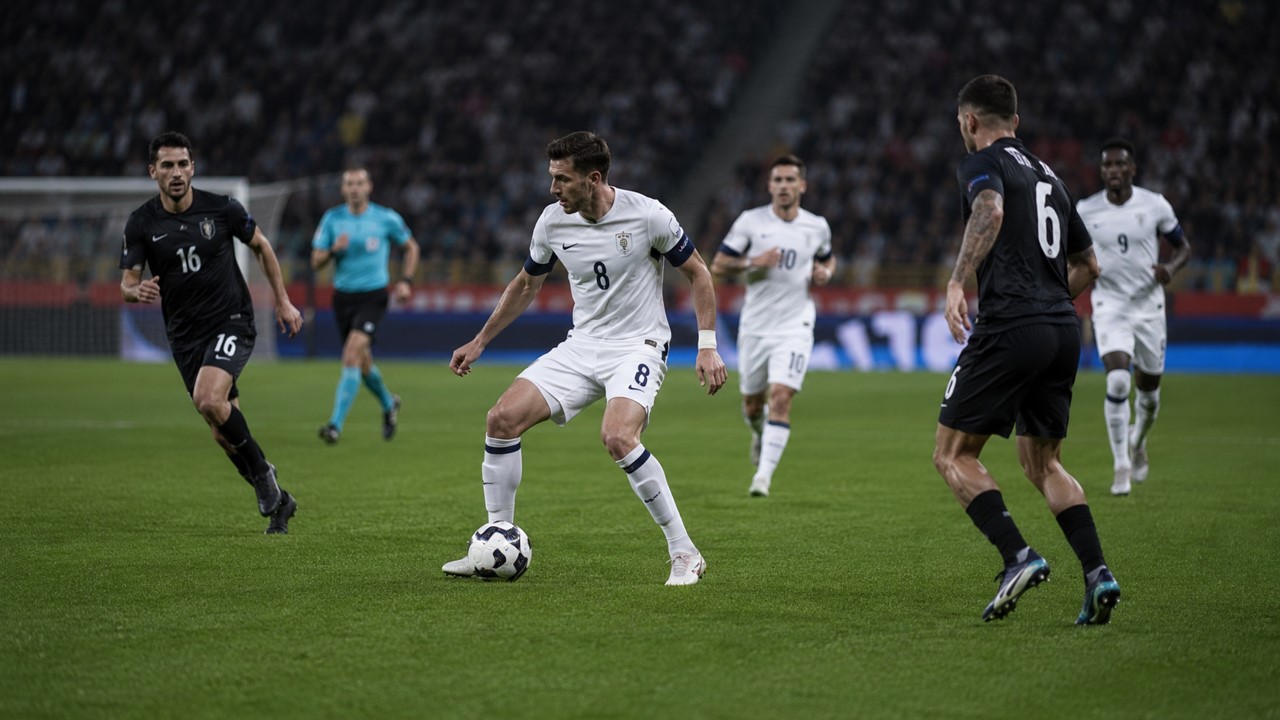
Elite athletes don’t need to look directly at everything to stay aware of a fast-changing play. This article explores how gaze and attention work together to monitor movement, spacing, and opportunity across the wider visual field.
NeuroTracker is one of the most widely researched cognitive training systems, used in elite sports, military, and human performance settings worldwide. Built on 20 years of neuroscience research.