


Welcome to the Research and Strategy Services at in today's fast-paced.
Many people experience noticeable fluctuations in cognitive performance across a full workday. Periods of clarity and effectiveness may be followed by moments of slowed thinking, reduced focus, or increased error, even when motivation and effort remain unchanged.
These fluctuations are often interpreted as lapses in ability, discipline, or energy. In reality, they reflect predictable performance dynamics that emerge under sustained cognitive demand.
This article explains why cognitive performance can feel inconsistent across long workdays, and how these changes arise even when underlying capacity remains stable.
Work environments often assume that cognitive performance is relatively constant throughout the day. If someone can perform well in the morning, it is expected that similar performance should be maintained later, provided effort is sustained.
This assumption treats cognitive capacity as static and interchangeable across time.
Under sustained cognitive demand, this assumption does not hold.

As tasks extend over hours rather than minutes, new constraints emerge.
Across a long workday:
These conditions alter how cognitive capacity is expressed. Performance becomes shaped not only by ability, but by how long demands have already been sustained.
This reflects the cumulative effects of cognitive load and the way recovery unfolds over time rather than instantly.
Performance changes across the day are often mistaken for randomness or inconsistency. In practice, they follow recognizable patterns.
Under sustained demand:
These shifts reflect cumulative demand and adaptive strategy, not loss of skill or focus.
Understanding what normal cognitive variability looks like can help put these fluctuations into context.
As demands accumulate, individuals often adjust how they perform.
These adjustments may include:
From the outside, such changes may appear as reduced performance. In context, they often represent adaptive responses to sustained cognitive load rather than deterioration.

A common assumption is that brief breaks or pauses restore cognitive performance to an earlier baseline.
While short breaks may relieve immediate strain, they do not erase accumulated demand. Performance after a break continues from the system’s current state rather than restarting from the beginning.
This is why performance can feel inconsistent even when rest is intermittently available.

Because short breaks do not fully reset performance under sustained cognitive load, people often adapt by altering how long or how intensely they engage with cognitively demanding work.
Common adaptations include:
These adjustments are rarely conscious performance strategies. More often, they reflect practical responses to how cognitive performance behaves over time under continuous demand.
Such adaptations do not eliminate performance fluctuations. They reflect an intuitive recognition of sustained cognitive constraints rather than a failure of effort or discipline.
In many cases, environmental constraints also shape how performance is expressed, independently of actual cognitive capacity.
These everyday performance fluctuations are best understood through the framework of Cognitive Performance Under Load, which describes how sustained task demands alter performance dynamics over time without implying loss of underlying capacity.
Within this framework, inconsistency is not a sign of unreliability. It is an expected outcome of prolonged engagement under continuous cognitive demand.
Cognitive performance across a long workday is not meant to be uniform.
Fluctuations reflect:
Recognizing this distinction helps explain why performance can vary meaningfully across the day without indicating reduced ability, motivation, or competence.
Welcome to the Research and Strategy Services at in today's fast-paced.
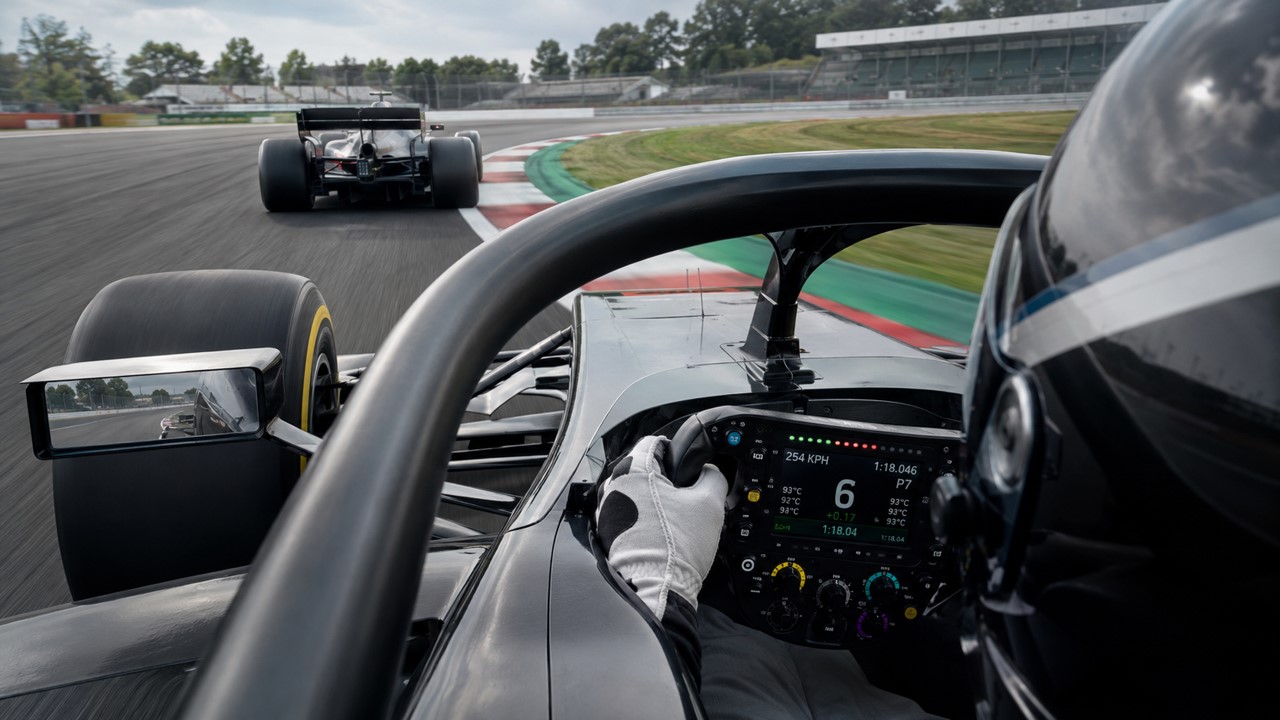
At Formula 1 speeds, performance depends on far more than fast reactions. This article explores how elite drivers prioritize information, anticipate what comes next, and continuously update the race at extreme speed.
Elite tennis returners do more than react quickly — they extract useful information before the ball is even struck. This article explores how anticipation, body cues, and rapid updating help players solve the return before the serve fully unfolds.
Elite athletes don’t need to look directly at everything to stay aware of a fast-changing play. This article explores how gaze and attention work together to monitor movement, spacing, and opportunity across the wider visual field.
NeuroTracker is one of the most widely researched cognitive training systems, used in elite sports, military, and human performance settings worldwide. Built on 20 years of neuroscience research.