NeuroTracker has been tried and tested by many independent research centres across the world. Discover the diverse research published with our searchable database
Published Research Papers
Research Institutes Using NeuroTracker
Issued Patents and Patents Pending
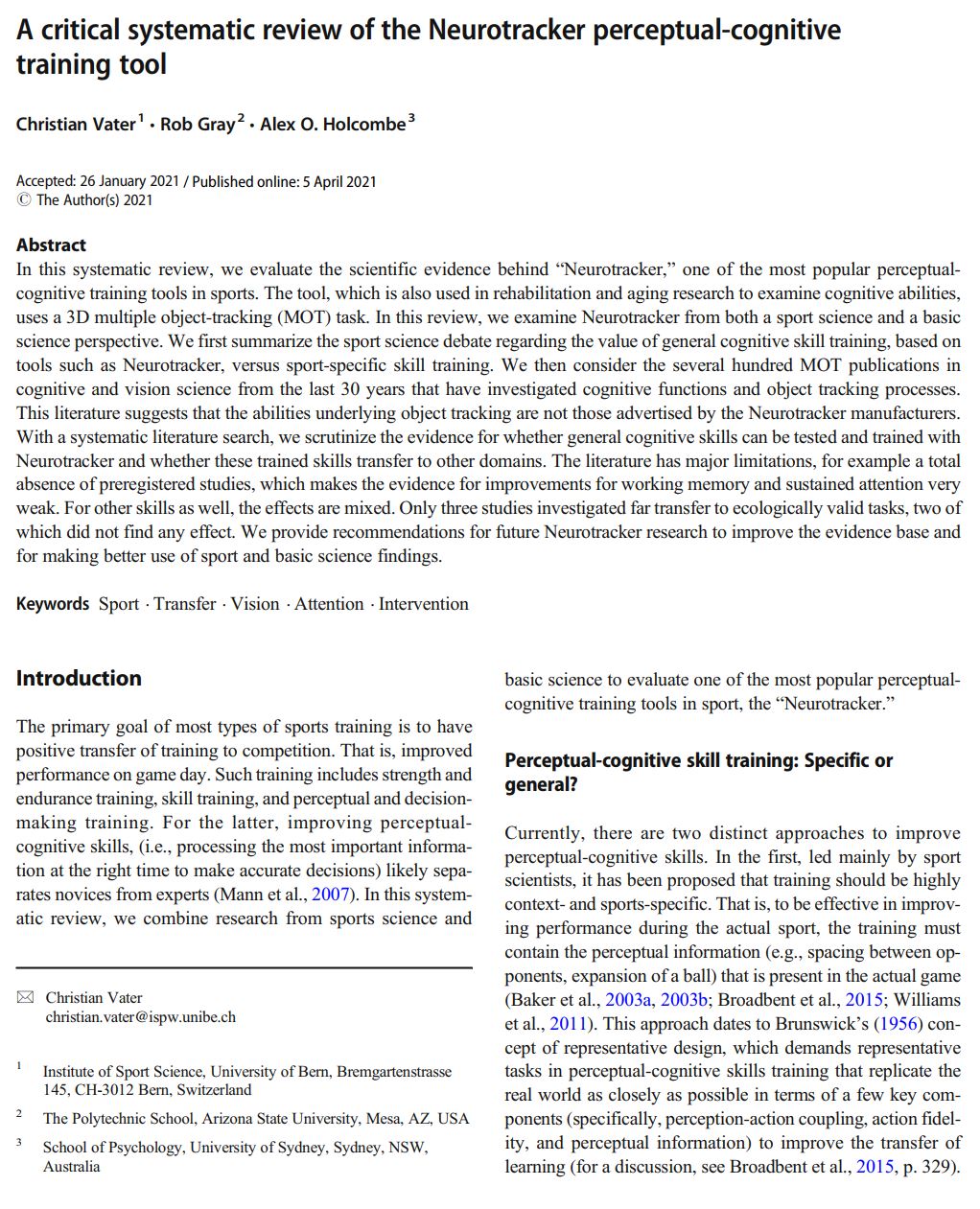
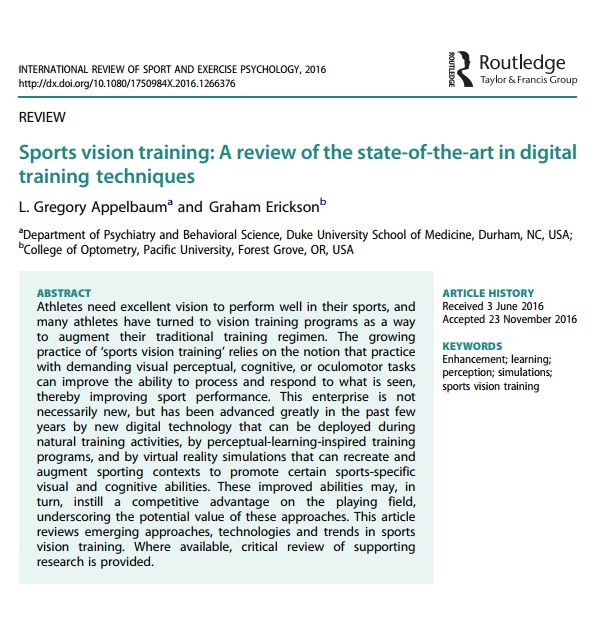
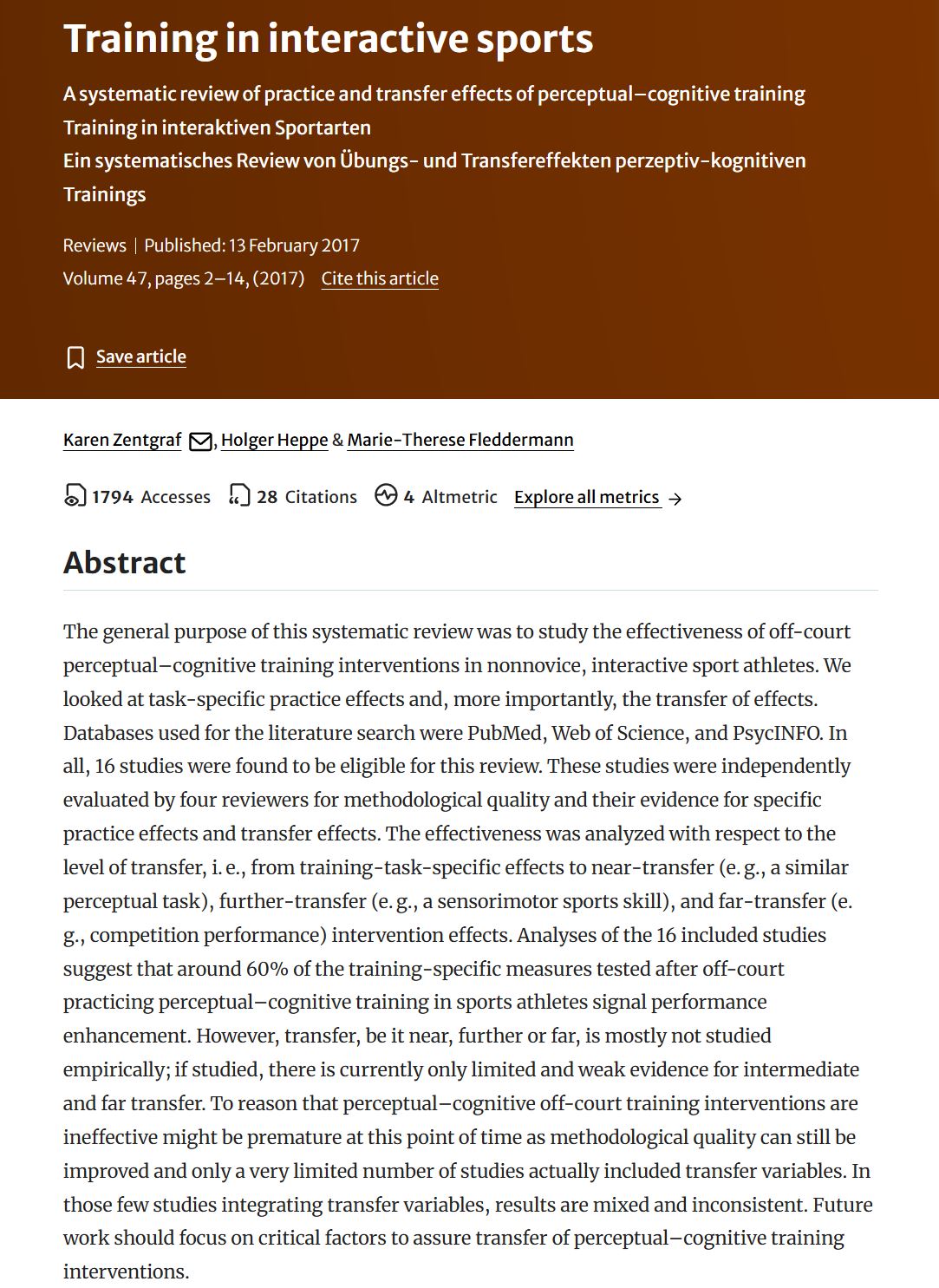
NeuroTracker peer-reviewed research shows promising relevance for broad cognitive enhancement across different populations.
To assess the usefulness of NeuroTracker (3D-MOT) as a cognitive enhancement tool to overcome the common challenges associated with cognitive training products.
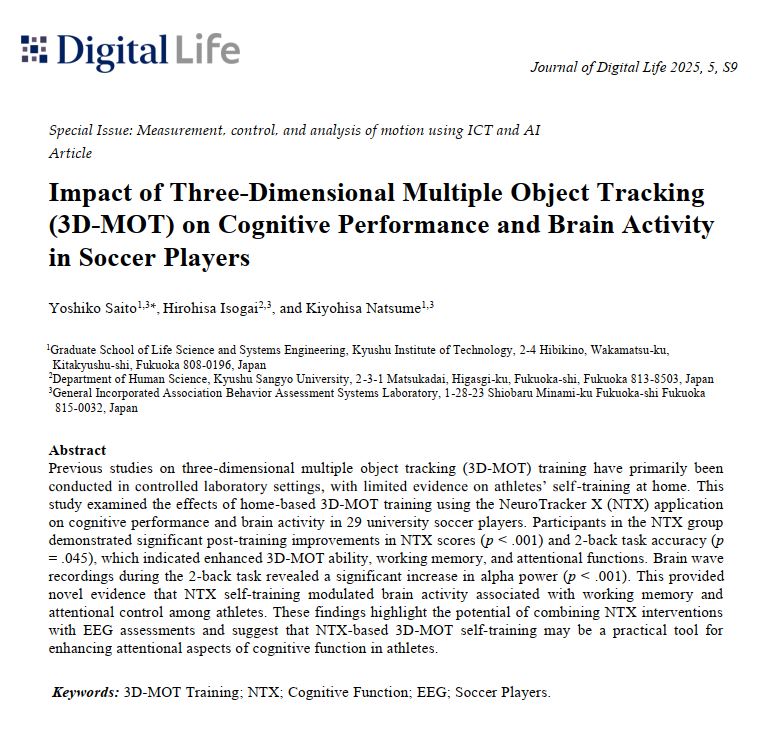
60 minutes of NeuroTracker training transfers to significant improvements in passing accuracy in NCAA Division 1 soccer players.
The purpose of this study was to investigate the relationship between the effects of 4-weeks of NeuroTracker training on in-game soccer performance measures.
NeuroTracker baselines reveal a distinct perceptual-cognitive advantage for college-age athletes over non-athletes.
To evaluate perceptual cognitive abilities among male and female adolescents and determine if undiscovered gender differences in athletes’ perceptual cognitive abilities exist.
NeuroTracker baselines have superior test–retest reliability over ImPACT across two sports seasons with collegiate athletes.
To determine timeframes required for baseline updates for NeuroTracker and ImPACT, based on long-term retest reliability.
NeuroTracker training transfers to significantly improved useful field of view, an ability strongly associated with driving skills.
To examine if NeuroTracker training transfers to useful field of view (UFOV) performance, a measure strongly associated with driving performance.
High intensity exercise can be effectively combined with NeuroTracker as dual-task training for younger and older adults.
To examine the effects of a high intensity intermittent exercise (HIIE) protocol on performance with a perceptual-cognitive task (NeuroTracker), and whether effects differ between children, young adults, and older adults.
NeuroTracker learning rates and neuropsychological assessments reveal that professional action video gamers possess superior attentional capacities.
To assess the extent to which action video game players perform better than non-gamers on cognitive functions measured by NeuroTracker and neuropsychological assessments.
NeuroTracker baselines are a strong predictor of multiple performance measures of simulated air traffic control abilities.
To investigate of NeuroTracker baselines can be a predictor of air traffic control task performance.
Pitching velocity of youth baseball players at different ages correlates with NeuroTracker scores and other performance metrics.
To identify across ages, in younger males and females, and to compare, in younger males, the anthropometrics, athletic abilities and perceptual-cognitive skills associated with baseball pitcher's ball velocity.
NeuroTracker baselines reveal the longer-term and short term negative impacts of night shift duties on hospital physicians.
To evaluate the effects of night shift work on cognitive performance in medical resident physicians.
NeuroTracker and neuropsychological assessments reveal cognitive functions relate to sprinting and jumping abilities in elite soccer players.
To investigate the relationship of executive functions and physical abilities in youth and adult elite soccer players.
NeuroTracker training is highly accessible and understandable for children with neurodevelopmental disorders.
This feasibility study investigated the viability of implementing an in-classroom NeuroTracker adaptive training program for adolescents with extremely low IQ.
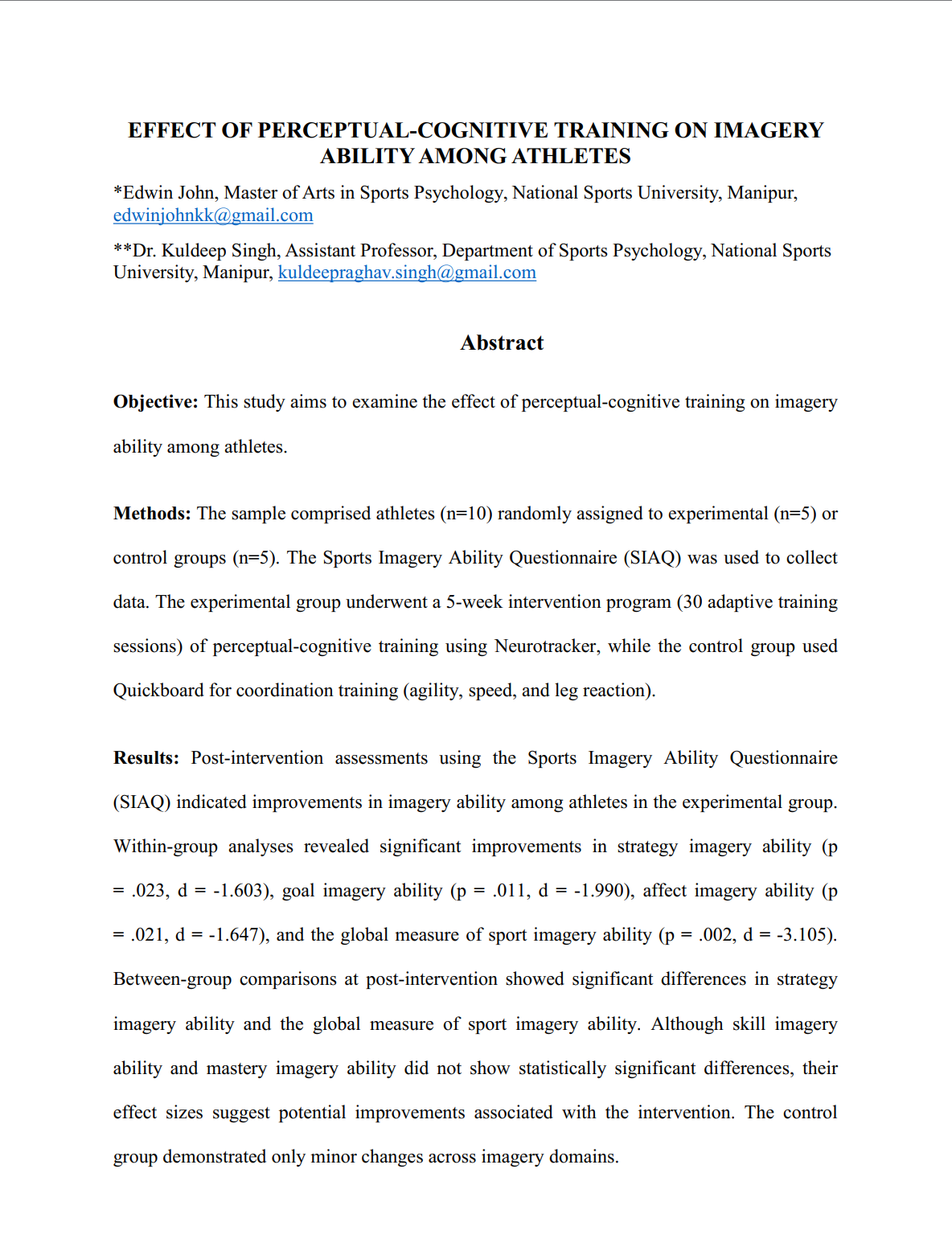
NeuroTracker 3D-MOT baseline performance was established using CORE sessions, and the intervention showed gains in tracking ability though broader performance transfer was limited.
To evaluate the effects of a vision training program — including 3D multiple object tracking (3D-MOT) as implemented in NeuroTracker — on perceptual-cognitive performance in an athletic or high-performance context.
A variety of egg-based diets over 1-month improve performance on NeuroTracker compared to a no-egg diet.
To evaluate the impact of the nutritional impact of dietary intake of whole eggs, egg white, and egg yolk on visual cognitive performance (NeuroTracker) in healthy older adults.
Hydration timing may significantly effect NeuroTracker performance
To determine if variance in hydration status would be associated with cognitive performance, as assessed by NeuroTracker.
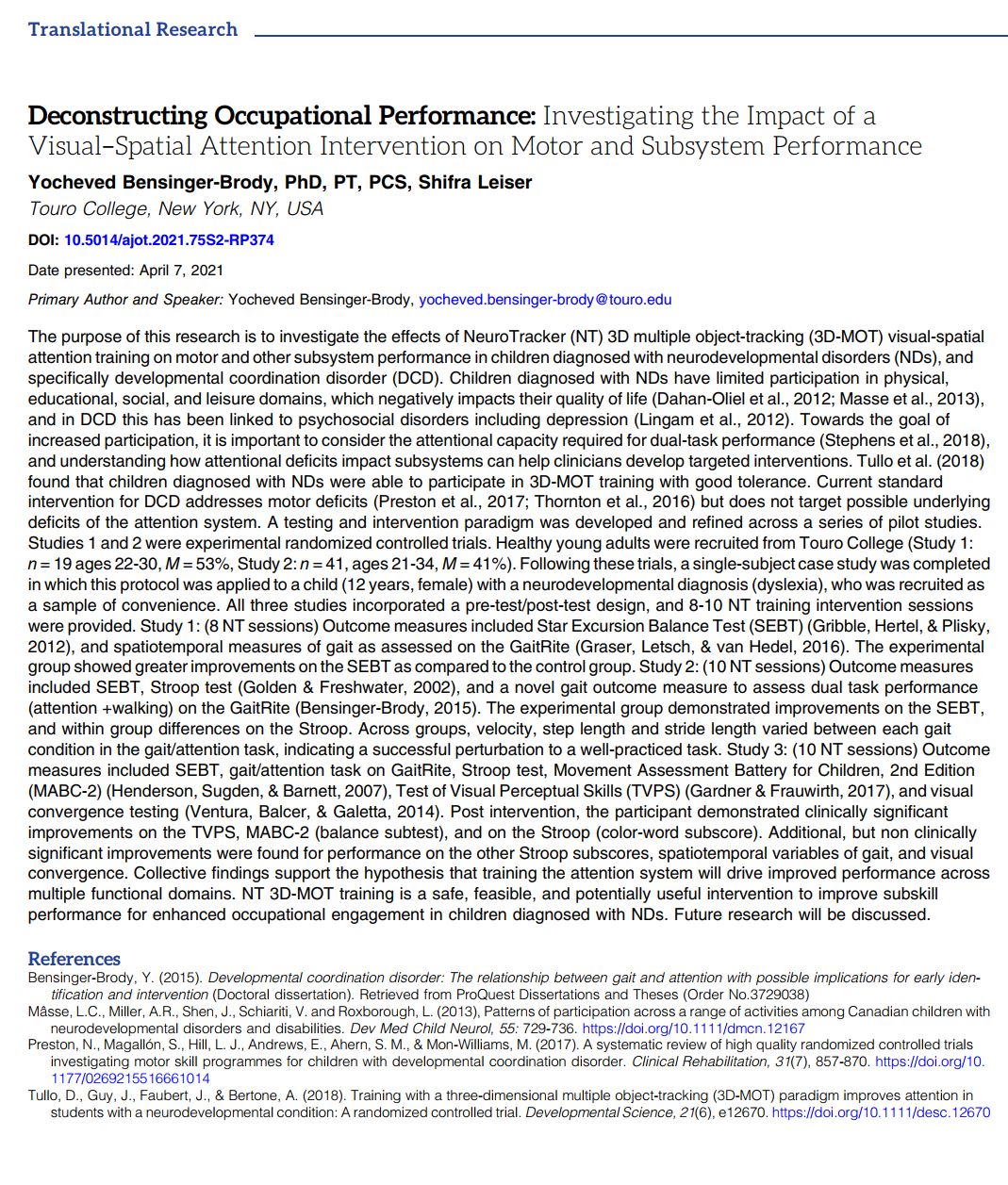
NeuroTracker 3D-MOT training was associated with improvements in balance and attentional control, with additional changes observed in dual-task gait and visual-perceptual measures.
To examine whether a visual–spatial attention training intervention using 3D multiple object tracking (3D-MOT) influences motor performance and subsystem measures relevant to occupational performance.
High intensity interval training combined with NeuroTracker provides an efficient dual-task method for training physical and mental performance.
To investigate how perceptual–cognitive performance is affected during high-intensity interval training (HIIT) using NeuroTracker(NT) assessments.
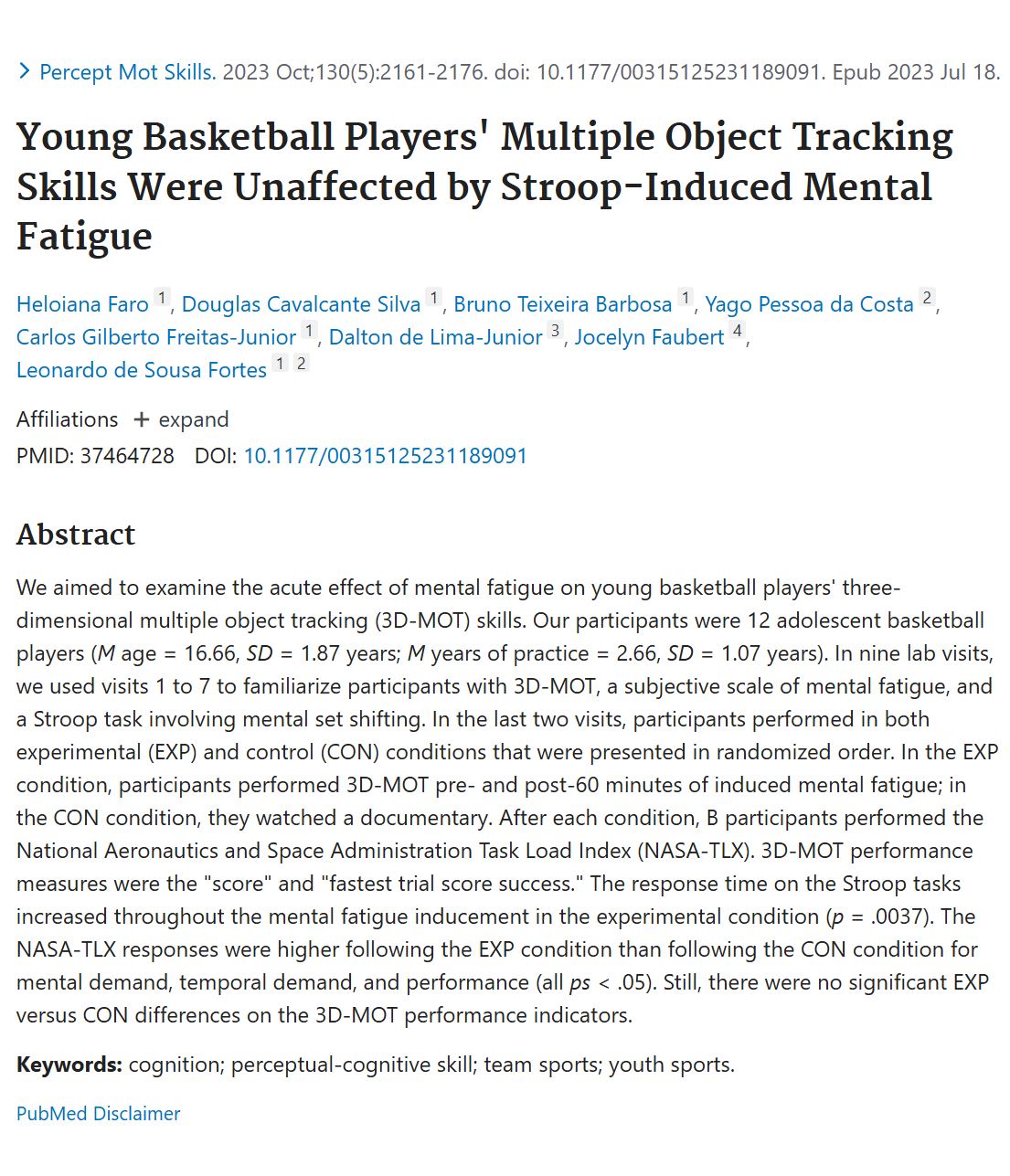
Collegiate basketball athletes improve visual tracking speed by 42% from 1.2 hours of NeuroTracker training.
To compare the efficacy of NeuroTracker training for concentration and game performance to conventional training.

NeuroTracker is one of the most widely researched cognitive training systems, used in elite sports, military, and human performance settings worldwide. Built on 20 years of neuroscience research.