


Welcome to the Research and Strategy Services at in today's fast-paced.
Decision-making is often assumed to improve through experience. The underlying assumption is simple: make decisions, observe outcomes, adjust behavior, and repeat. Over time, performance should stabilize.
In many real-world environments, this loop breaks down—not because decisions are poor, but because feedback is delayed, incomplete, or unreliable.
This article explains why decision quality and learning degrade under these conditions, even when motivation, effort, and expertise are high.

Feedback is the primary mechanism through which internal predictive models are refined. When outcomes clearly follow actions, cognition can update expectations, reduce prediction error, and improve future decisions.
Effective feedback has three properties:
When any of these properties are compromised, learning becomes unstable.

When feedback is delayed, the link between decision and outcome weakens. Cognition must maintain provisional hypotheses about which actions led to which results, often across long intervals or intervening events.
As delay increases:
Decisions may still be made competently in the moment, but learning from them becomes fragile.

Incomplete feedback presents a different challenge. In some environments, outcomes are only partially observable, selectively reported, or filtered through indirect indicators.
Under these conditions:
Without clear outcome signals, cognition cannot reliably distinguish between successful and unsuccessful strategies.

A common assumption is that more experience will compensate for poor feedback. In reality, repetition without reliable feedback often reinforces uncertainty rather than resolving it.
When feedback remains delayed or incomplete:
Experience accumulates, but learning does not consolidate.
The primary constraint in these environments is reduced predictive reliability. Secondary cognitive costs emerge as a consequence.
Because internal models cannot stabilize, cognition must remain in a state of continuous updating. This leads to:
These effects are often misattributed to fatigue or stress, but they arise structurally from the feedback conditions themselves.
When decision-making appears inconsistent under delayed or incomplete feedback, it is tempting to attribute errors to poor judgment, lack of discipline, or insufficient effort.
A feedback-based interpretation offers a different explanation:
Recognizing this distinction prevents overcorrection and misdiagnosis of performance issues.
Delayed and incomplete feedback are core mechanisms through which uncertainty operates.
They limit the ability of predictive models to converge, maintain elevated prediction error, and decouple confidence from accuracy. As such, feedback structure—not decision effort—is the dominant driver of performance variability in these environments.
Delayed or incomplete feedback is one of the primary mechanisms through which uncertainty constrains performance. When outcomes cannot be clearly or reliably linked to decisions, predictive models fail to converge, leading to persistent variability in decision quality even when effort and experience are high.
This pattern reflects broader principles of Cognitive Performance Under Uncertainty, where reduced predictive reliability—rather than task difficulty—drives changes in learning, confidence, and performance stability.
Decision-making does not fail under delayed or incomplete feedback because individuals stop trying or lose skill. It falters because the informational conditions required for reliable learning are absent.
Understanding this distinction is essential for accurately interpreting performance in complex, real-world settings where outcomes are not immediately or clearly revealed.
Welcome to the Research and Strategy Services at in today's fast-paced.
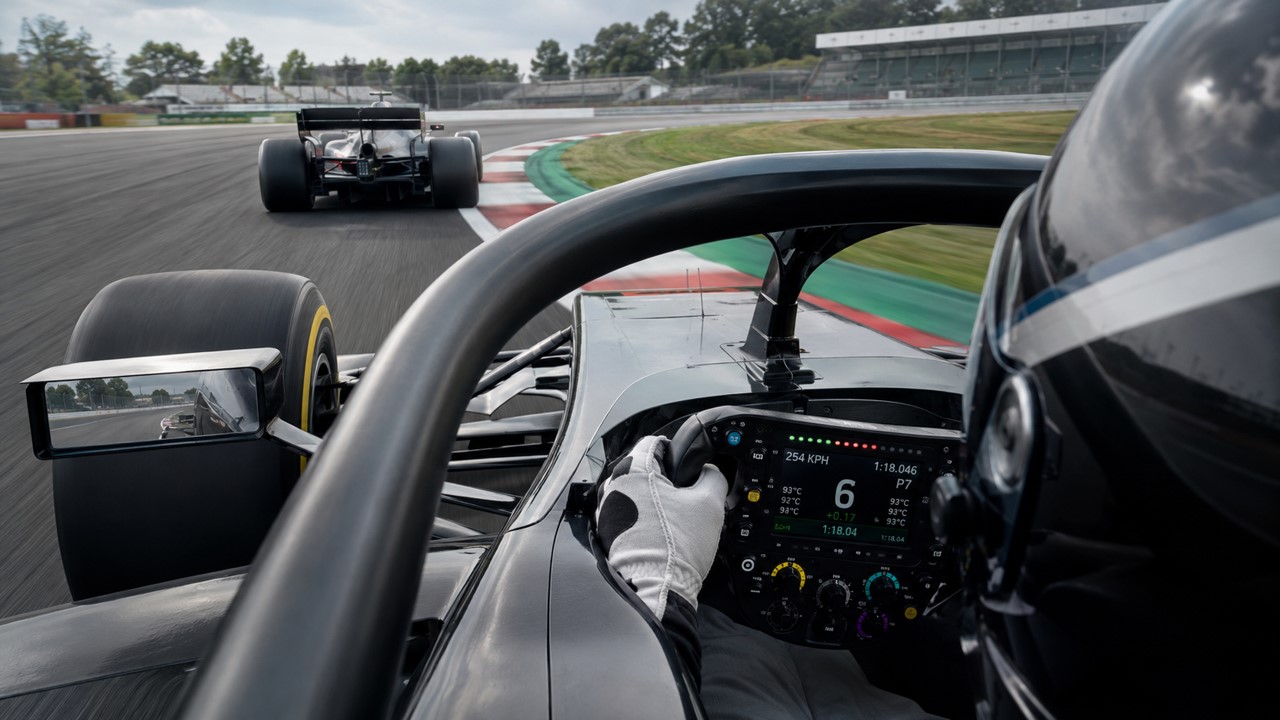
At Formula 1 speeds, performance depends on far more than fast reactions. This article explores how elite drivers prioritize information, anticipate what comes next, and continuously update the race at extreme speed.
Elite tennis returners do more than react quickly — they extract useful information before the ball is even struck. This article explores how anticipation, body cues, and rapid updating help players solve the return before the serve fully unfolds.
Elite athletes don’t need to look directly at everything to stay aware of a fast-changing play. This article explores how gaze and attention work together to monitor movement, spacing, and opportunity across the wider visual field.
NeuroTracker is one of the most widely researched cognitive training systems, used in elite sports, military, and human performance settings worldwide. Built on 20 years of neuroscience research.