


Welcome to the Research and Strategy Services at in today's fast-paced.
When performance declines under time pressure, the change is often attributed to stress, overload, or reduced cognitive ability. Slower reasoning, narrower strategies, or increased error rates are frequently interpreted as signs of diminished capacity.
However, an alternative explanation may be structural.
Time-limited decision environments do not necessarily reduce ability. They constrain the window within which evaluation and comparison can occur. When available time contracts, the solution space narrows. Fewer options can be explored, fewer contingencies simulated, and fewer refinements applied before action is required.
The observable shift reflects compressed search, not compressed intelligence.

A time limit alters performance architecture by reducing the depth of internal evaluation. Under extended conditions, a decision-maker may:
When the decision window is shortened, these processes must be truncated. Certain strategies become unavailable, not because they are unknown, but because they cannot be completed within the permitted interval.
The individual adapts to the constraints of a narrower window.

A central interpretive error occurs when a shortened evaluation horizon is mistaken for reduced ability.
Under strict time limits:
Yet output may appear simplified or less refined.
This simplification does not necessarily reflect a decline in cognitive resources. It reflects constraint on deliberative depth.
Performance under time restriction is therefore shaped by how much internal simulation can occur before commitment, not by how much ability exists in principle.
Time-limited decision-making differs from sustained cognitive load.
Accumulated load emerges as demands draw on resources over time. Fatigue, depletion, or reduced precision may follow prolonged effort. Time restriction, by contrast, alters the decision structure immediately. Even brief tasks can produce altered performance signatures when the allowable evaluation window is narrow.
The defining feature is structural limitation, not progressive resource loss.
Time pressure may coexist with load in real-world settings, but the mechanisms are distinct. A rested individual may still show reduced strategic depth if the evaluation window is sharply constrained.

When time windows narrow, internal models may require rapid reallocation of processing. Heuristics may replace extended comparison. Confidence calibration may shift as fewer alternatives are examined. Variability in response style may increase or decrease depending on how the constraint interacts with the task.
These secondary effects arise from reduced evaluation latitude rather than diminished intelligence.
The architecture adapts to fit the available window.
Observed performance under time limits should be interpreted in light of structural restriction.
A lower score, faster but less elaborate reasoning, or simplified output may reflect adaptation to a compressed decision horizon rather than reduced capacity. Distinguishing between reduced ability and reduced evaluation time prevents misattributing structural constraint to personal limitation.
This pattern reflects the broader principles described in Cognitive Performance Under Environmental Constraint, where reduced degrees of freedom—rather than diminished capacity—reshape how performance is expressed.
Welcome to the Research and Strategy Services at in today's fast-paced.
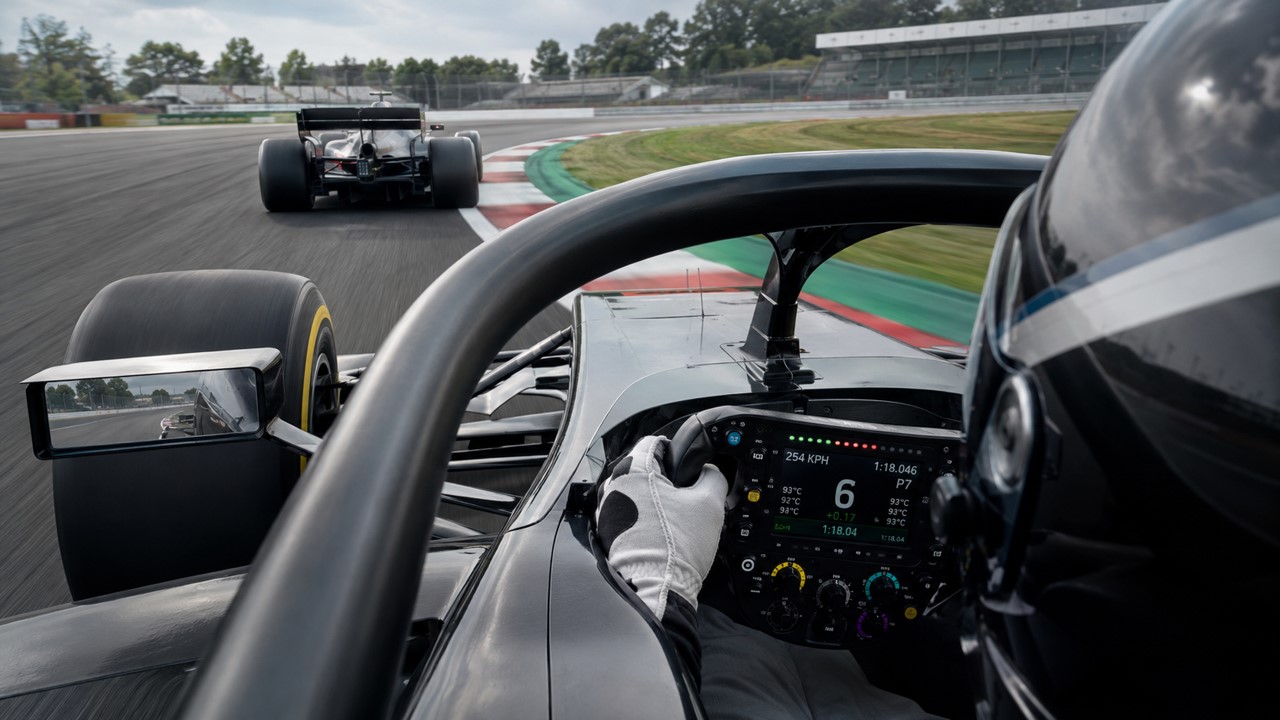
At Formula 1 speeds, performance depends on far more than fast reactions. This article explores how elite drivers prioritize information, anticipate what comes next, and continuously update the race at extreme speed.
Elite tennis returners do more than react quickly — they extract useful information before the ball is even struck. This article explores how anticipation, body cues, and rapid updating help players solve the return before the serve fully unfolds.
Elite athletes don’t need to look directly at everything to stay aware of a fast-changing play. This article explores how gaze and attention work together to monitor movement, spacing, and opportunity across the wider visual field.
NeuroTracker is one of the most widely researched cognitive training systems, used in elite sports, military, and human performance settings worldwide. Built on 20 years of neuroscience research.