


Welcome to the Research and Strategy Services at in today's fast-paced.
Watch our recent NeuroTracker webinar with Mick Clegg, former Manchester United Power Development Coach, on the role of cognitive conditioning in elite sport.
In this NeuroTracker webinar, Jean-Christian Rindoni speaks with Mick Clegg, former Power Development Coach at Manchester United, about what it really takes to develop elite sports performance.
Drawing on more than four decades of coaching experience, Mick shares a wide-ranging discussion on the relationship between the heart, brain, and body in athlete development. Rather than treating performance as purely physical, he explains why motivation, attention, perception, decision-making, and self-awareness all need to be part of the training picture.
A major theme of the conversation is the idea that elite athletes are not simply stronger or faster. They are better at integrating information, adapting under pressure, and transferring what they do in training into real competition. Mick discusses how this shaped his work at Manchester United, including his approach to power development, player individuality, injury prevention, and the importance of listening closely to athletes.
The webinar also explores Mick’s early adoption of NeuroTracker during his time at Manchester United. He explains why he was looking for a tool that could train and measure “rapid cognition,” and how 3D multiple object tracking offered a practical way to challenge the visual, attentional, and cognitive demands that matter in high-performance sport.
For coaches, practitioners, and NeuroTracker clients, the discussion offers a valuable perspective on how cognitive conditioning fits into a broader performance system.
Mick emphasizes that effective coaching begins by understanding the person in front of you. Athletes need motivation, purpose, and ownership of their development. Training works best when the athlete sees why it matters and is willing to commit to it.
The conversation explains how Mick’s approach to power development went beyond traditional strength and conditioning. His focus was on speed, strength, direction, movement quality, and transfer into the demands of football.
A recurring theme is that movement, skill, reaction, and adaptation all depend on the brain. Physical training is essential, but elite performance also requires attention, perception, awareness, and fast decision-making.
Mick shares insights from working with some of football’s most dedicated athletes, including Cristiano Ronaldo and Ryan Giggs. He highlights their seriousness, discipline, curiosity, and willingness to use every part of the performance environment to improve.
One of the strongest practical messages is that coaches should observe, listen, and adjust. Athletes often provide the clearest feedback through how they train, how they perform, and how they respond to different interventions.
Mick explains that he was searching for a way to train and measure rapid cognition in athletes. NeuroTracker provided a structured way to challenge dynamic attention, visual tracking, peripheral awareness, and cognitive processing in a measurable format.
The discussion closes around the importance of transfer: helping athletes carry training gains into real performance environments. For Mick, the next frontier is not simply adding more tools, but understanding how different forms of training connect to what athletes actually need to do in competition.
For more sports performance insights from Mick, you can check out his series of Expert Corner blogs here.

For teams, coaches, or practitioners interested in trying NeuroTracker, take our free Brain Test.
Welcome to the Research and Strategy Services at in today's fast-paced.
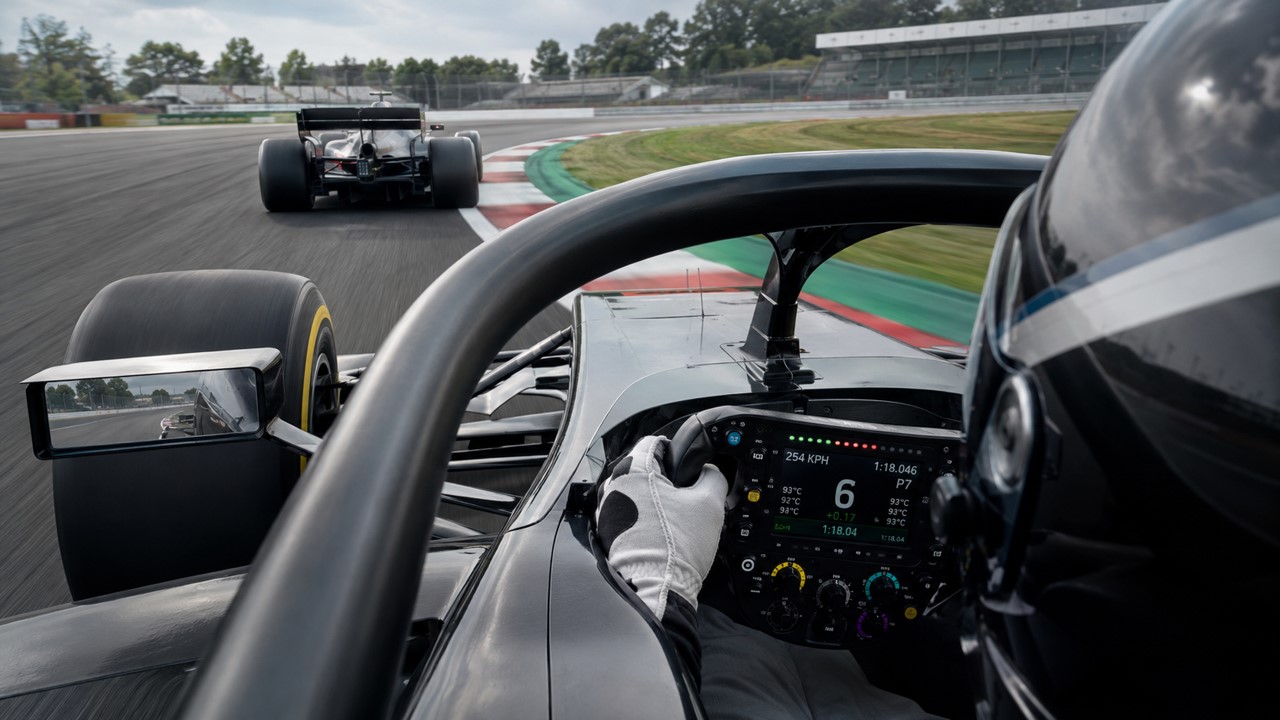
At Formula 1 speeds, performance depends on far more than fast reactions. This article explores how elite drivers prioritize information, anticipate what comes next, and continuously update the race at extreme speed.
Elite tennis returners do more than react quickly — they extract useful information before the ball is even struck. This article explores how anticipation, body cues, and rapid updating help players solve the return before the serve fully unfolds.
Elite athletes don’t need to look directly at everything to stay aware of a fast-changing play. This article explores how gaze and attention work together to monitor movement, spacing, and opportunity across the wider visual field.
NeuroTracker is one of the most widely researched cognitive training systems, used in elite sports, military, and human performance settings worldwide. Built on 20 years of neuroscience research.