


Welcome to the Research and Strategy Services at in today's fast-paced.
For much of modern history, thinking and movement were often studied as separate systems. One belonged to the brain. The other belonged to the body.
Today, neuroscience paints a very different picture.
Every movement depends on perception. Every decision depends on incoming information. Even seemingly physical actions rely on continuous interaction between attention, visual processing, anticipation, and motor control.
Rather than operating independently, the brain and body function as an integrated system.
NeuroTracker research has explored this relationship across a wide range of populations and tasks, from athletes and drivers to older adults. The findings repeatedly point toward the same idea: changes in perceptual-cognitive performance can influence how people move, react, and perform in real-world situations.
Here are highlights from six studies which help illustrate this connection.
Scientific Study: Effects of 3D Multiple Object Tracking on Off-the-Block Reaction Time in University of Victoria Varsity Swimmers: A Pilot Study
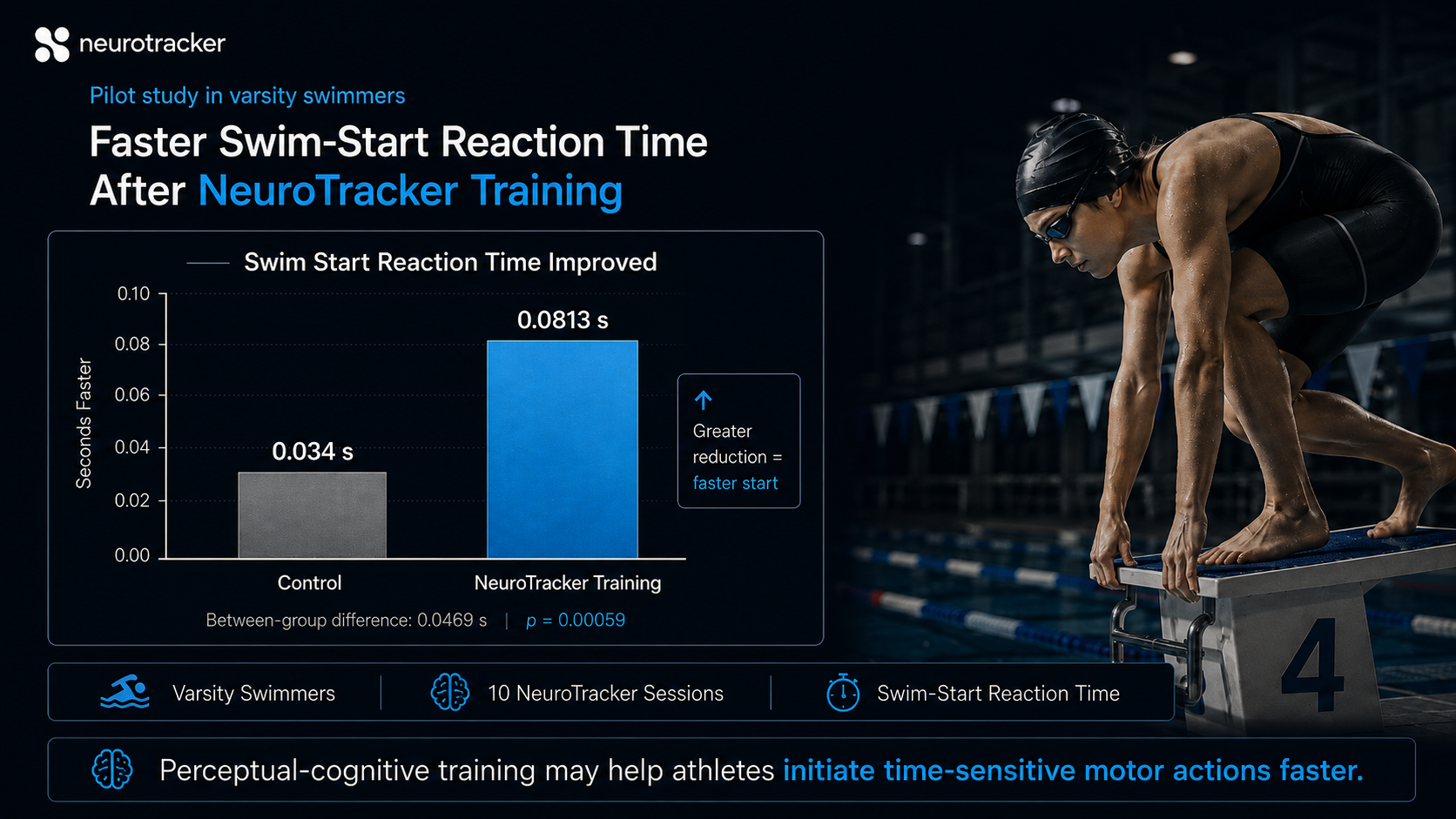
In this pilot study, varsity swimmers who completed NeuroTracker training showed larger improvements in swim-start reaction time than a control group.
Although the outcome was measured physically, the difference begins before movement occurs. Faster starts depend on how quickly relevant information is detected, processed, and translated into action.
Scientific Study: Transferability of Multiple Object Tracking Skill Training to Professional Baseball Players' Hitting Performance
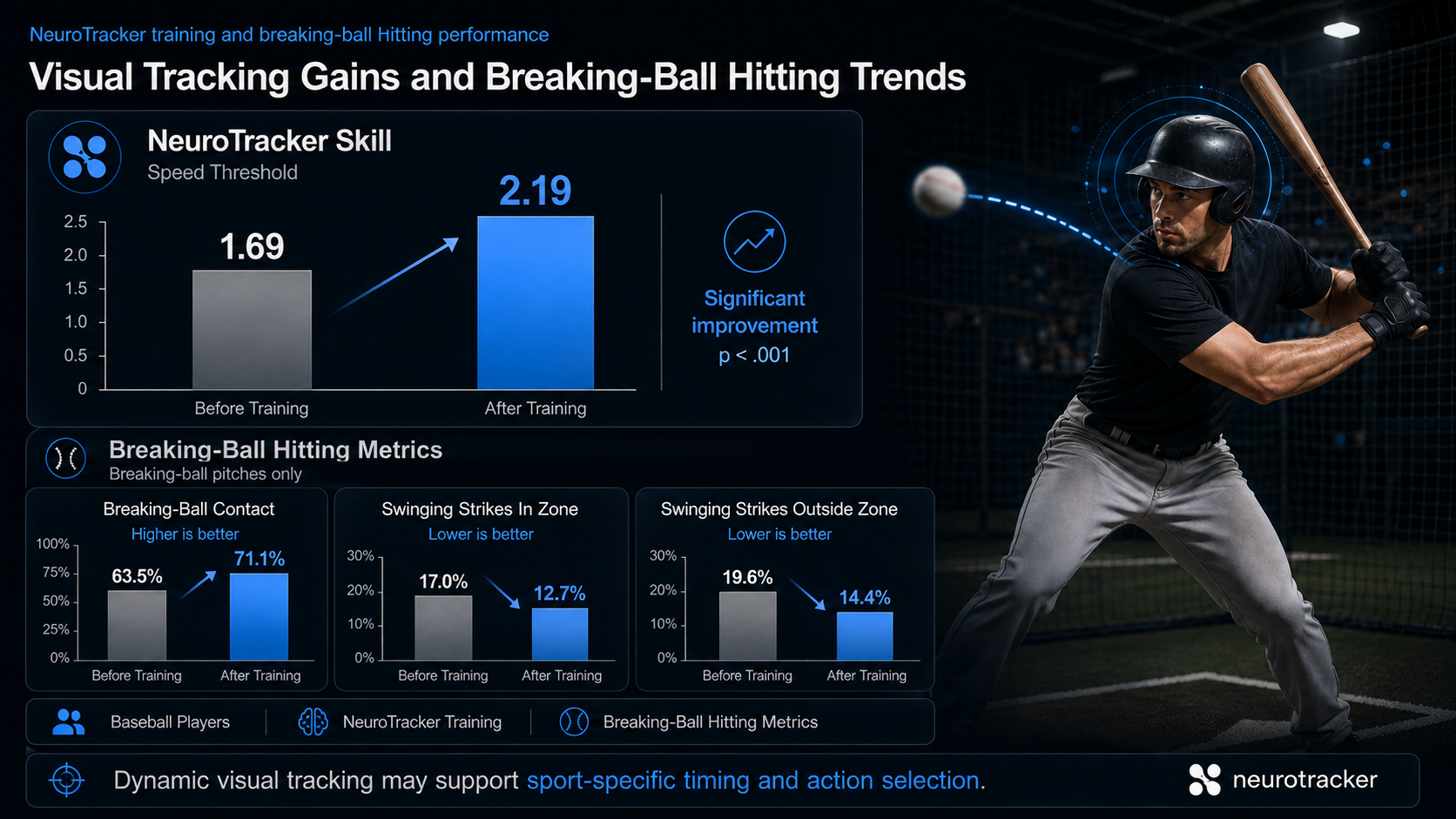
Professional baseball players improved their NeuroTracker performance over training while also showing favorable trends in several breaking-ball hitting measures.
Hitting a baseball is not simply a physical skill. It requires continuous visual tracking, anticipation, timing, and action selection under extreme time pressure.
Scientific Study: Can Three-Dimensional Multiple Object Tracking Training Be Used to Improve Simulated Driving Performance? A Pilot Study in Young and Older Adults
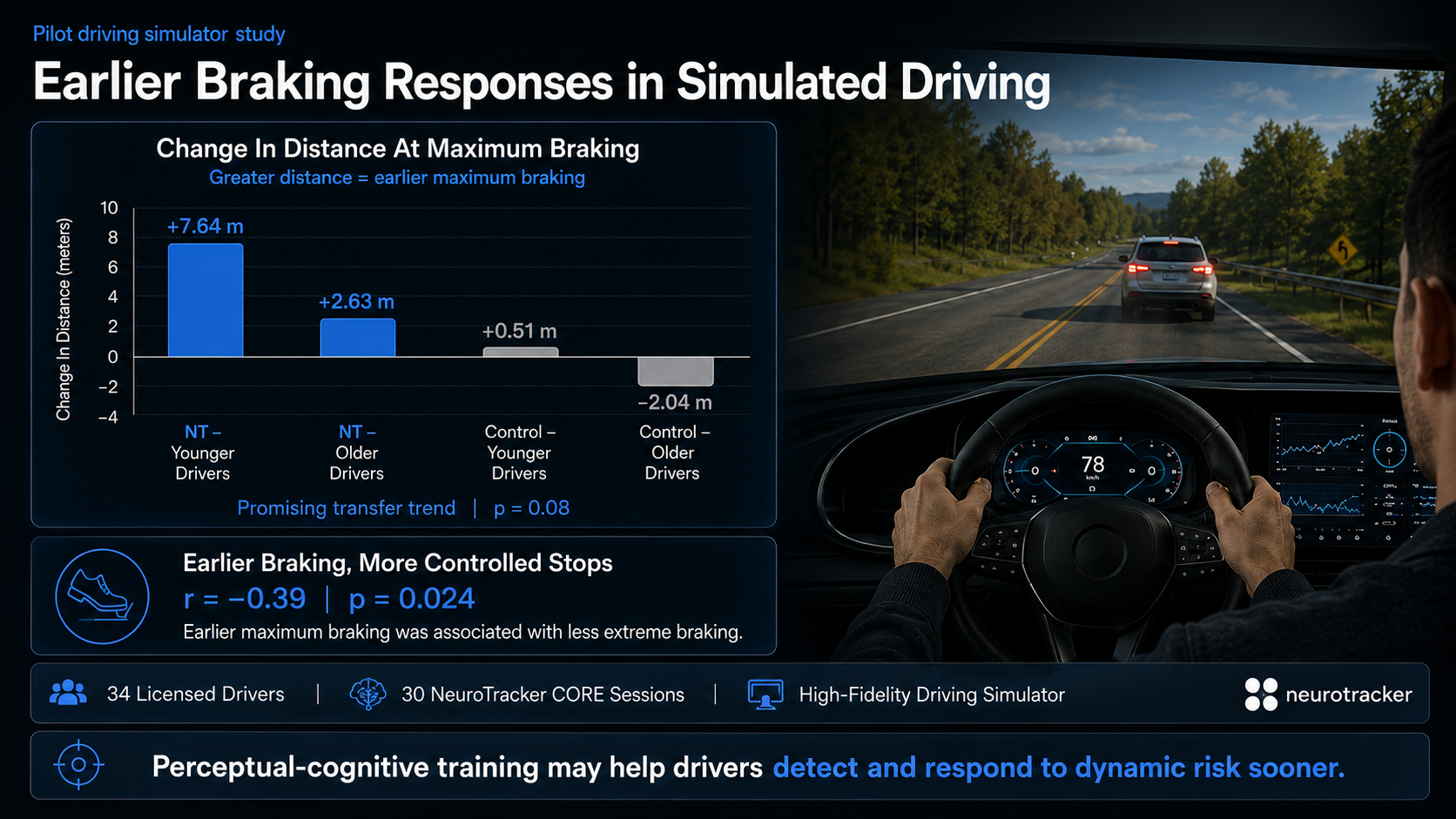
Participants who completed NeuroTracker training showed trends toward earlier braking responses during simulated driving tasks.
Driving performance depends heavily on detecting and interpreting changing information. Earlier responses may reflect improved processing of dynamic environmental cues before a physical action is required.
Scientific Study: Effect of 3D Multiple Object Tracking Training on Manual Dexterity in Elderly Adults With Dementia and Mild Cognitive Impairment
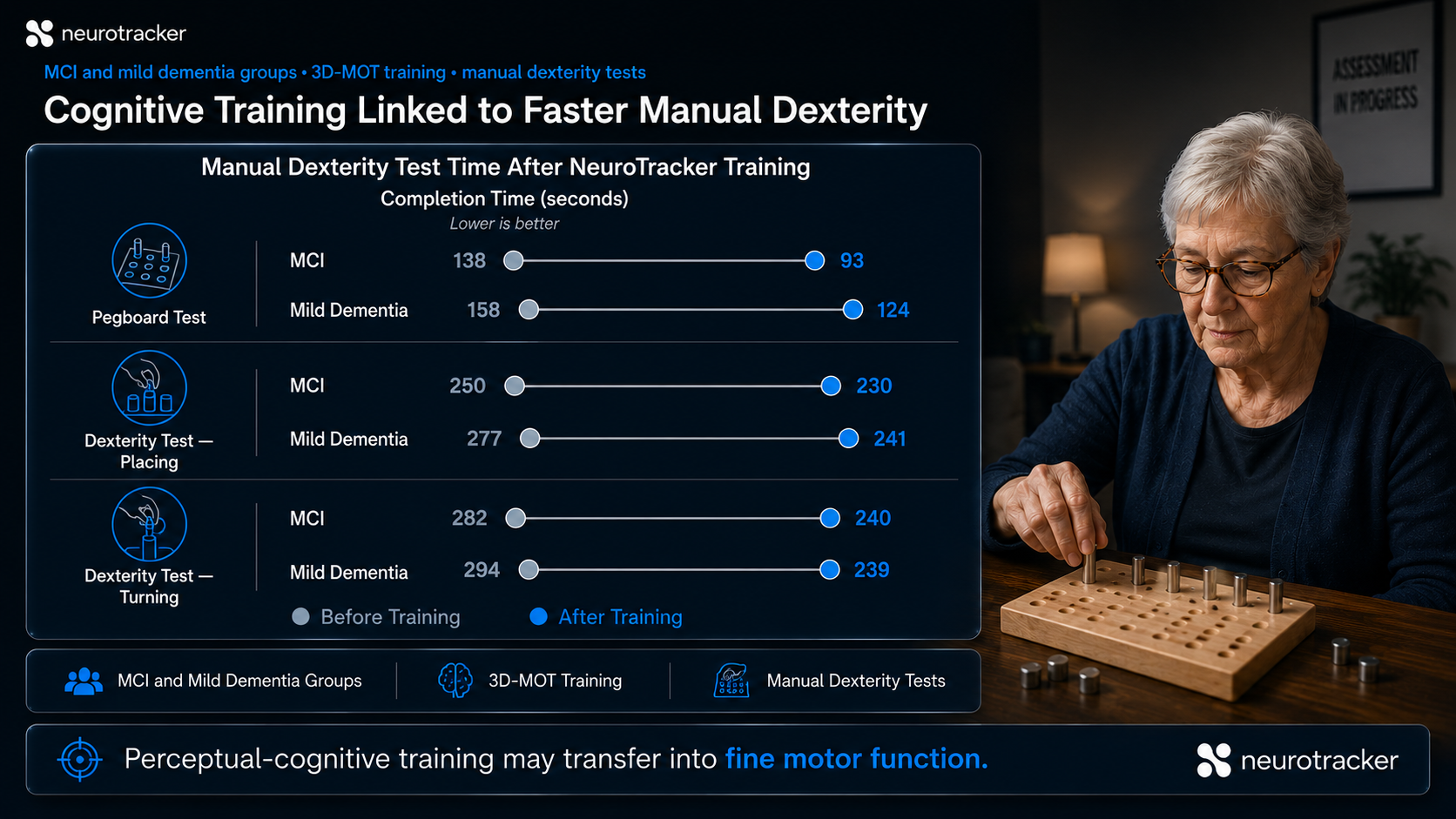
Older adults with mild cognitive impairment and mild dementia demonstrated improvements on multiple manual dexterity assessments following NeuroTracker training.
These findings suggest that perceptual-cognitive functions may contribute to the efficiency and coordination of precise hand movements, highlighting the close relationship between cognition and motor performance.
Scientific Study: The Combined Impact of a Perceptual Cognitive Task and Neuromuscular Fatigue on Knee Biomechanics During Landing
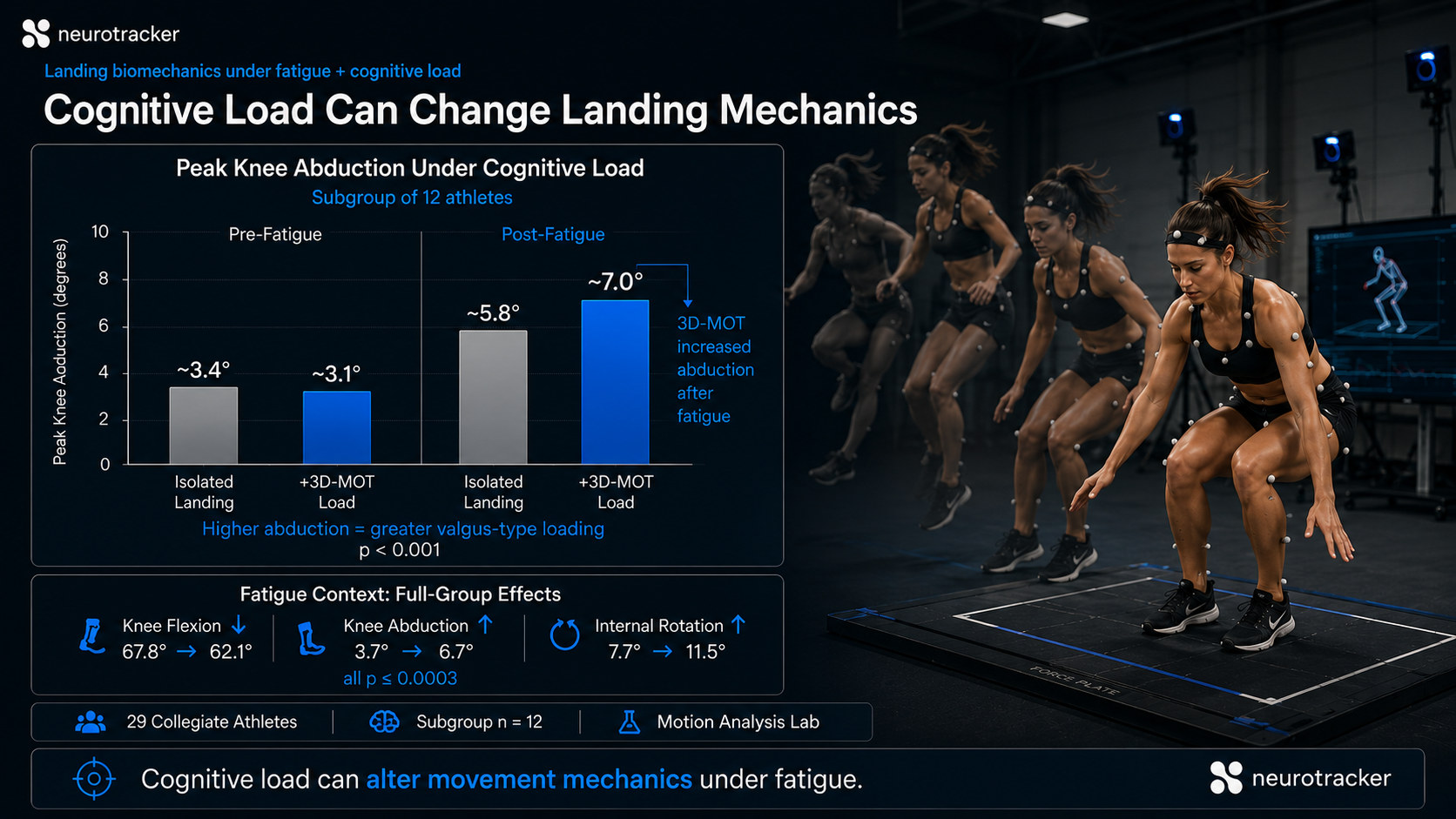
Researchers found that adding cognitive load altered landing mechanics, particularly when athletes were already physically fatigued.
This study demonstrates that movement quality is not determined solely by muscles and joints. The information-processing demands placed on the brain can directly influence how the body moves.
Scientific Study: Prior Perceptual Cognitive Training Builds Mental Resistance During Acute Physical Fatigue in Professional Rugby Athletes
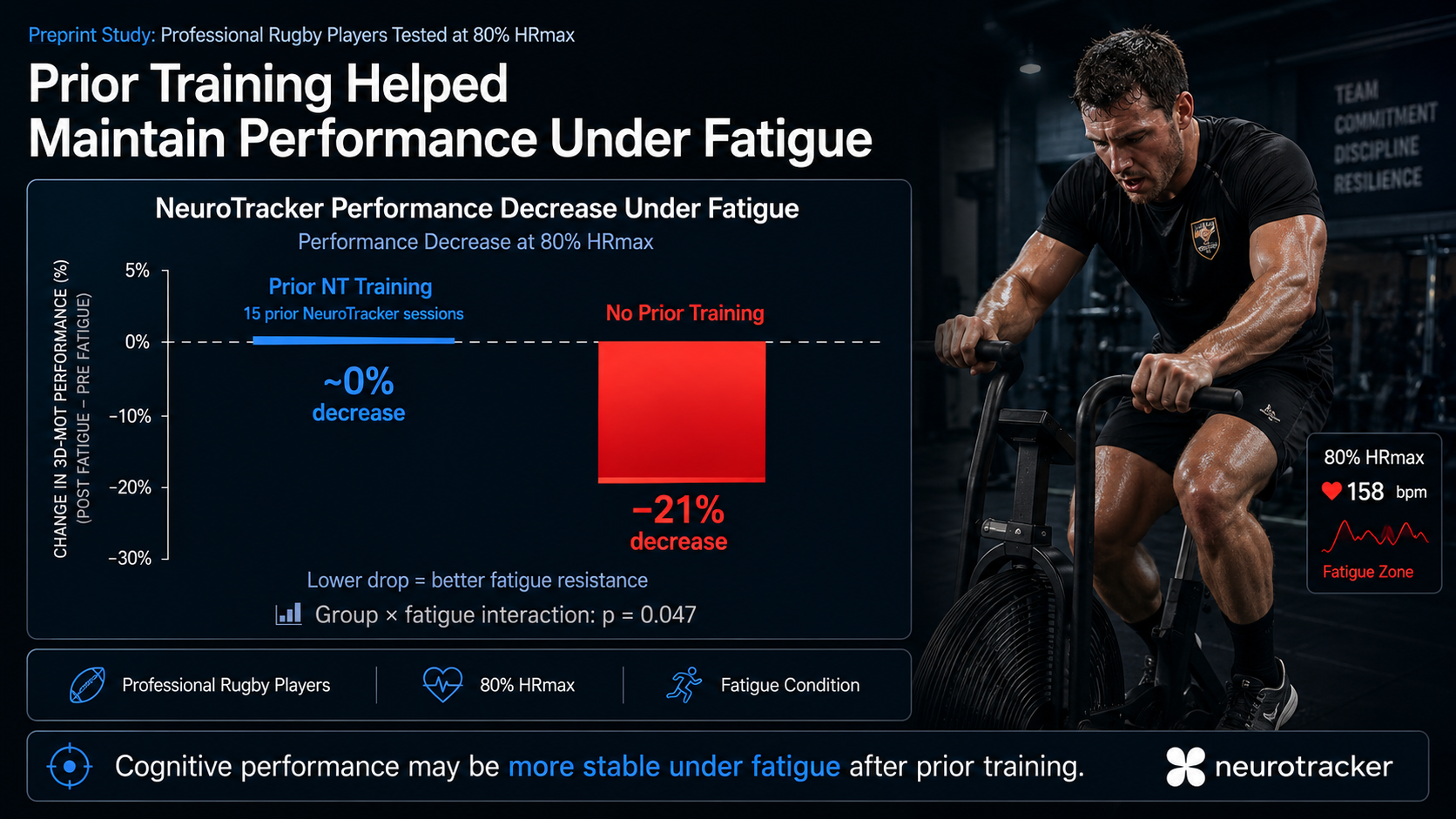
Professional rugby players with prior NeuroTracker training maintained perceptual-cognitive performance more effectively during acute physical fatigue than untrained athletes.
Physical fatigue is often viewed as a purely bodily limitation, yet this study highlights how cognitive performance and physiological stress interact. Maintaining effective information processing may be an important component of performing well under demanding conditions.
Across sports, driving, aging, dexterity, and fatigue research, a consistent theme emerges: perception, decision-making, and movement are deeply interconnected.
The brain does not simply issue commands to the body. It continuously interprets information, prioritizes what matters, predicts what may happen next, and helps shape how actions unfold in real time.
NeuroTracker research provides a growing body of evidence that perceptual-cognitive performance can influence a wide variety of real-world outcomes. Whether initiating a movement, selecting an action, maintaining performance under fatigue, or coordinating precise motor skills, the quality of information processing may be just as important as the movement itself.
Understanding human performance means understanding both sides of the equation—the brain and the body working together as one integrated system.
Welcome to the Research and Strategy Services at in today's fast-paced.
Healthy aging isn’t only about what changes with age, but also what capacity remains to adapt. This article explores how NeuroTracker research suggests cognitive adaptability remains surprisingly high in older adults.
Learn about an 11 year old boy's inspiring achievements using NeuroTracker training for sports and educational performance.
A new controlled study shows that remote NeuroTrackerX training improved attentional performance and frontal alpha brain activity in university soccer players.
NeuroTracker is one of the most widely researched cognitive training systems, used in elite sports, military, and human performance settings worldwide. Built on 20 years of neuroscience research.