




Welcome to the Research and Strategy Services at in today's fast-paced.
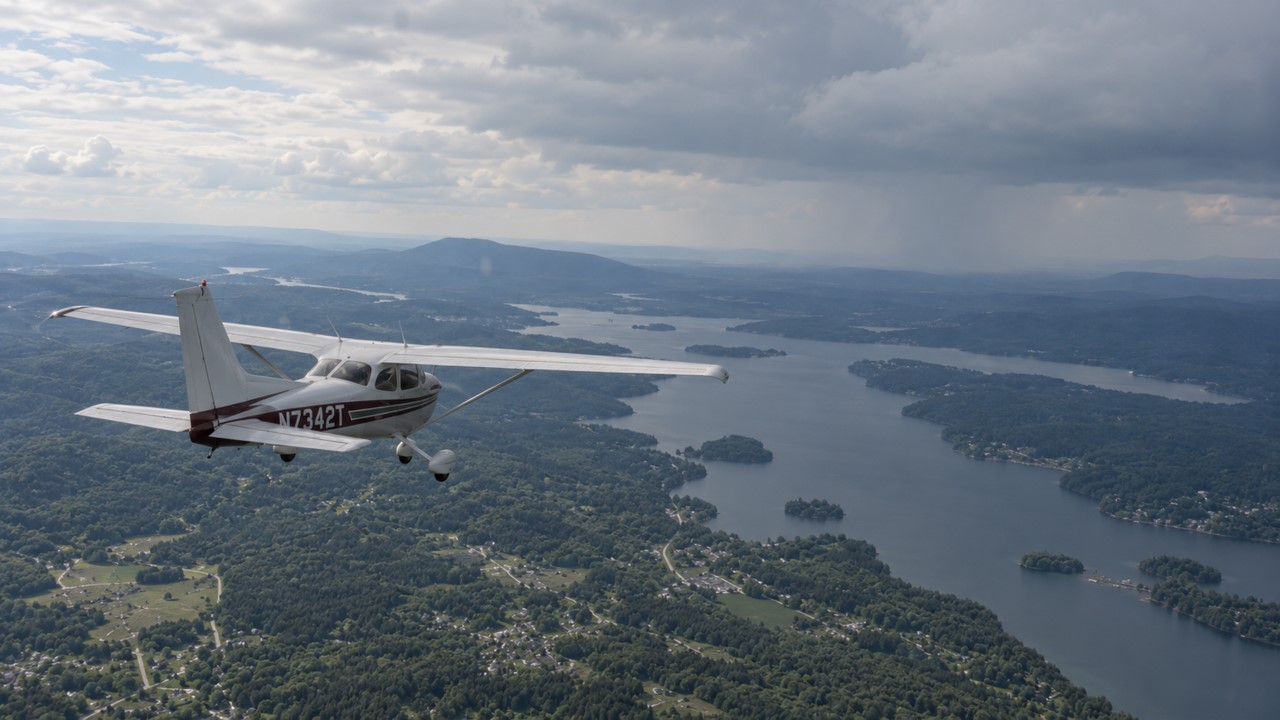
A flight can be thoroughly planned and still change before you've had much time to settle into it.
Weather develops faster than expected.
A route through controlled airspace is no longer available.
An intended airport becomes unsuitable.
A piece of equipment stops working.
Fuel calculations begin moving in the wrong direction.
None of these necessarily means something has gone badly wrong. Changing plans is part of flying.
What makes it interesting is what happens cognitively when the plan changes.
You are not sitting at a desk with the opportunity to start again. You are already flying the aircraft, monitoring its performance, communicating, maintaining situational awareness and thinking ahead. The new problem arrives on top of everything that was already demanding your attention.
And sometimes the amount of time available to reorganize everything is surprisingly short.
I've experienced this with weather.
On one flight, everything had been planned before departure. I had checked the conditions, prepared the route and received the available weather information. But by the time I had completed the pre-flight work, taken off and climbed to around 1,000 feet, conditions were developing quickly enough that continuing with the original plan no longer made sense.
So the flight changed.
Instead of continuing along the planned route, I stayed local, completed a few circuits and landed. Not long afterwards, the weather moved in.
From the outside, that sounds simple: conditions changed, so change the plan.
From the cockpit, there is considerably more going on.
A flight plan creates a mental picture of what is supposed to happen next. You know where you are going, approximately when you will arrive, what airspace you expect to encounter, what frequencies and procedures will be relevant and what fuel you expect to have available.
When an important assumption changes, parts of that picture can become obsolete almost immediately.
The cognitive task is no longer simply following the plan - it is rebuilding it.
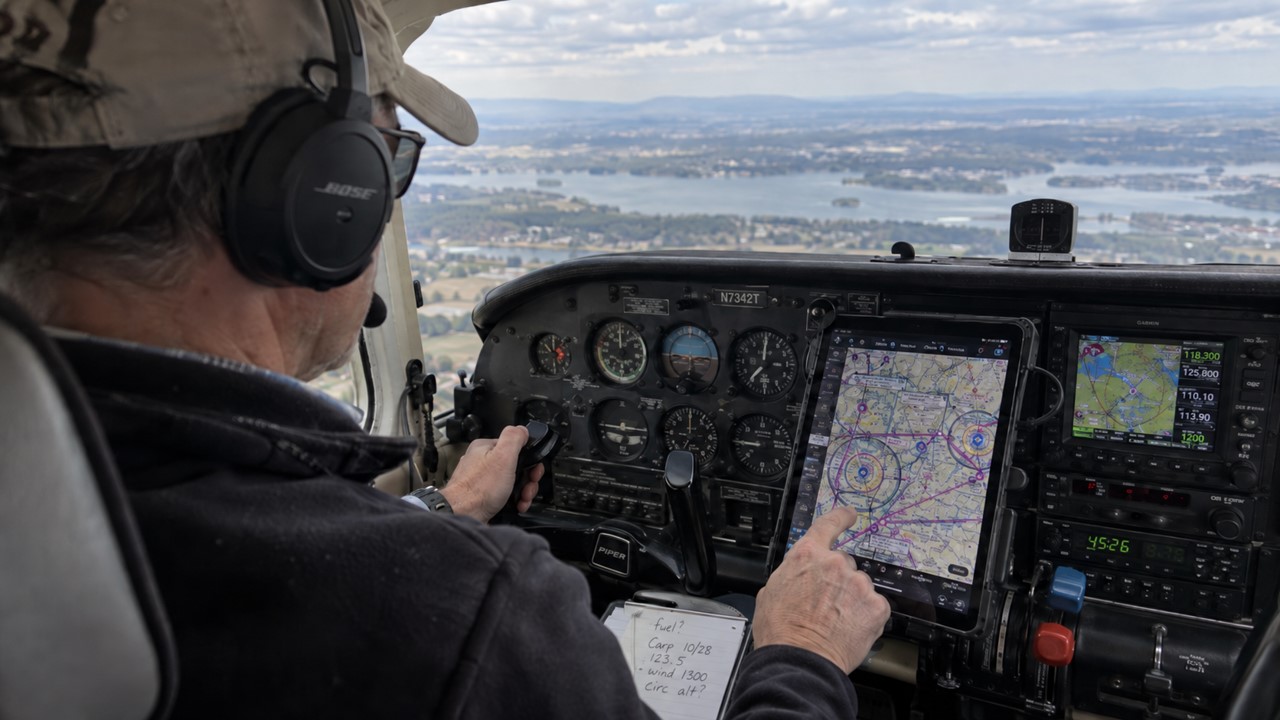
Imagine deciding in flight that you can no longer continue to your intended destination.
The obvious question is: where do I go instead?
But answering it creates more questions.
What airports are within practical range? What is the weather doing there? Which runway is likely to be appropriate? What is the runway length and elevation? What airspace will the new route take you through? What frequencies are required? Are there relevant notices or local procedures? What traffic pattern or circuit applies? Do you have enough fuel not simply to reach the airport, but to maintain appropriate margins if something else changes?
On the ground, you can work through those questions methodically.
In the air, the aircraft keeps moving while you answer them, and the time window to adapt may be compressed.
That distinction is easy to underestimate.
A diversion adds a new decision problem without removing the existing demands of flying. Information has to be located, interpreted and prioritized while the pilot continues monitoring the aircraft and the environment around it.
This is where aviation becomes much more cognitively complex than simply knowing the correct procedure.
An important characteristic of flying is that operational problems rarely remain isolated.
Consider a strong headwind. On a long flight, the aircraft may be behaving perfectly normally. The ride can feel stable. There may be no obvious sense of urgency.
But the groundspeed is lower than planned.
Initially that is simply a difference between expectation and reality. Over time, however, it begins changing other parts of the flight.
The journey is taking longer. Fuel is being consumed for longer. The expected reserve changes. An airport that initially looked comfortably reachable may become less attractive. Another airport may become the better option. A different altitude may offer more favourable winds. Continuing may still be perfectly reasonable—but the decision now depends on a different set of factors than it did earlier.
I've experienced headwinds strong enough on a cross-country flight that an additional fuel stop became necessary even though it hadn't been part of the original plan.
Nothing dramatic had suddenly happened - the change accumulated gradually and was easy to overlook initially.
That is a different cognitive challenge from a sudden equipment failure or last-second go-around, but the underlying requirement is similar: keep updating the picture as the conditions supporting your original decisions change.
It is tempting to describe all of this as cognitive workload.
Workload certainly matters. Flying can already require simultaneous monitoring, communication, navigation, anticipation and control.
But a diversion introduces something more specific in that the structure of the task changes.
Before the change, much of what happens next has already been anticipated. The route has been selected. Relevant information has been reviewed. Expectations have been established.
After the change, some of those expectations are no longer reliable.
Now the pilot has to determine which parts of the original plan remain useful, which need to be discarded, what new information matters and how the new pieces fit together.
In cognitive terms, the mental model has to be updated while it is still being used. That is very different from simply giving someone another task to perform.
These underlying cognitive demands are explored in more detail in the article Strategic Decision-Making in Rapidly Changing Environments.
Not every change develops gradually, sometimes almost the opposite happens.
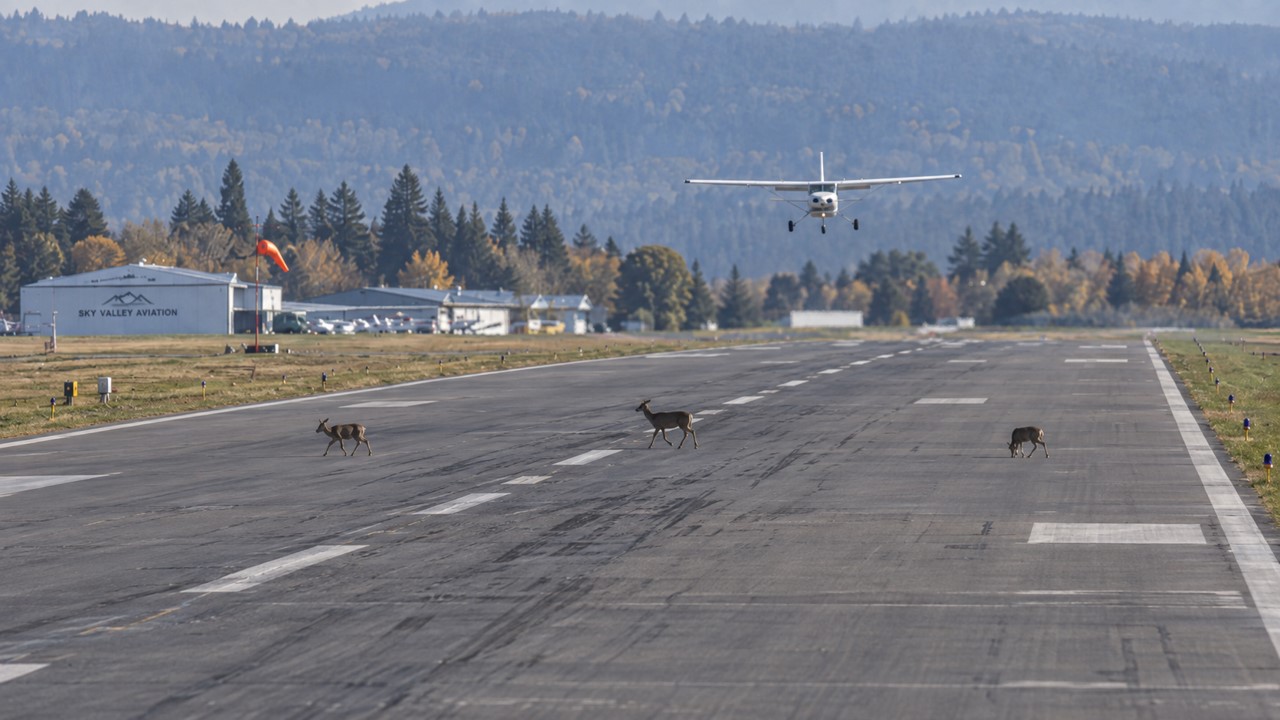
Consider an aircraft established on approach and configured for landing. The pilot has already shifted into one operational state: speed has been reduced, the aircraft has been configured appropriately and attention is oriented towards completing the landing.
Then the landing is no longer available.
Perhaps another aircraft has not cleared the runway. Perhaps wildlife or an obstruction appears. Perhaps conditions no longer support continuing the approach.
Now the operational objective changes very quickly.
The challenge is not merely knowing how to perform a go-around. Pilots train for that.
The interesting cognitive feature is how rapidly the pilot has to transition from one prepared sequence of actions into another.
Seconds earlier, the correct expectation was land.
Now it is do not land.
The aircraft configuration, flight path, attention priorities and immediate sequence of actions all have to move with that change.
This is where time becomes more than another source of pressure. It limits how long the pilot has to evaluate possibilities before action is required.
The same person, with the same knowledge and underlying ability, can therefore face a very different cognitive problem depending on how early the change is recognized.
Five minutes of warning and five seconds of warning are not simply different amounts of the same problem - the nature of the problem itself is different.
There is another point that is easy to miss when aviation decisions are examined from outside the cockpit. The pilot does not get to stop the primary task while solving the new one.
If you are sitting at home planning a route and discover that an airport is unavailable, you can stop and investigate alternatives. If you discover it while airborne, the aircraft still needs your attention.
That creates a layering effect.
The unexpected problem occupies cognitive resources, but so do the normal demands that existed before it appeared. Attention has to move between the aircraft, the outside environment, navigation information, communications and whatever new information is needed to revise the plan.
This is why relatively ordinary changes can become demanding surprisingly quickly.
The individual elements may all be familiar, but it is having to coordinate them at the same time, while the situation continues evolving, that creates the challenge.
There is also an important forward-looking aspect to this.
Piloting is not only about responding correctly to what is happening now. Many good decisions are valuable because they preserve options for what might happen next.
Fuel is an obvious example. So is route selection around terrain, selecting suitable alternates or recognizing that weather is developing before it forces the decision for you.
The earlier a meaningful change is detected, the larger the decision space often remains. And as conditions close in, that space can shrink.
Fewer airports may remain practical. Fuel margins may narrow. Terrain or weather may constrain routing. Time available to gather information can reduce.
From that perspective, situational awareness is not simply knowing where you are or what is happening around the aircraft - its real value is partly predictive.
What is this situation becoming, and what will still be possible if it continues in that direction?
That question sits behind a surprising amount of aviation decision-making.
Procedures, planning and training exist for good reasons. They reduce uncertainty, establish priorities and give pilots structured ways to handle situations that would otherwise be far more difficult.
But flying can never be reduced entirely to executing a prepared sequence, because environments can change.
Aircraft and systems sometimes behave unexpectedly. Weather develops. Traffic alters the picture. Facilities become unavailable. Human beings make mistakes. Information that appeared reliable earlier in the flight can become outdated.
The result is a profession in which technical knowledge has to coexist with continuous adaptation. And that adaptation takes place inside an already demanding operating environment.
Perhaps that is one of the less obvious cognitive realities of aviation.
A good flight plan tells you what you expect to do. Good flying also means recognizing when reality has changed, reorganizing quickly enough to keep pace with it, and doing so without ever stopping the primary task of flying the aircraft. That ability to adapt while already under load is one of aviation’s most demanding — and least visible — human-performance challenges.
Welcome to the Research and Strategy Services at in today's fast-paced.
NeuroTracker is one of the most widely researched cognitive training systems, used in elite sports, military, and human performance settings worldwide. Built on 20 years of neuroscience research.