



Welcome to the Research and Strategy Services at in today's fast-paced.
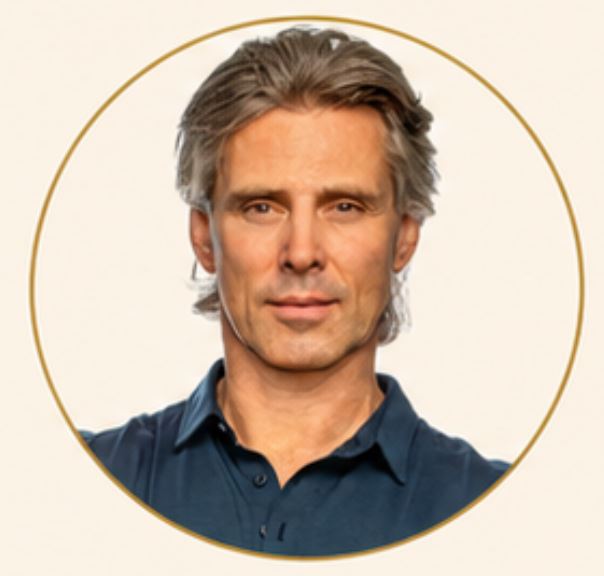

Most people I meet do care about their health.
That may sound obvious, but I think it matters. People are often spoken to as if the problem is that they are lazy, careless, or simply unwilling to change. In my experience, that is rarely the whole story.
Many people are trying. They are reading, listening, searching, asking questions, buying better food, joining gyms, tracking sleep, cutting back on certain things, adding others, and trying to make sense of what they should be doing.
The problem is that the health landscape has become incredibly noisy.
One week, coffee is good for you. The next, caffeine is something to worry about. One headline says fasting is the answer. Another says it may be risky. Protein is essential, then excessive. Sunlight is dangerous, then morning light is foundational. Wearables tell you to optimize your recovery, your sleep, your strain, your readiness, your biological age.
At some point, people start to feel like they are being bounced around from one conclusion to the next.
I understand that. To be honest, I think it is one of the biggest challenges in health today. It is not that people have no information. It is that they have too much information, without a clear way to organize it.
After more than 30 years in clinical practice, one thing has become very clear to me: simply telling people what to do only helps a handful of them.
You can tell someone to sleep more, move more, eat better, reduce stress, get stronger, lose weight, stretch, recover, hydrate, or get outside in the morning. All of those things may be useful. But if the person does not understand why those things matter, or how they fit together, the advice usually becomes another item on a list.
And most people already have too many lists.
What they are missing is not another instruction. What they are missing is a better understanding of the rules of the game.
Health is not random. The body responds to inputs. It responds to light, sleep, food, movement, stress, recovery, timing, social connection, and the environment we place it in every day. Those inputs are not separate tips. They are signals. Repeated often enough, those signals shape what the body becomes capable of tolerating.
That is where I think the conversation around healthspan needs to mature.
Healthspan is often described as the number of years we live free of disease. That definition is useful, but I do not think it is complete.
Life is not lived in a disease-free vacuum. Life includes stress. It includes hard days. It includes responsibility, travel, poor sleep, injuries, infections, emotional strain, and periods where things do not go according to plan. In sport, injury is not really a question of if. It is usually a question of when, and how well the person can recover. In life, I think the same principle applies more broadly.
To me, healthspan is not just about avoiding problems. It is about preserving enough capacity to meet life when it becomes demanding.
Can you recover?
Can you adapt?
Can you remain strong, mobile, clear-headed, independent, and engaged?
Can your system handle disruption without becoming fragile?
That is a different way of thinking.
It moves the conversation away from chasing the latest quick fix and toward understanding the biological conditions that allow people to function well over time.
This is important because many of the early signs of declining capacity do not feel dramatic. Recovery takes a little longer. Sleep becomes less reliable. Stiffness becomes normal. Energy dips become easier to explain away. Brain fog comes and goes. Strength fades quietly. People often say, “I guess this is just aging.”
Sometimes age is part of the picture. Of course it is. But age is not the whole story.
The body adapts to what it repeatedly experiences. If it is not asked to preserve strength, strength declines. If it is not exposed to proper light cues, timing becomes less clear. If sleep is repeatedly sacrificed, recovery suffers. If food signals are constant and movement is minimal, metabolism adapts. If stress is never resolved, the system protects itself rather than building capacity.
None of this usually happens overnight. That is exactly why it is so easy to miss.
Health does not disappear suddenly. More often, the margin narrows.
By margin, I mean the buffer between what life demands and what your body can handle without paying a price. When that margin is wide, you can tolerate a poor night of sleep, a busy week, a hard workout, a stressful period, or a disruption in routine. When that margin narrows, the same demands start to cost more.
That is where many people find themselves. Not broken. Not sick in an obvious way. But with less room to absorb life.
This is also where modern comfort becomes a hidden issue.
I am not against comfort. I like comfortable chairs, computers, cars, heating, good food, and all the things that make modern life easier. I am not interested in pretending we should live like cavemen.
But biologically, comfort is not neutral.
For most of human history, movement, effort, hunger, temperature variation, sunlight, darkness, and physical demand were built into life. Now many of those signals have been removed. We sit more. We move less. Food is always available. Light is often too dim during the day and too bright at night. Stress remains high, but the physical outlets for that stress are lower.
So the body still adapts, but it adapts to a different environment.
That is why long-term health does not need to be framed as rocket science or extreme optimization. In many cases, it begins with understanding ordinary biology more clearly.
The question is not, “What is the newest thing I should add?”
The better question is, “What signals am I already giving my body every day, and what are those signals asking it to become?”
That shift matters.
When people understand the bigger picture, they stop pinballing around every new headline. They become less reactive. They can look at a new study, a new claim, or a new health trend and ask better questions.
Does this support capacity?
Does it improve recovery?
Does it create useful adaptation?
Does it restore rhythm?
Does it address the input, or only the outcome?
Is this something my body can actually integrate over time?
That is what I mean by judgment.
The goal is not perfection. It is not obsession. It is not turning health into a full-time job. The goal is to understand the relationship between the life you are living and the capacity your body is able to preserve.
That is the starting point for a more useful healthspan conversation.
Because people do not need more fragmented advice. They need a clearer model for making sense of the advice they already receive.
Once the rules of the game become clearer, the choices become less confusing. And when choices become less confusing, people have a much better chance of helping themselves.
Welcome to the Research and Strategy Services at in today's fast-paced.
Understand why progress in ADHD can feel inconsistent — and how to recognize real improvement over time.
Learn why ADHD children can focus intensely on some tasks but struggle with others — and how to support better attention regulation.
Understand why progress in ADHD can feel inconsistent — and how to recognize real improvement over time.
NeuroTracker is one of the most widely researched cognitive training systems, used in elite sports, military, and human performance settings worldwide. Built on 20 years of neuroscience research.