


Welcome to the Research and Strategy Services at in today's fast-paced.
This article explains why individuals who are well-qualified for a role may perform below their true capability in interview settings, and clarifies how environmental constraints — rather than lack of ability — often drive this discrepancy.
Job interviews are structured environments that impose multiple simultaneous constraints on cognitive performance. Candidates are typically required to process questions, retrieve relevant knowledge, organize responses, and communicate clearly within limited time windows and predefined formats. These conditions differ significantly from real-world working environments, where individuals can think more freely, revisit problems, and apply flexible strategies.
As a result, interview performance often reflects how effectively a person can operate under time-limited decision windows, fixed response formats, and restricted opportunities for strategic thinking, rather than their full cognitive capability. This can lead to situations where individuals who are highly competent in practice appear less capable during interviews.
Understanding this distinction helps reframe interview performance as a product of environmental constraints on cognition, rather than a direct measure of underlying ability.

Interview questions often require immediate responses, leaving little time for deeper processing or structured reasoning.
Even when a candidate knows the answer, reduced time to:
• organize thoughts
• prioritize information
• structure communication
can lead to incomplete or less coherent responses.
This reflects a broader distinction between time-limited decision environments and underlying cognitive capacity, where performance is shaped by how much time is available to process information rather than how much the brain is capable of processing.

Interviews often expect concise, structured answers (e.g. behavioral frameworks, short explanations), which can restrict how individuals express their thinking.
This can limit:
• nuanced reasoning
• alternative approaches
• adaptive problem-solving strategies
resulting in answers that underrepresent actual understanding.
This aligns with the concept of fixed response formats, where the structure of how answers must be delivered can limit the expression of strategic thinking and flexible reasoning.
In real work environments, individuals can:
• revisit problems
• test ideas
• refine solutions over time
In interviews, this flexibility is removed. Candidates must commit to a response without iteration, which places additional pressure on cognitive coordination.

Candidates must simultaneously:
• interpret the question
• retrieve relevant knowledge
• monitor their communication
• manage self-presentation
This creates a form of divided attention demand, which can reduce processing efficiency even when overall cognitive capacity is sufficient.
A useful way to reframe interview performance is:
Interview performance ≠ cognitive ability. Interview performance = cognitive ability under constraint
This distinction helps explain why:
• strong candidates sometimes underperform
• performance can vary significantly between interviews
• real-world capability is not always reflected in interview outcomes

It is also important to recognize that structured interview formats are not purely limiting.
Constraints can:
• standardize evaluation
• reduce bias in questioning
• enable comparison across candidates
However, these same constraints can also reduce the visibility of deeper cognitive abilities, particularly those involving:
• complex reasoning
• adaptive thinking
• long-horizon problem solving
Understanding the role of environmental constraints in interviews can help:
• candidates interpret their performance more accurately
• employers recognize the limitations of interview-based evaluation
• organizations design assessment processes that better reflect real-world capability
More broadly, this example illustrates a general principle:
Cognitive performance is always shaped by the environment in which it is expressed.
Welcome to the Research and Strategy Services at in today's fast-paced.
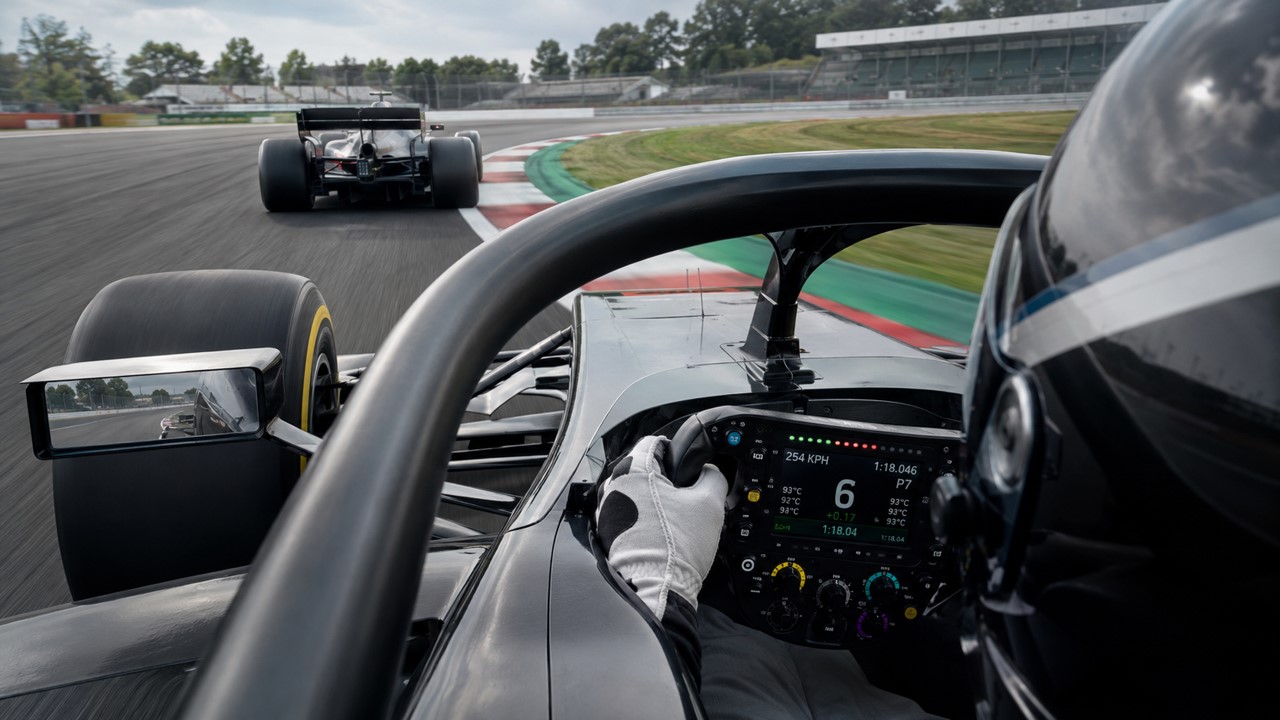
At Formula 1 speeds, performance depends on far more than fast reactions. This article explores how elite drivers prioritize information, anticipate what comes next, and continuously update the race at extreme speed.
Elite tennis returners do more than react quickly — they extract useful information before the ball is even struck. This article explores how anticipation, body cues, and rapid updating help players solve the return before the serve fully unfolds.
Elite athletes don’t need to look directly at everything to stay aware of a fast-changing play. This article explores how gaze and attention work together to monitor movement, spacing, and opportunity across the wider visual field.
NeuroTracker is one of the most widely researched cognitive training systems, used in elite sports, military, and human performance settings worldwide. Built on 20 years of neuroscience research.