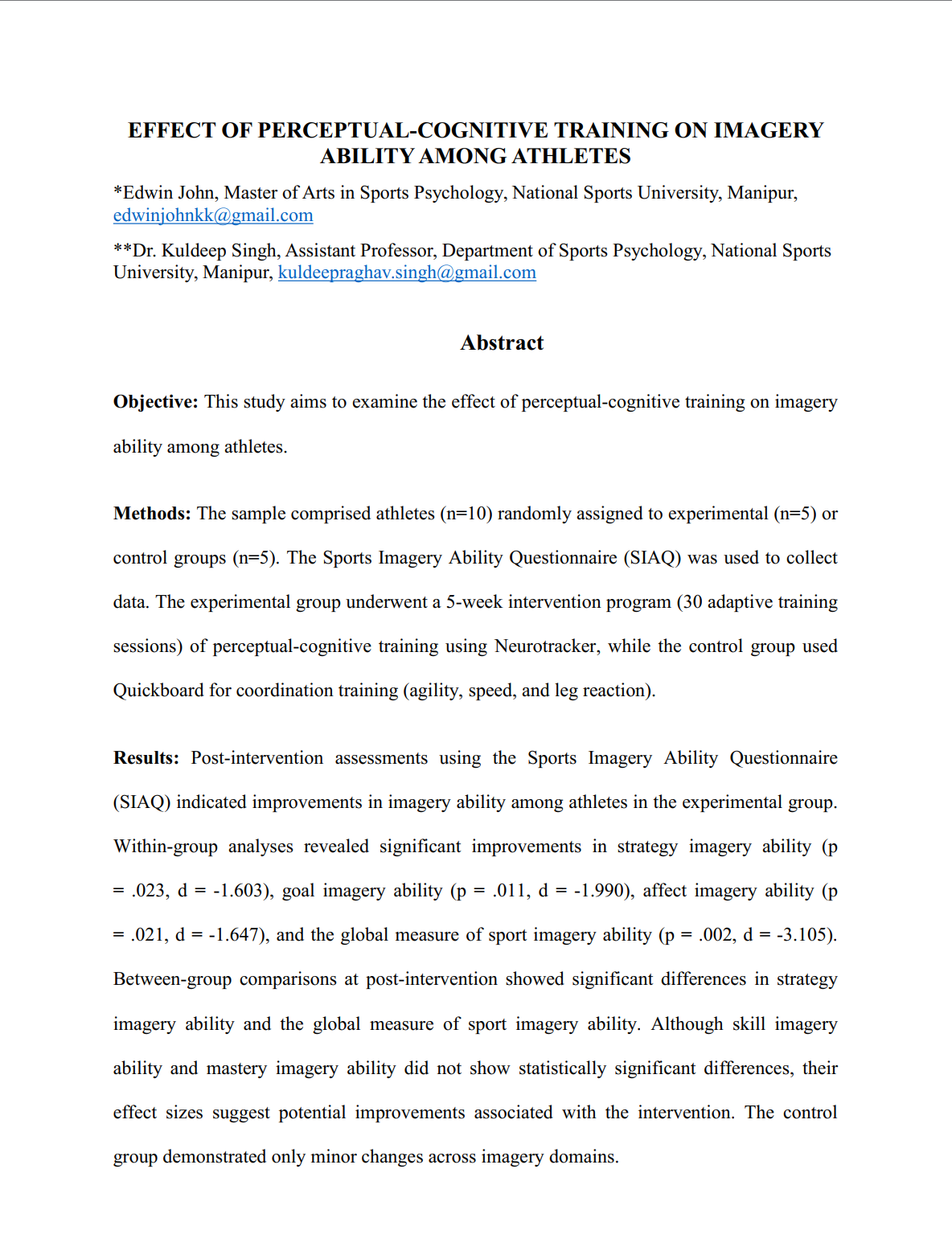
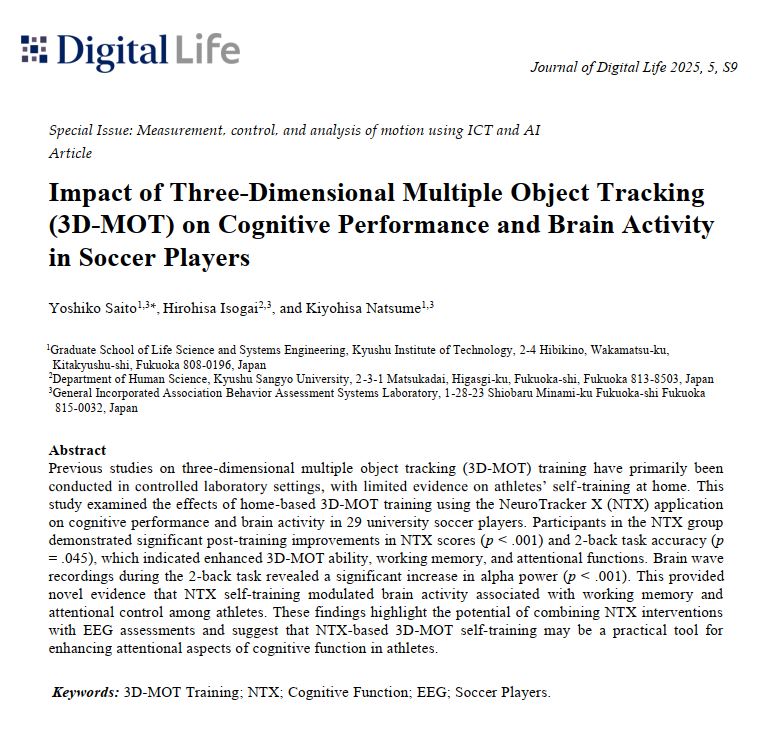
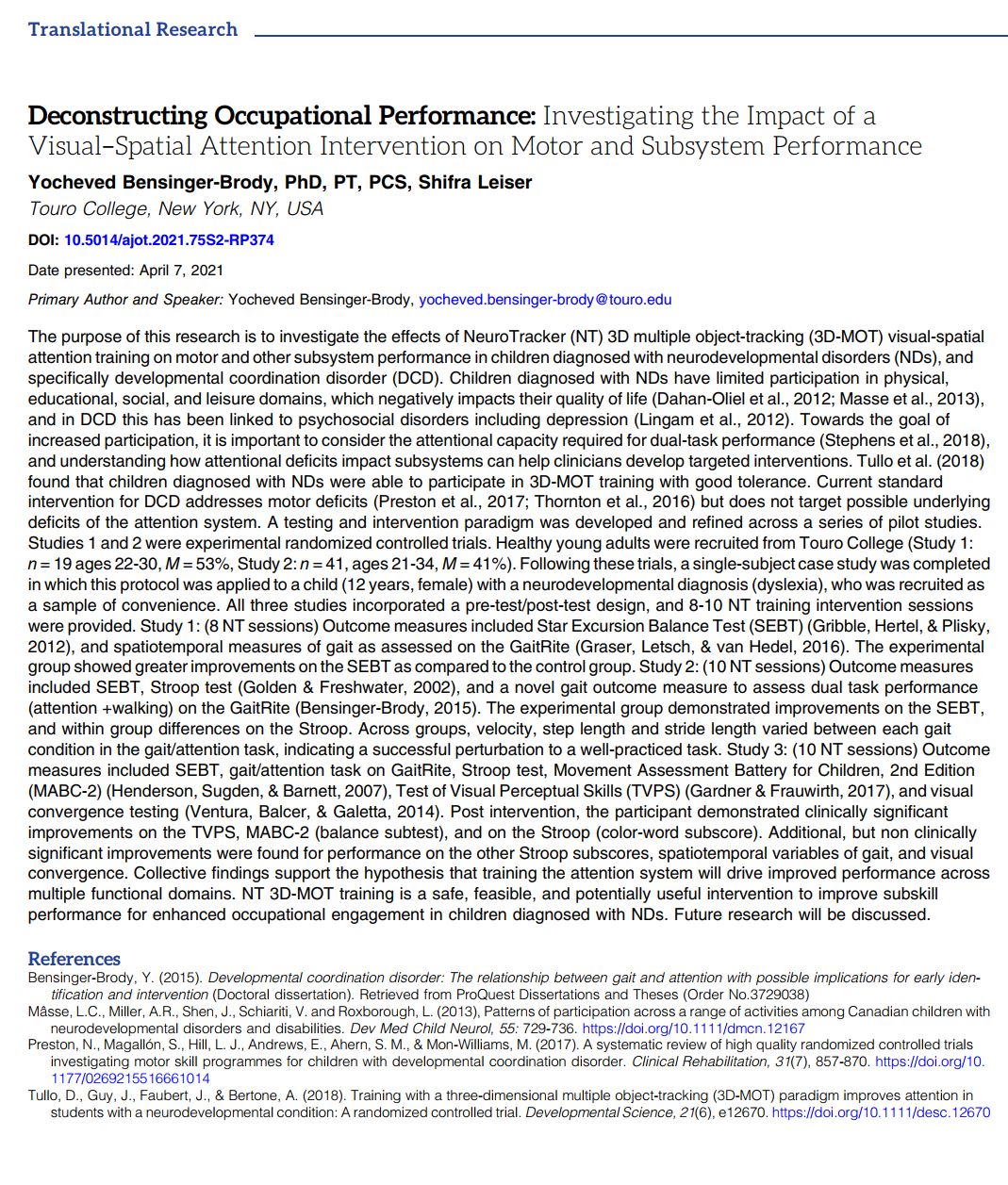
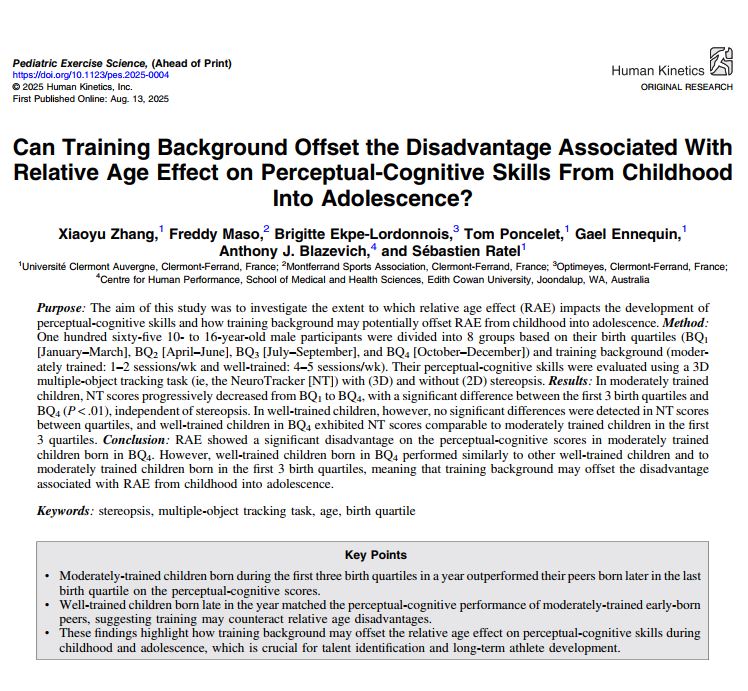
NeuroTracker has been tried and tested by many independent research centres across the world. Discover the diverse research published with our searchable database
Published Research Papers
Research Institutes Using NeuroTracker
Issued Patents and Patents Pending
NeuroTracker integrated with closed-loop live EEG feedback enhances NeuroTracker learning rates for healthy adults.
To investigate if real-time Neurofeedback can enhance learning rates for NeuroTracker training.
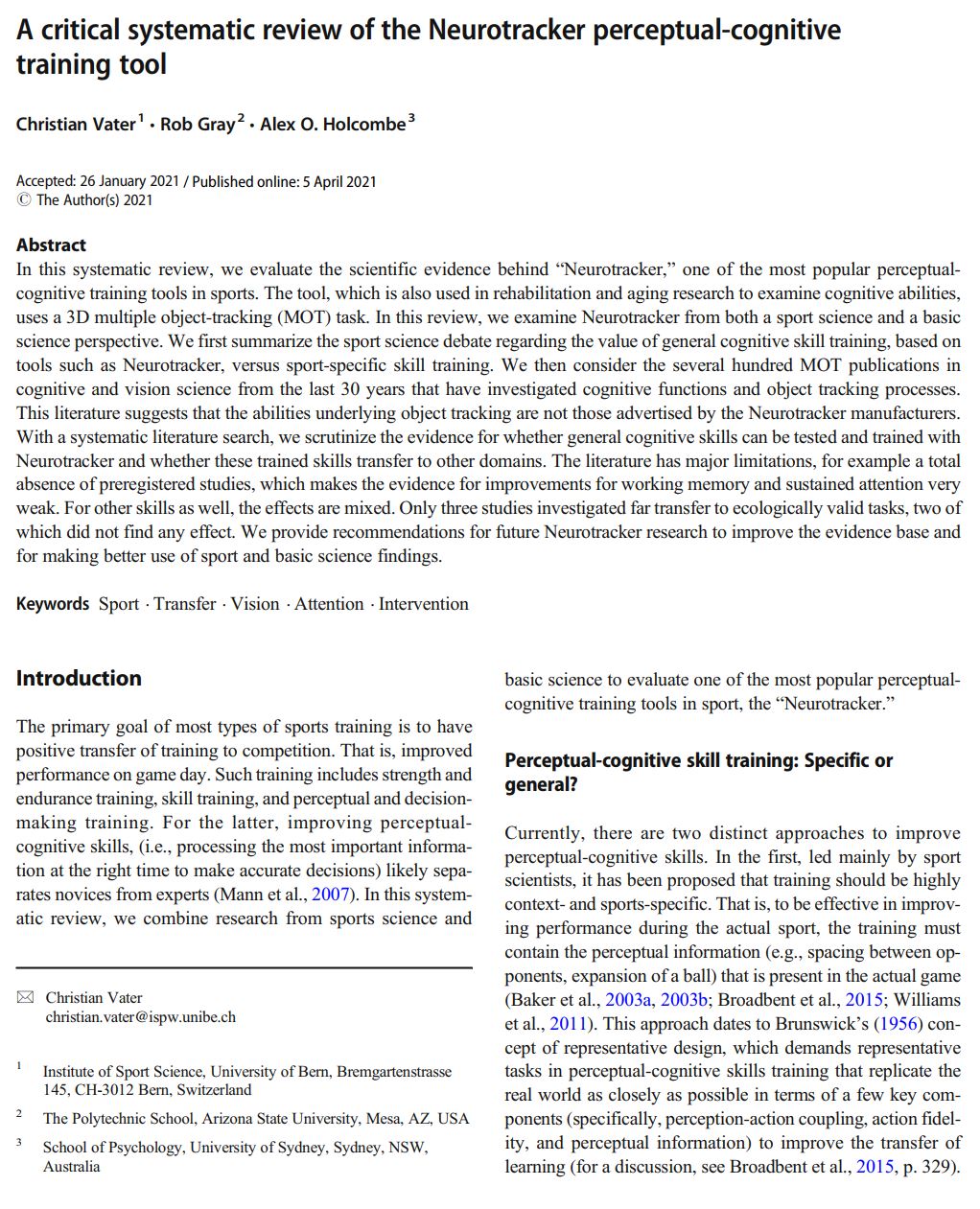
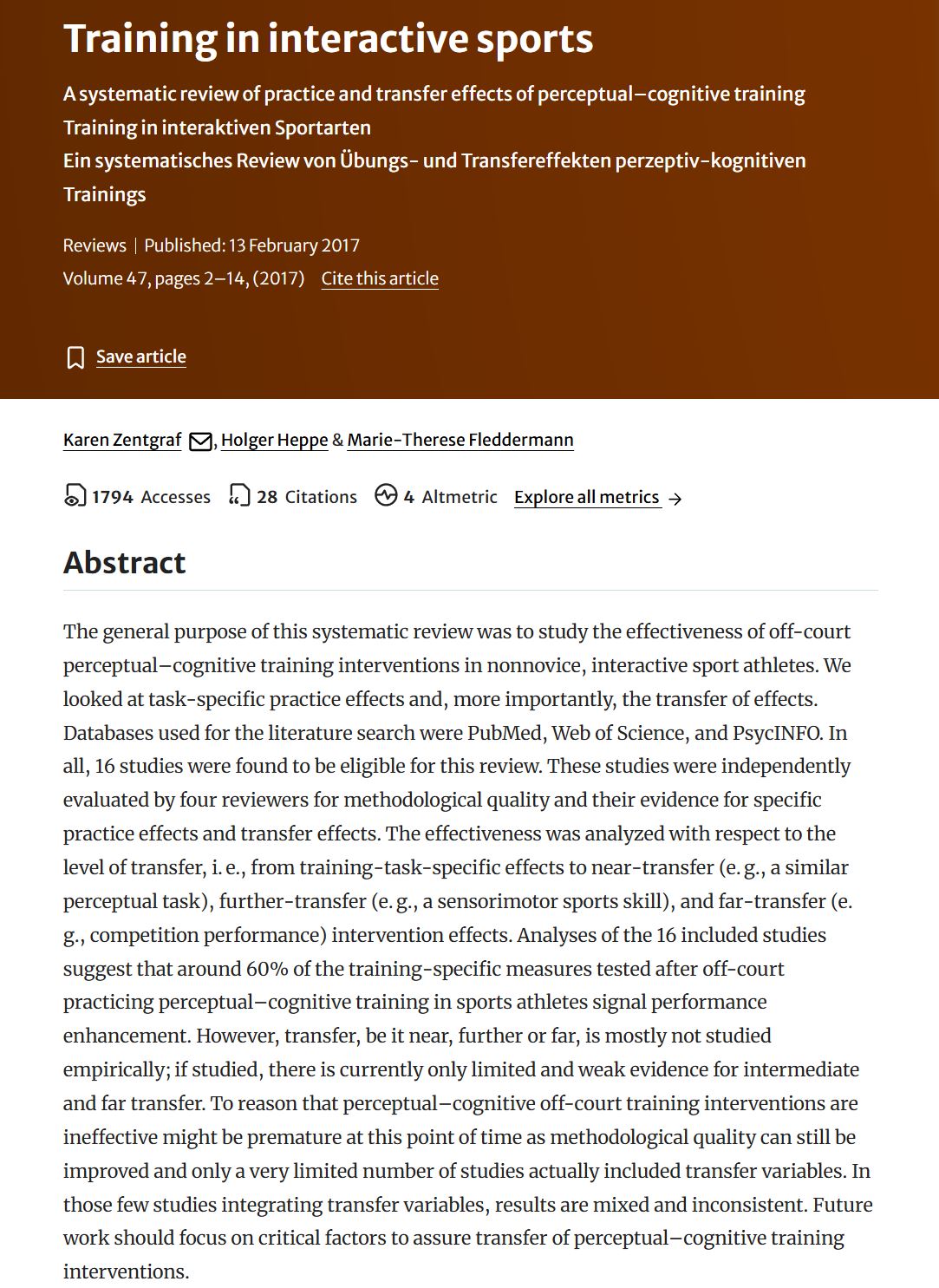
A systematic review evaluating the scientific evidence behind NeuroTracker, concluding the tool reliably produces task-specific learning, but evidence for far transfer effects remains methodologically limited.
To systematically evaluate the scientific evidence supporting NeuroTracker as a perceptual-cognitive training tool, examining both (1) whether it trains the cognitive functions claimed and (2) whether training transfers to other domains, particularly real-world performance.
3 hours of NeuroTracker training improves verbal and matrix working memory span in Canadian armed forces personnel.
To investigate if working memory in Canadian Armed Forces can be improved with unsupervised remote NeuroTracker training as a practical performance enhancement tool.
NeuroTracker training with elite youth soccer players leads to improvements in inhibition and visual clarity over controls, but not other measures.
To evaluate the effectiveness and transfer of an NeuroTracker training on visual and executive functions in youth elite soccer players.
Professional esports players perform better at NeuroTracker than amateurs or traditional athletes, who also perform better than the normal population.
To compare the visual tracking performance of professional as well as amateur eSport players and traditional sportsmen using NeuroTracker.
MS patients respond positively to NeuroTracker training with healthy learning rates and transfer to improvements in a driving readiness assessment.
To assess the usability of NeuroTracker for patients with multiple sclerosis (MS).
Learning rates across 15 NeuroTracker sessions significantly differentiate professional vs casual video game players
To examine whether individuals who play video games at a professional level in the esports industry differ from amateur video game players in their cognitive and learning abilities.
NeuroTracker provides greater improvements in archery athlete's concentration than conventional archery training.
To investigate if NeuroTracker training can improve archery concentration performance at moment of shooting.
NeuroTracker baselines along with neuropsychological and mood assessments detect no pre-post significant cognitive changes from BDNF supplementation.
To examine if β-Alanine supplementation can increase brain-derived neurotropic factor (BDNF) to benefit cognition and mood under anticipatory stress prior to simulated military operations.
NeuroTracker training improves memory and other cognitive abilities for elderlies, more effectively than a memory training intervention.
To investigate if cognitive training programs can reduce expected cognitive decline associated with aging.
NeuroTracker baselines more sensitively detect effects on cognition than other cognitive assessments after open heart surgery.
To examine whether cognitive baselines can be used to detect changes in cognitive function in open-heart surgery patients.
NeuroTracker pre-post measures reveal cognitive benefits for college females engaging in a 15-day diet with added beef nutrients.
To investigate if beef and beef-related nutrient intake can explain the variance in visual cognitive performance in young females.
A 20-30 minute NeuroTracker training intervention significantly improves multiple object tracking skills and working memory abilities.
To assess transfer from a NeuroTracker training intervention to near, mid-level, far transfer tasks.
A 4-session NeuroTracker training program (24-mins) improved working memory by 35% in athletes in high and low tracking sports.
To examine the role of working memory and visual attention for tracking expertise in different sports.
Older adults show clear improvements in cognitive abilities at the end of a NeuroTracker training intervention, and additional gains one month later.
To investigate if perceptual-cognitive training can provide a proactive intervention to enhance cognition in older adults with memory problems.
Older adults show significant cognitive gains across a battery of neuropsychological assessments with a short NeuroTracker training intervention.
To investigate if a short NeuroTracker training intervention could improve high-level cognitive abilities in elderly populations.
Elite volleyball players significantly improved scores on sustained attention and processing assessments from an 8-week NeuroTracker training intervention.
To investigate the effectiveness of NeuroTracker training with elite volleyball players as a form of off-court cognitive performance training.
Prior consolidation with NeuroTracker isolated training improves learning rates for NeuroTracker decision-making and motor-skill dual-task training.
To investigate the effects of motor and perceptual dual-task NeuroTracker training over time, and in particular to see if performing prior NeuroTracker consolidation training significantly influences these effects.

NeuroTracker is one of the most widely researched cognitive training systems, used in elite sports, military, and human performance settings worldwide. Built on 20 years of neuroscience research.