


Welcome to the Research and Strategy Services at in today's fast-paced.
Strategic decision-making often assumes that experience improves accuracy over time. As patterns repeat and feedback accumulates, decision quality is expected to stabilize.
In rapidly changing environments, this stabilization process breaks down.
This article explains why strategic performance becomes fragile when conditions shift faster than predictive models can converge, and why inconsistency in these settings reflects structural uncertainty rather than poor judgment.

An environment is rapidly changing when:
In these settings, historical information becomes less dependable as a guide for future action.

Strategic decision-making depends on internal predictive models that link cues, actions, and expected outcomes. In stable conditions, repeated exposure allows these models to refine and converge.
In rapidly changing environments, convergence is disrupted.
As conditions shift:
The result is not necessarily poorer reasoning, but diminished reliability of the informational structure supporting it.

Strategic performance under changing conditions often appears inconsistent.
Observers may see:
These patterns are frequently interpreted as overreaction, indecision, or lack of discipline.
In reality, they may reflect rational adaptation to unstable contingencies. When environmental structure changes, stable strategy becomes maladaptive.

It is commonly assumed that experience reduces uncertainty. In rapidly changing environments, experience may accumulate without stabilizing decision quality.
When patterns fail to repeat:
Past success does not reliably transfer forward when the environment itself lacks continuity.
The primary constraint in rapidly changing environments is reduced predictive reliability.
Secondary effects may include:
These effects arise from persistent instability, not from diminished cognitive capacity.
Strategic breakdown in changing environments is often framed as failure.
A more accurate interpretation is fragility.
When predictive models cannot stabilize:
Fragility reflects environmental instability rather than deficient reasoning.
Rapidly changing environments are a clear instantiation of uncertainty. When informational structure fails to remain stable long enough for convergence, strategic performance becomes inherently provisional.
This pattern reflects broader principles of Cognitive Performance Under Uncertainty, where reduced predictive reliability—rather than effort, expertise, or motivation—drives variability in decision outcomes.
Strategic inconsistency in rapidly changing environments does not necessarily signal poor judgment or inadequate experience.
It may instead indicate that the environment is evolving faster than predictive models can stabilize.
Recognizing this distinction clarifies why performance fluctuates in dynamic settings and prevents misattribution of instability to individual competence.
Welcome to the Research and Strategy Services at in today's fast-paced.
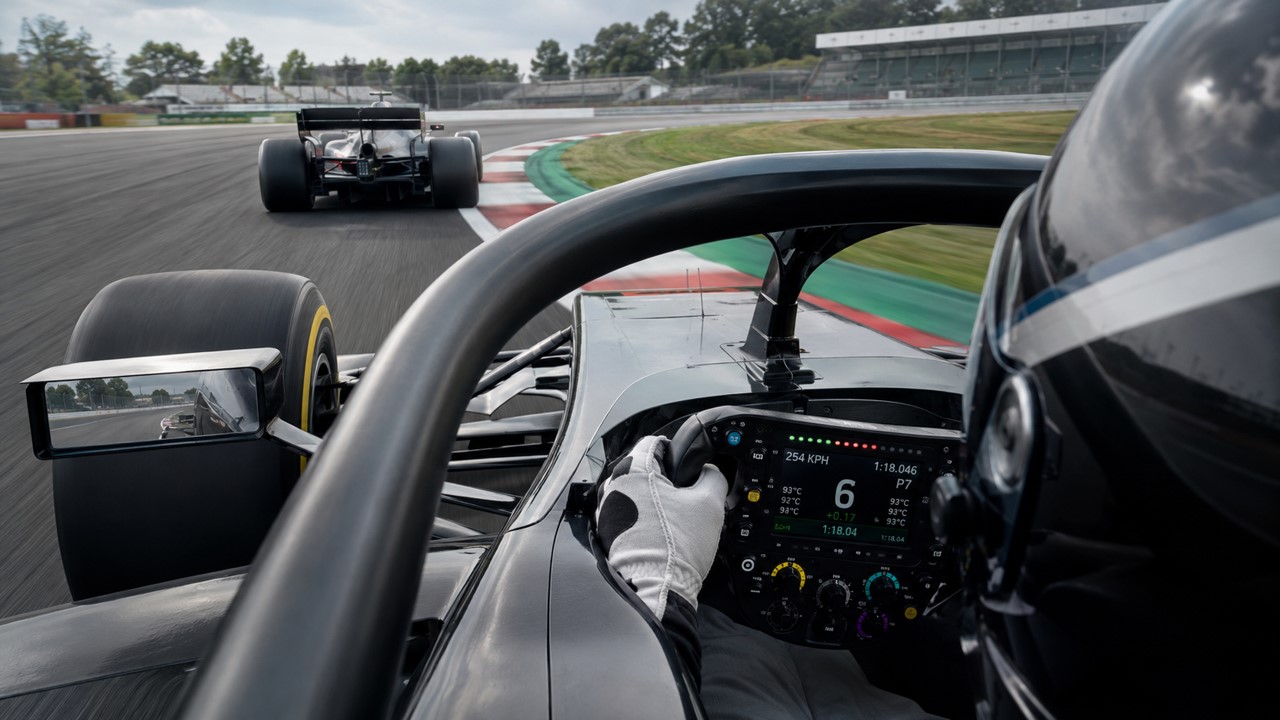
At Formula 1 speeds, performance depends on far more than fast reactions. This article explores how elite drivers prioritize information, anticipate what comes next, and continuously update the race at extreme speed.
Elite tennis returners do more than react quickly — they extract useful information before the ball is even struck. This article explores how anticipation, body cues, and rapid updating help players solve the return before the serve fully unfolds.
Elite athletes don’t need to look directly at everything to stay aware of a fast-changing play. This article explores how gaze and attention work together to monitor movement, spacing, and opportunity across the wider visual field.
NeuroTracker is one of the most widely researched cognitive training systems, used in elite sports, military, and human performance settings worldwide. Built on 20 years of neuroscience research.